Summer Living Room Refresh: Light, Bright Ideas You Can Preview
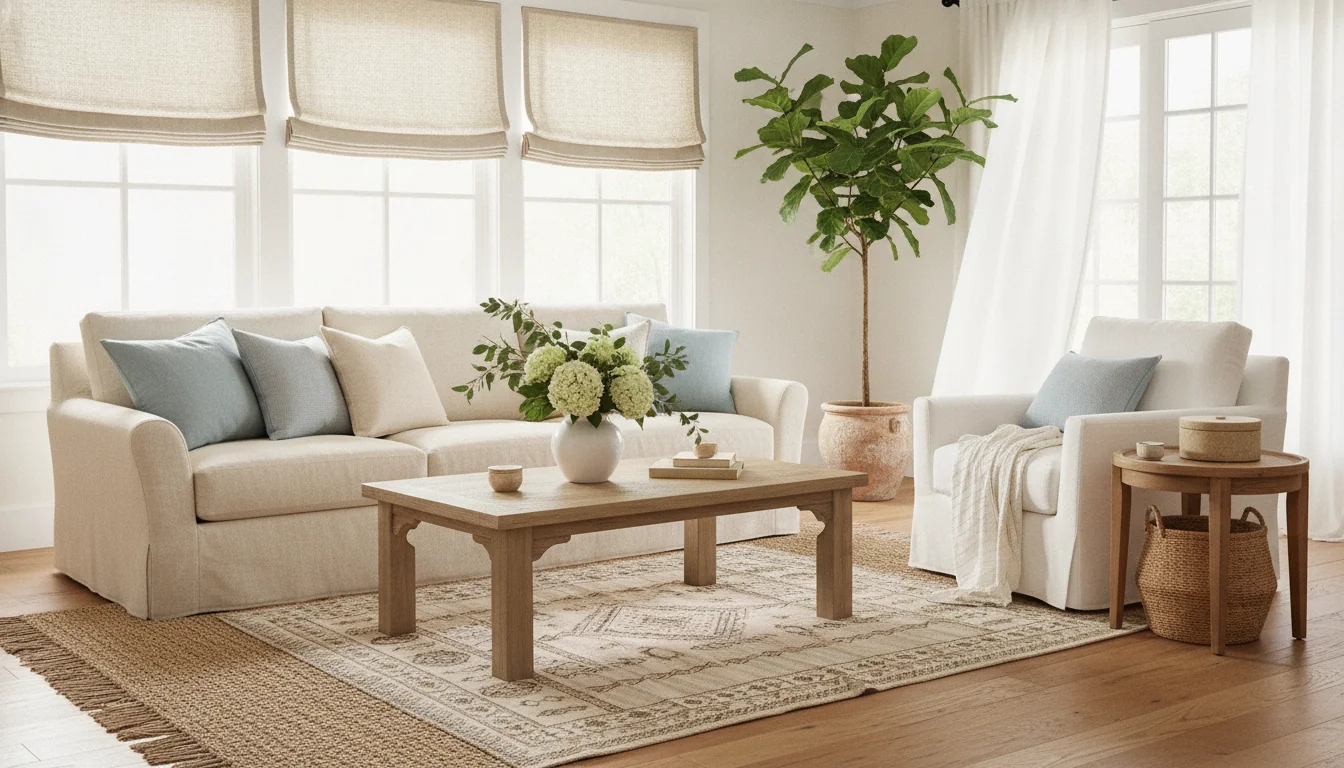
A summer living room refresh is the lowest-effort, highest-impact seasonal change in most homes — and most people skip it because they cannot decide which swap is worth making. Swap the throw pillows? Replace the rug? Paint the walls? Each option costs something, and the combination might clash. The result is paralysis, and the room stays in its winter configuration through July.
AI room design closes that gap. Snap a photo of your living room, describe the summer swap you are considering — lighter sofa covers, a jute rug, sheer curtains, a rearranged seating layout — and a modern AI rendering app produces a photoreal preview on your actual room before you spend a cent. You see whether the pale linen sofa cover reads as “breezy” or “washed out,” whether the jute rug works with your coffee table, and whether the furniture layout you are considering leaves enough room to walk. The preview costs nothing. The wrong purchase costs both the item and the return headache.
This guide covers what a summer living room refresh actually involves, the swap-don’t-renovate mindset, how to lighten the palette, the textile and rug swaps that change the room most, bringing greenery and natural light forward, and how to preview every swap before buying.
What is a summer living room refresh? A summer living room refresh is a targeted set of seasonal swaps — textiles, rug, pillow covers, curtains, accessories, and minor furniture rearrangements — designed to make a living room feel lighter, brighter, and cooler for the warmer months. It does not involve paint, new furniture purchases, or structural changes. The goal is a room that feels intentionally seasonal, reached through reversible changes that cost under a few hundred dollars and take one weekend.
What a summer refresh actually involves
A summer living room refresh is about three categories of change, and only three. Anything outside these categories turns a weekend project into a renovation.
Textile swaps. The sofa cover, pillow covers, throw blankets, curtain panels, and rug that worked in November are the heaviest and darkest pieces in the room. Swapping them for lighter-weight, lighter-color alternatives changes the feel more than any other single action. The sofa alone covers roughly 30 square feet of visual surface area; a cream linen slipcover instantly shifts the room’s center from winter-warm to summer-bright.
Accessory edits. About half the decorative objects in a living room can be swapped seasonally at zero cost if you already own them. The dark ceramic vase goes to the closet; the light terracotta or woven rattan piece comes forward. The heavy wool throw is replaced by a cotton or linen one. The stack of dark hardcover books is replaced by light-toned ones or a single large shell. The cost can be zero — it is simply a rotation of what you already own.
One furniture move. A single repositioning — pulling the sofa off the wall, angling armchairs toward the window, replacing a heavy coffee table with a lighter one — completes the refresh. One move, not a full reconfiguration. Two or three moves and the room may feel unsettled rather than refreshed.
| Change type | Typical cost | Time | Impact | Reversible |
|---|---|---|---|---|
| Textile swaps (covers, pillows, curtains) | $50–$200 | 1–2 hours | Very high | Yes |
| Accessory edits | $0–$50 | 30 minutes | Moderate | Yes |
| One furniture move | $0 | 15 minutes | High | Yes |
| Paint or wall treatment | $100–$400 | 4–8 hours | Very high | No (costly) |
| New furniture | $500–$3,000 | 1–3 hours | High | No (fees) |
The line between a refresh and a renovation is the line between swapping and replacing. Swapping is reversible, costs little, and takes a weekend. If you are considering paint or new furniture, you are in redesign territory — which has its own guide at AI living room design.
Swap, don’t renovate: the seasonal mindset
The mindset shift that makes a summer refresh work is editing, not acquiring. Most people approach it by scrolling stores and asking “what should I buy?” The better question is “what should I change?”
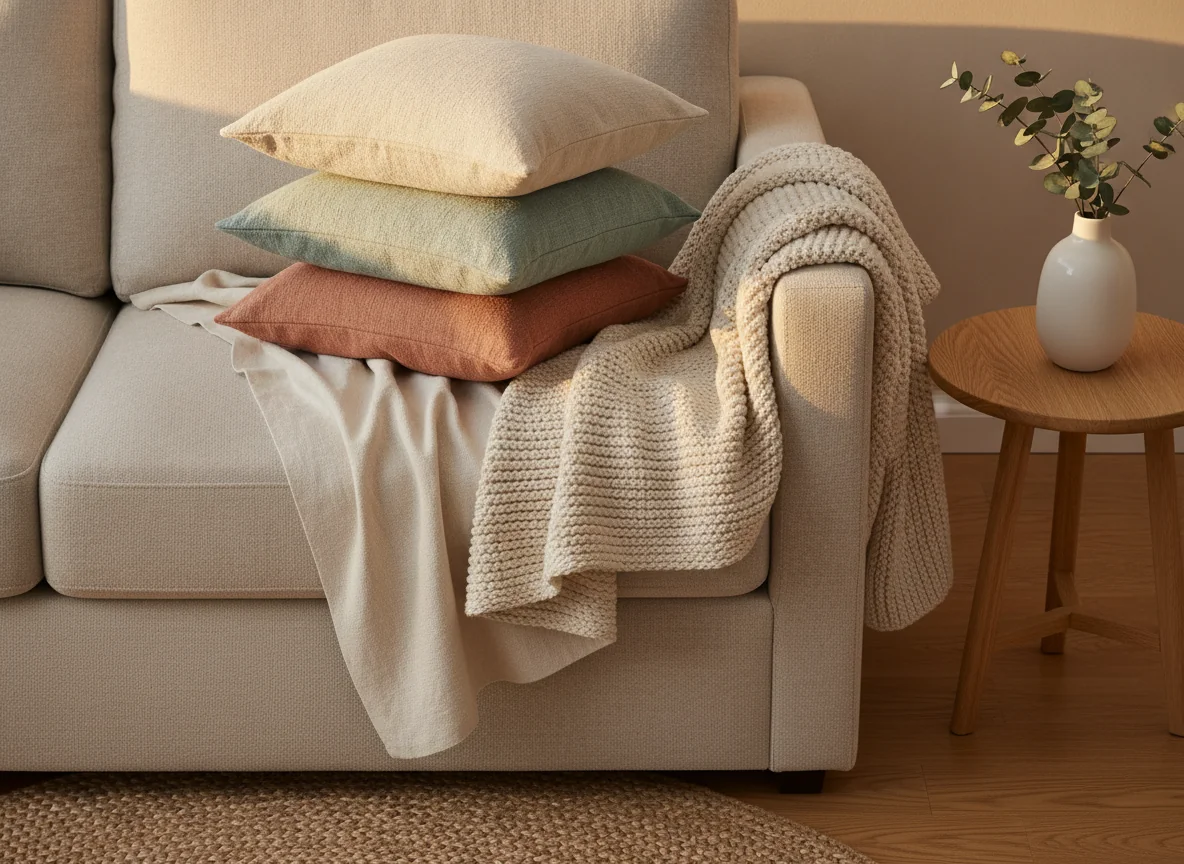
Start with what you already own. Identify everything that reads as visually heavy or warm — the chunky knit throw in charcoal, the rust-orange velvet pillows, the dark wool rug. These pieces were right in December. In June, they hold visual heat. Move them to a closet, swap in their lighter counterparts, and the room changes before you buy anything.
The accessory rotation is the cheapest test. If moving your light ceramic vase and cotton throw forward transforms the room enough, stop there. If the room still feels heavy, move to the textile swap — pillows, sofa cover, curtains — which costs money but remains fully reversible.
The seasonal mindset also means accepting imperfection. A summer refresh does not produce a magazine-ready room. It produces a room that feels intentionally lighter for three months, knowing you will reverse most of it in September. The practical test: if a change takes more than one weekend or costs more than a few hundred dollars, it is not a refresh. Our easy home decor ideas guide covers more small-budget room changes with the same reversible logic.
Lightening the palette for summer
A living room’s winter palette tends to be warm, deep, and enveloping — rust, olive, charcoal, camel. These colors feel cozy at freezing temperatures. They feel oppressive in summer. Lightening the palette does not require repainting walls (that would violate the refresh rule). It requires shifting the accent colors from deep to light while keeping base tones — wall, floor, large furniture — unchanged.
Three palette shifts that reliably produce a summer feel:
Cream, sand, and pale blue. The closest thing to a universal summer palette. It works with almost any wall color because it adds color without fighting the base. Cream linen sofa covers, sand-colored throw pillows, pale blue accent cushions, and a natural jute or sisal rug. The result reads as coastal without nautical motifs. For more on the coastal approach, the AI interior design app guide covers how the same palette translates across room types.
Warm white, honey, and sage. A slightly warmer palette. Cream as dominant, honey-toned rattan and wood accents, sage green pillows. Works particularly well in rooms with northern or eastern light, where pure white can read as cool.
Blush, terracotta, and cream. Warmer still, for rooms with southern or western light. Blush provides soft pink warmth, terracotta anchors it with earthy contrast, and cream keeps everything light.
| Palette | Dominant | Accent 1 | Accent 2 | Best light | Vibe |
|---|---|---|---|---|---|
| Coastal-light | Cream | Sand | Pale blue | Any | Breezy |
| Warm-neutral | Warm white | Honey | Sage | North/east | Cozy-bright |
| Earthy-warm | Cream | Blush | Terracotta | South/west | Warm-fresh |
Apply the palette through textile and accessory layers, not walls or floor. The sofa cover, pillows, curtains, and decorative objects carry the new palette. The fastest way to see whether a palette works in your room is to preview it with an AI render — upload a photo, specify the palette, and see the entire room with those colors applied before buying anything.
Textile and rug swaps that change the room
Textiles cover the largest surface areas and are the most purely seasonal element in a room. Wool and velvet are winter-weight; linen and cotton are summer-weight. Swapping them seasonally also extends each set’s lifespan by giving it six months of rest.
The sofa cover. A cream or oatmeal linen slipcover changes the visual center of the room from a dark mass to a light one. If your sofa does not have a removable cover, drape a large light-colored throw across the back and seat — it covers about 60 percent of the visible surface at a fraction of the cost.
Pillows. The most cost-effective swap. Four linen or cotton pillow covers in a summer palette cost $30 to $80 and change the sofa’s entire personality. Two in the dominant color, one in the accent, one in a complementary neutral. The winter pillows go into a vacuum bag until October.
Curtains. Swapping heavy winter drapes for sheer or semi-sheer linen panels changes the room’s light quality more than any other single move. Sheers diffuse hard summer sun into soft ambient light and make the room feel larger. Cost: $40 to $120 per panel. If you cannot swap, tie the drapes back wider than their winter position — half the effect at zero cost.
The rug. A jute or sisal rug reads as summer through its natural fiber and open weave. A flat-weave cotton dhurrie in cream adds color without weight. Cost for a 6-by-9: $200 to $600. The budget option: layer a smaller light-colored rug on top of your existing one, positioned under the coffee table. For more on proportion rules, how to choose the right rug size covers what applies year-round.
Bringing greenery and natural light forward
Two forces define a summer room: more natural light and more visible greenery. Both are strong seasonal cues, and both cost little to amplify.
Natural light. The single most effective move is cleaning the windows — inside and out. Winter dust reduces light transmission by 10 to 30 percent. After cleaning, pull furniture back from windows by at least six inches. A sofa against a window blocks light entirely; pulled back six inches, light spills around its sides. Mirrors opposite windows are the second-most-effective move: a mirror facing a window effectively doubles the light. Our good living room paint colors piece goes deeper on light quality and wall tones.
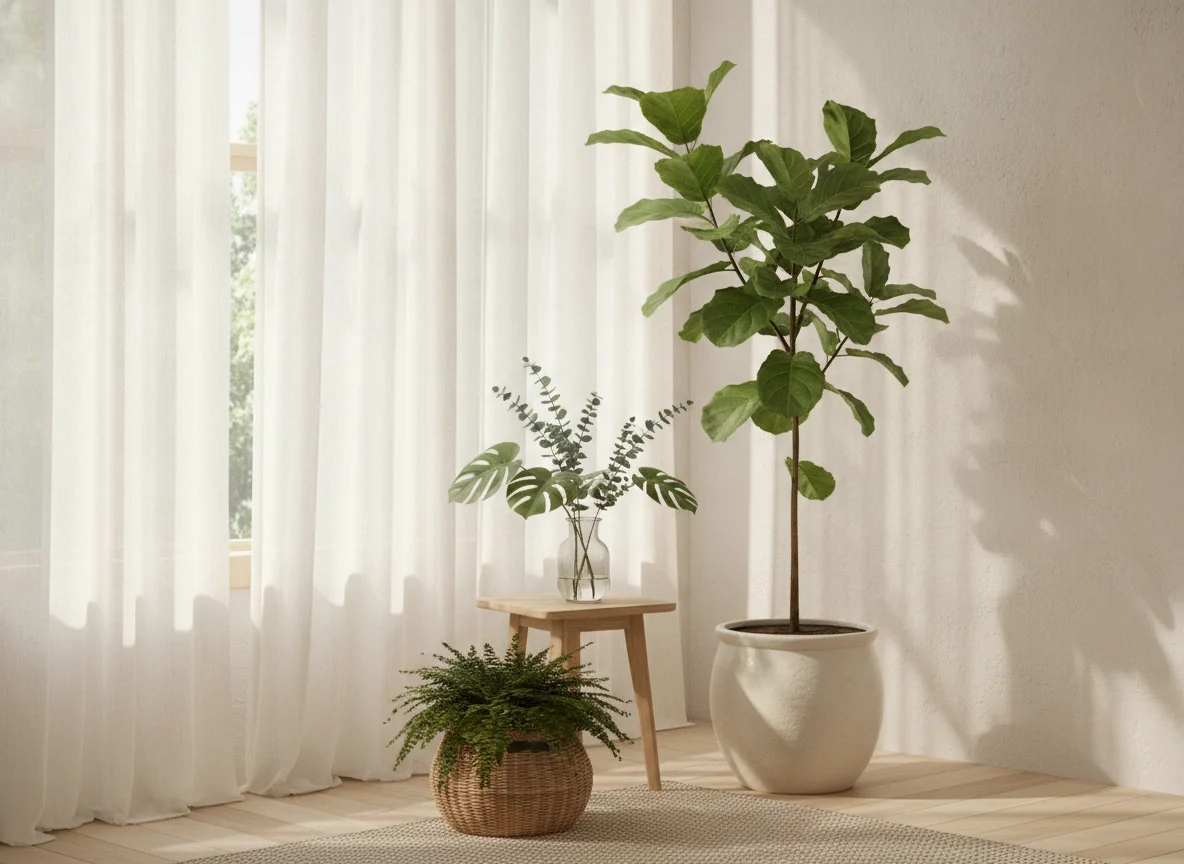
Green. A single large plant (fiddle leaf fig, monstera, rubber tree) in a light pot near the window anchors the greenery layer. Two or three smaller plants on the coffee table, side table, and mantel distribute the green. Fresh cut greenery from the yard — eucalyptus, hydrangea, lavender — in a simple glass vase costs nothing and reads as intentionally seasonal. Place plants on the light side of the room, near windows, and let the greenery frame the bright zone. If your windows face south or west, sheer curtains are the difference between beautiful soft light and harsh glare that bakes the furniture.
Previewing the refresh before you buy
The most expensive mistake in a summer refresh is buying the wrong piece. A cream sofa cover that looked perfect on the website can arrive in a shade that clashes with your wall color. A rug that seemed light enough can read as beige-on-beige next to your sofa. AI previewing eliminates this category of mistake entirely.
The workflow is simple:
- Photograph the room. Take a clear, well-lit photo from the doorway, including both the sofa and the window. Good lighting produces a better render.
- Describe the swap. In the AI design app, describe the change specifically: “Replace the sofa cover with cream linen, add sage green throw pillows, swap the rug for a light jute.”
- Generate the preview. The AI produces a photoreal version of your room with the swaps applied — your actual room, your actual light.
- Evaluate. Does the cream sofa cover read as fresh or faded? Does the sage pillow work against the wall? The render answers these questions in two minutes.
- Iterate. Change one element — “try pale blue pillows instead of sage” — and generate another. Most people find the right combination in three to five iterations.
| Iteration | Sofa cover | Rug | Pillows | Curtains | Verdict |
|---|---|---|---|---|---|
| 1 | Cream linen | Jute | Sage + cream | Sheer | Sage too green against wall |
| 2 | Cream linen | Jute | Pale blue + cream | Sheer | Works, feels coastal |
| 3 | Cream linen | Cream dhurrie | Pale blue + cream | Sheer | Warmer than jute — better |
| 4 | Cream linen | Cream dhurrie | Pale blue + terracotta | Sheer | Terracotta adds warmth — chosen |
Iteration four is the one most people choose. The pale blue provides summer lightness, the terracotta prevents it reading as cold, and the cream dhurrie warms the floor. Found in four renders, not four online purchases with returns. The same AI preview also catches spatial problems: a light sofa cover reads as visually larger than a dark one, and the render shows whether it now dominates the room. The AI interior design guide covers the broader prompt workflow for specifying design changes.
Frequently Asked Questions
How much does a summer living room refresh cost?
$200 to $500 if you buy everything new. Most people spend less because they already own some lighter pieces. The zero-cost version — accessory rotation only — is a legitimate refresh that changes the room noticeably.
Can I do a summer refresh in a rented apartment?
Yes — most strategies were designed for renters. Sofa covers, pillow swaps, curtain changes, and accessory edits leave no marks. Skip the rug swap if you have fitted carpet; layer a small light-colored rug on top instead.
How long does it take?
The first refresh — choosing, ordering, installing — takes one weekend. The following year it takes a few hours because you already own the pieces. The annual rotation becomes a two-hour seasonal ritual after the first year.
What if my room already feels light?
Shift from color to texture. Nubby linen pillow covers, a flat-weave cotton dhurrie, a chunky cotton throw. The goal is tactile lightness — the feel of summer fabrics rather than a color change.
Should I store winter textiles differently?
Clean everything before storing — stains set during storage. Use breathable cotton garment bags (not plastic bins, which trap moisture). Add cedar blocks or lavender sachets to deter moths.
Is it worth AI-previewing a small swap like pillow covers?
Yes, because pillow colors shift dramatically under different room light. A pale blue that reads as perfect in a store’s lighting can read as gray in north-facing light or aqua in south-facing light. The AI preview shows the color against your actual walls, sofa, and floor in your actual light — a combination impossible to judge from a website photo.
How do I transition back in fall?
Reverse the order. Winter sofa cover first, then the heavier rug, then the winter pillows and curtains. Store the summer textiles in whatever containers held the winter pieces. An afternoon’s work, and the room feels intentionally seasonal rather than neglected.
Preview your summer swaps before you spend on them
A summer living room refresh is one of the lowest-risk, highest-return projects in home decorating. The changes are reversible, the costs are modest, and the result is a room that feels intentionally seasonal. The one variable that trips people up is the preview: not knowing whether the cream sofa cover will work with their wall color or whether the jute rug will read as too similar to the floor.
That variable is now eliminable. Snap a photo, describe the swap, and see the result on your actual room in under two minutes — before you spend a cent on pieces you may end up returning.
RoomGenius is available on the App Store and Google Play. Upload your living room photo, describe the summer swaps you are considering, and get a photoreal preview in seconds. Preview your summer swaps before you spend on them — it is the cheapest design decision you will make all season.