Summer Home Decor Ideas: Seasonal Style You Can Test First
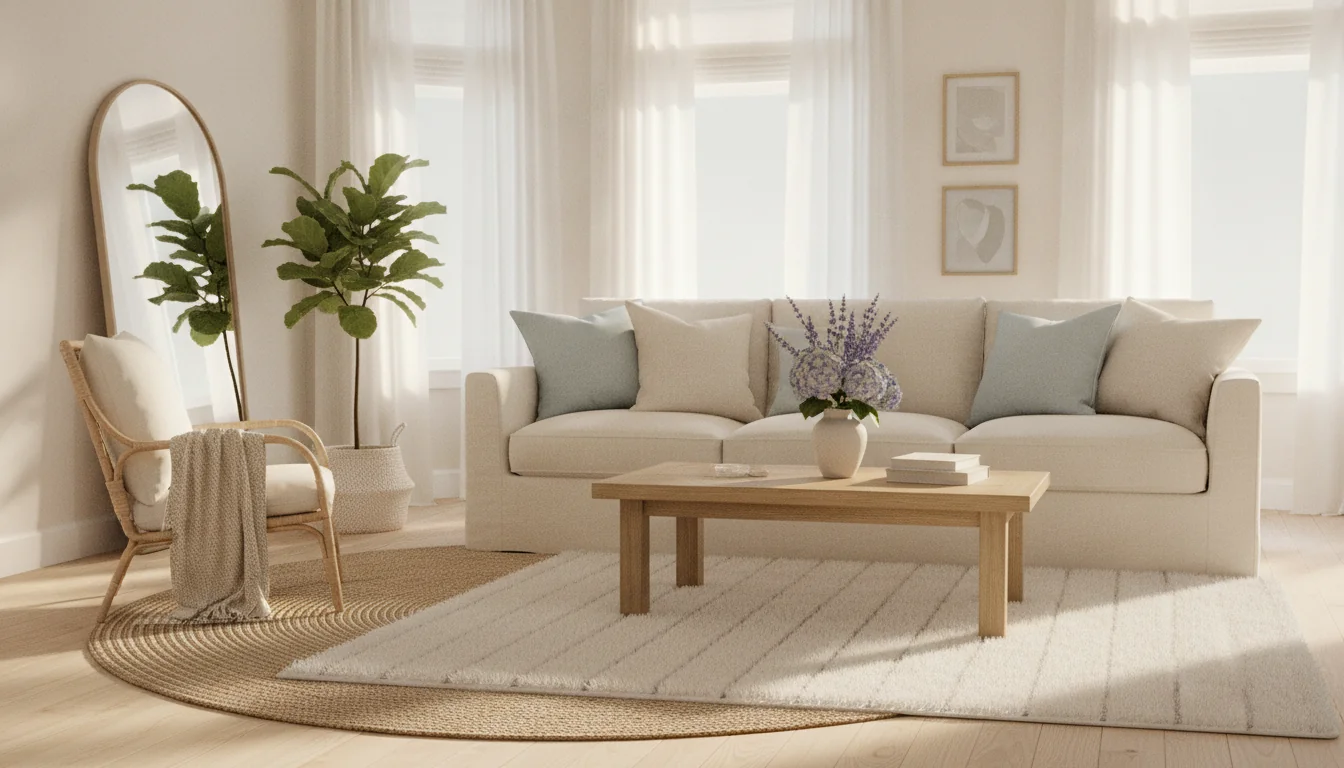
Summer home decor has a reputation problem. The search results lean heavily toward “throw a pineapple on it” — seasonal motifs slapped onto otherwise unchanged rooms. The real version — room-by-room swaps that lighten the palette, shift the materials, and make the whole house feel intentionally seasonal — requires no pineapples and no theme. It requires knowing what to change in each room and previewing the result before you buy.
AI room design closes the visualization gap. You photograph a room, describe the summer swap you have in mind — lighter curtains, a jute rug, linen bedding, rattan accessories — and a modern AI rendering app produces a photoreal preview on your actual room in under a minute. This guide covers what summer home decor actually means beyond the cliché, room-by-room ideas, the material palette and color rules that matter, low-commitment swaps for renters, and how to preview the whole-home refresh before buying.
What is summer home decor? Summer home decor is a targeted, room-by-room set of seasonal swaps — textiles, rugs, window treatments, accessories, and small furniture edits — designed to make a home feel lighter, brighter, and intentionally seasonal. It works through material and color shifts alone: heavy fabrics replaced with light ones, warm palettes cooled down, accessories rotated from winter to summer. The goal is a home that belongs to the season, achieved through reversible changes that cost under a few hundred dollars per room.
What “summer decor” means beyond the cliché
The difference between summer decor and holiday-themed decor is the difference between material and motif. Holiday decor adds objects. Summer decor subtracts weight. It asks: “what can I swap, rotate, or remove to make this room feel lighter?”
Three shifts define real summer decor:
Textile weight. A single linen sofa cover changes the visual center of a living room more than any other action. Swap velvet for linen, wool for cotton, chunky knits for flat weaves. The shift does not need to be complete — even layered cotton and linen pillows continue the move to floor level.
Color temperature. Winter interiors lean warm — rust, olive, camel, burgundy. These colors feel heavy in June. Summer decor shifts the accent palette toward the cool end: pale blue, sage, cream, sand, blush. Base colors (walls, floor, large furniture) stay the same. Accents do the seasonal work.
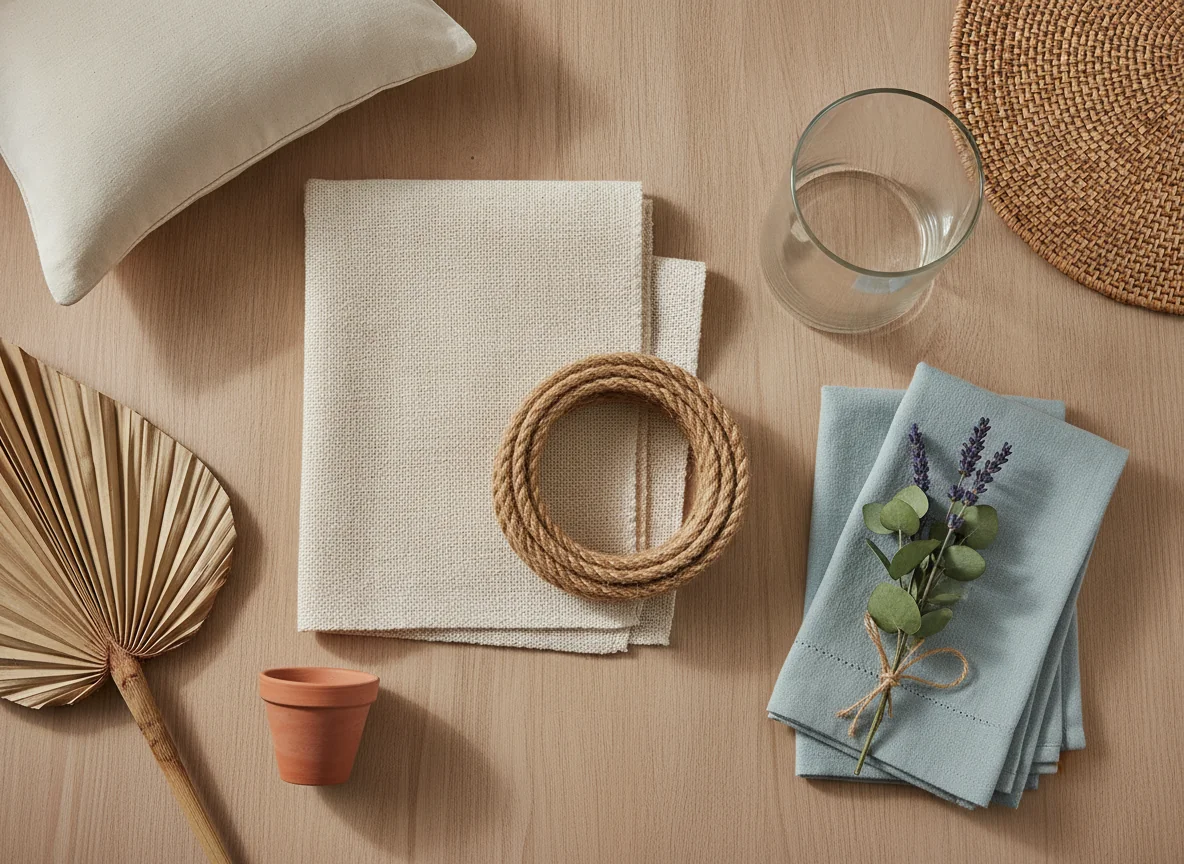
Material vocabulary. Winter decor relies on materials that trap heat: wool, velvet, suede, lined drapery. Summer decor surfaces linen, rattan, jute, cotton, bamboo, glass, seagrass, and sheer fabric. These materials look lighter, feel cooler, and signal summer without a single themed object.
| Shift | Winter | Summer | Cost range | Effort |
|---|---|---|---|---|
| Textile weight | Velvet, wool, chunky knit | Linen, cotton, jute, sheer | $50–$200/room | 1–2 hours |
| Color temperature | Rust, olive, camel, burgundy | Pale blue, sage, cream, blush | $30–$100/room | 30 min |
| Material vocabulary | Velvet, suede, lined drapery | Rattan, seagrass, bamboo, glass | $40–$150/room | 1 hour |
| Rug | Wool, shag, dark pattern | Jute, sisal, flat-weave cotton | $100–$400 | 30 min |
For more small-budget changes with the same swap-don’t-renovate approach, our easy home decor ideas guide covers additional room-by-room tactics.
Room-by-room summer decor ideas
Each room benefits from a different treatment because each room has a different function and baseline palette. These six rooms have the highest visual return.
Living room
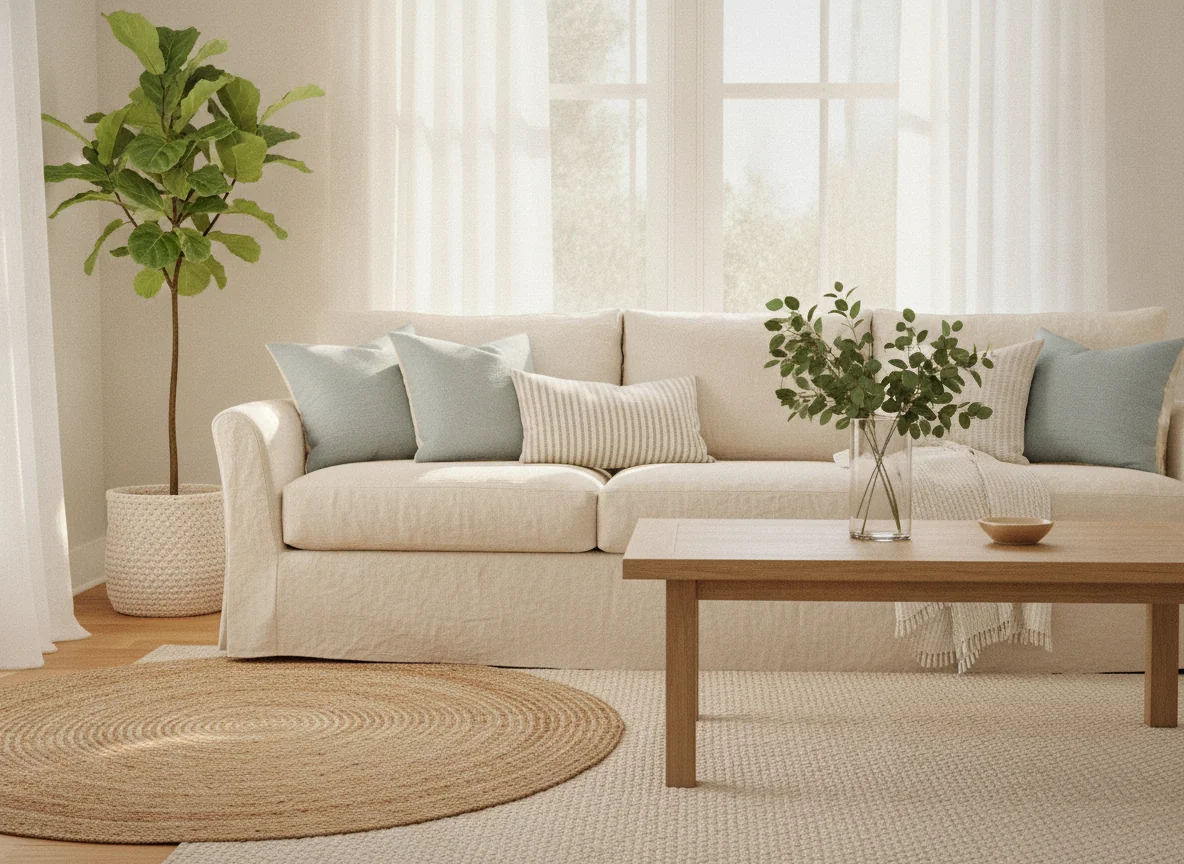
Start with the largest visible surface: the sofa. A cream or oatmeal linen slipcover covers roughly 30 square feet of visual surface — the single most effective summer swap in the house. Follow with four linen or cotton pillow covers in a summer palette ($30–$60), semi-sheer linen curtain panels, and a jute or flat-weave cotton rug layered over your existing one. These four swaps — sofa, pillows, curtains, rug — change the room from November to July in one afternoon. The full breakdown of budget and order of operations is in the dedicated summer living room refresh guide.
Bedroom
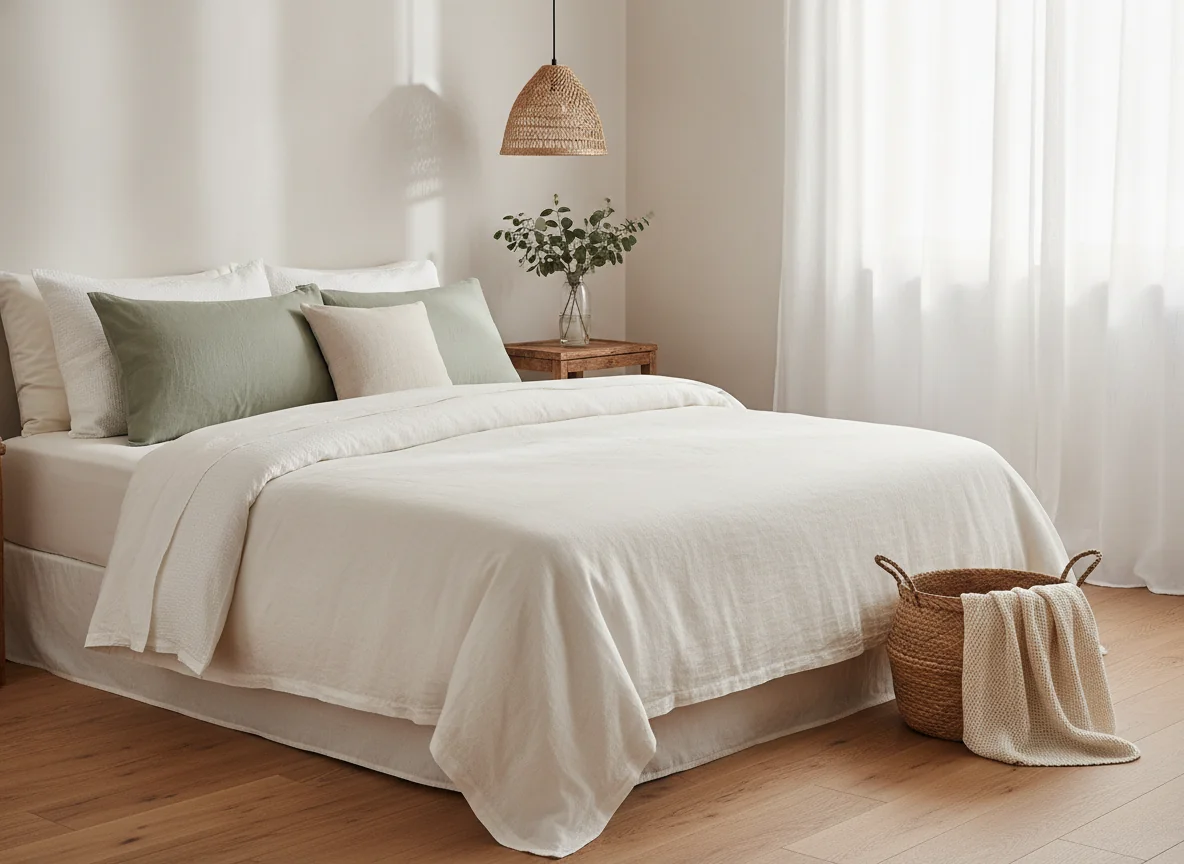
The bedroom is where material swaps have the most sensory impact because the bed is the dominant object. Swap the duvet insert from winter weight to a lightweight cotton or linen quilt. Replace flannel sheets with percale or sateen cotton. Swap velvet throw pillows for linen or cotton in summer colors. Rotate bedside accessories — a rattan or seagrass lamp base replaces a dark ceramic one, and a small plant replaces the heavy stack of books. Total cost: $80–$250 if you buy the duvet cover and pillow covers new; under $50 for pillow covers and accessory rotation alone.
Dining room
The dining room refresh happens at the tabletop level. Swap the heavy wool table runner for cotton or linen in a light color. Replace the dark ceramic centerpiece with glass, rattan, or light pottery. Move candle holders from dark metal or brass to clear glass or natural wood. Rotate sideboard decor from dark to light. If the kitchen is adjacent, the ideas for renovating an old house guide covers kitchen-and-dining reno workflows that pair naturally with seasonal styling.
Kitchen
The kitchen is the hardest room to seasonally decorate because its fixed elements rarely change. Summer kitchen decor is about visible accessories: remove the heavy crock and dark wooden bowl; replace with a glass jar, rattan tray, or light ceramic pitcher holding fresh herbs. Swap dark dish towels for white or cream cotton ones. The most effective move is also the cheapest: clear the counters. Winter kitchens accumulate visual weight that reads as cosy in December and cluttered in June. A summer kitchen should show no more than three objects on the counter: a plant or herb pot, a utensil crock, and a small tray for daily use.
Bathroom
The cheapest room to summer-refresh. Dark or heavy bath towels become white or light cotton. The dark memory-foam bath mat becomes a light cotton or teak one. The opaque shower curtain becomes a light-colored fabric or clear vinyl that lets more light through. Remove dark glass jars and replace with clear glass or ceramic. Add a single small plant — a pothos on the sill, a small fern near the sink. Total: $30–$80 and 20 minutes.
Entryway and hallway
The entryway is the first room a visitor sees and the room most people forget to adjust. The heavy winter umbrella stand, the dark ceramic bowl for keys, the heavy coat hooks — these set the tone for the entire home. Replace the ceramic bowl with a woven or rattan one. Add a small vase of greenery on the console table. In hallways, a single large art print with a light palette (botanical print, landscape in pale blues and greens) changes the entire corridor’s tone. If you have a runner, swapping it from a dark pattern to a neutral flat-weave is the single most effective move.
The summer material kit: linen, rattan, cotton, glass
Four materials carry summer decor, and they work together in any combination.
Linen is the summer fabric — it breathes, wrinkles naturally, and lightens any surface it covers. Sofa covers, curtains, duvet covers, throw pillows. The visual effect is soft and matte; it absorbs light rather than reflecting it, which makes a room feel cooler.
Rattan is the summer texture. Lightweight, warm-toned without being heavy, visually open. Chairs, lamp bases, mirror frames, pendant lights, side tables, trays. A single rattan piece in a room signals summer the same way a single velvet piece signals winter. Its open weave lets light pass through.
Cotton is the workhorse. Where linen is expensive or too wrinkly, cotton does the job. Pillow covers, sheets, curtains, throws, flat-weave dhurries. Percale cotton sheets are the standard for summer bedding.
Glass is the invisible summer material. Clear glass vases, pitchers, candle holders, and jars replace ceramic, metal, and dark glass wherever possible. Glass holds a shape without announcing itself — exactly what summer accessories should do. For more on how glass fits into broader material decisions, the DIY interior decorating projects guide covers several glass-adjacent projects.
| Material | Best use | Visual effect | Cost | Durability |
|---|---|---|---|---|
| Linen | Sofa covers, curtains, bedding | Soft, matte, cool | $$ | Moderate |
| Rattan | Accent chairs, lamps, baskets | Warm, open, airy | $$ | High |
| Cotton | Pillows, sheets, rugs, throws | Light, crisp, versatile | $ | High |
| Glass | Vases, jars, candle holders | Invisible weight, clear | $–$$ | Fragile |
Color: lightening up without going beige
The most common summer color mistake is replacing color with nothing — taking a room with deep olive walls and camel furniture to beige walls and cream furniture, so the result reads as faded rather than refreshed. The correction is not to remove color but to shift it to a lighter register.
Four color families that carry summer without fading into beige:
Pale blue — the closest thing to a universal summer accent. Works with any base palette. Pale blue pillows, throws, ceramic vases. Avoid gray undertones (slate blue, steel blue) and stay with the sky end of the spectrum.
Sage and celadon — greens with enough gray and yellow to keep them soft. Read as botanical without being tropical. Works with cream and natural wood.
Blush and sand — warm pinks and warm beiges that read as intentional rather than washed out. Blush works with pale blue, sage, and cream. Sand extends the natural-material palette.
Cream — the neutral that carries summer weight. Not white (sterile in most rooms) and not beige (faded). Cream has enough yellow for warmth without feeling hot. Use it as the dominant neutral.
The application rule: one dominant accent (pale blue), one complementary accent (blush or sand), one neutral carrier (cream or natural wood). Apply the dominant accent on the largest surface (pillows, throw), the complementary accent on a smaller surface (vase, art print), and the neutral carrier on the sofa cover, rug, and curtains. Three colors are enough; four starts to look like theme decorating. For the full color-theory framework, our decorating color schemes guide covers the palette-selection process in depth.
Low-commitment seasonal swaps for renters
Renting does not mean skipping summer decor. The techniques overlap almost completely with homeowner refreshes because both operate within the same constraint: no permanent changes.
Remove, don’t add. Renters often buy more objects to compensate for limited change options. The more effective move is the opposite. Pack away half the books. Clear kitchen counters to three objects. Remove the dark shower curtain. A room with less in it reads as intentionally lighter.
Swap the soft goods. Everything that touches the floor or furniture is a rental-friendly swap because nothing is permanent. A cream linen sofa cover reverses in ten minutes. White semi-sheer curtains travel to the next apartment. A jute rug rolls up for storage.
Use plants and branches. Fresh greenery from a yard or market costs $5–$15 and lasts one to two weeks. A large vase of eucalyptus, lavender, or flowering branches in a clear glass vase changes the room’s entire personality for the weekend. This is the highest-ROI move available to renters: zero commitment, high visual impact, under $15.
Layer, don’t install. Cannot change the light fixture? Add a rattan pendant on a plug-in cord. Cannot change the blinds? Layer white curtain panels in front of them. Cannot paint? Lean a large mirror against the wall to double the window light. Each move is reversible in under a minute and leaves no marks. For more no-tools-required room changes, the DIY room makeover ideas guide covers the full range of temporary, low-cost approaches.
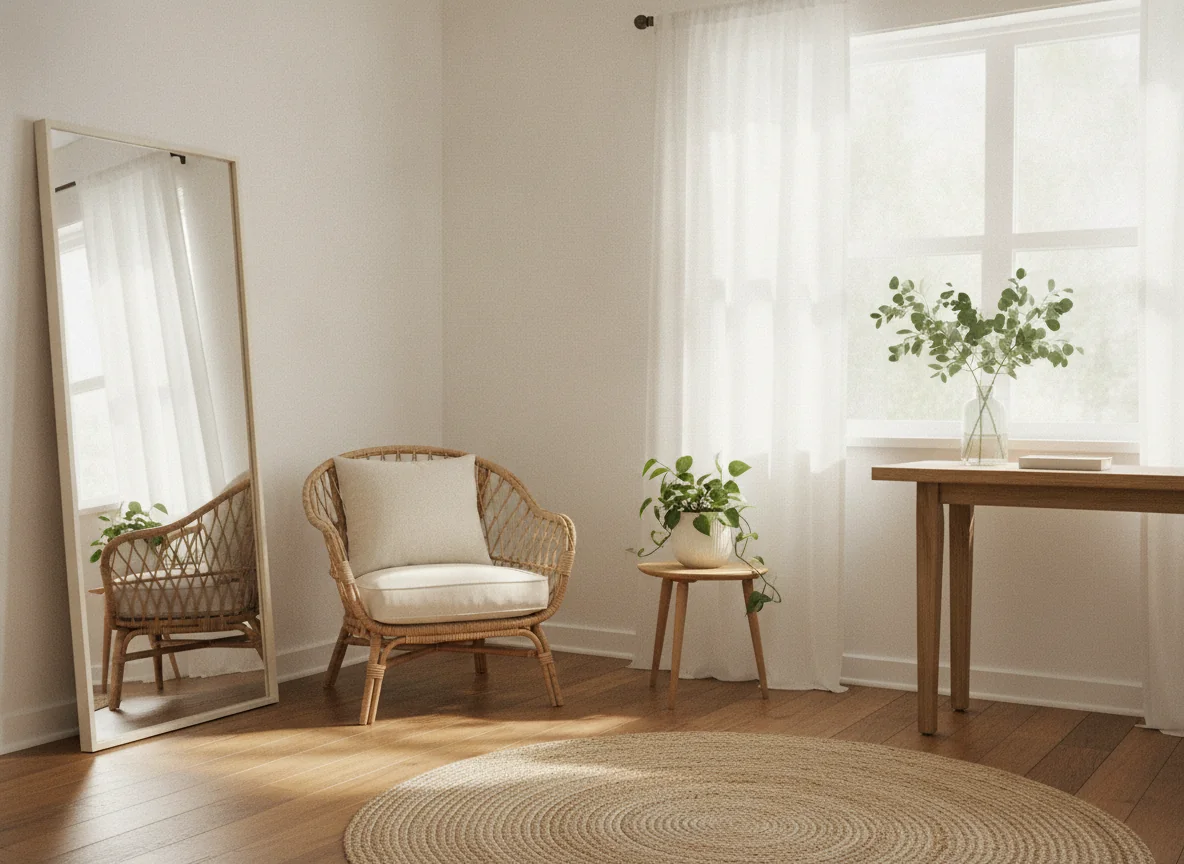
Previewing the whole-home refresh before you buy
The most expensive mistake in a whole-home summer refresh is not buying the wrong piece. It is buying a piece that works in one room and clashes with the adjacent room’s palette. AI previewing solves this at the whole-home level.
- Photograph each room — living room, bedroom, dining room — from the doorway in good midday light.
- Describe the swap per room — “Living room: cream linen sofa cover, pale blue pillows, jute rug, sheer curtains.” “Bedroom: white linen duvet cover, sage and cream pillows.”
- Generate each preview — the AI produces photoreal versions of your actual rooms with swaps applied.
- Evaluate the flow — open all previews side by side. Do the palettes flow naturally? Does the living room’s pale blue shift comfortably into the bedroom’s sage?
- Iterate — adjust one room at a time until the whole-home palette feels cohesive.
| Room | Summer swap | Bridge element |
|---|---|---|
| Living room | Cream + pale blue | Jute rug carries natural warmth |
| Bedroom | White + sage | Linen duvet repeats living room texture |
| Dining room | Cream + blush | Glass vase adds transparency |
| Kitchen | Cream + pale blue | Herb pot bridges to bedroom sage |
| Bathroom | White + sand | Towel color repeats sand from dining room |
For the broader AI room design workflow from photo to purchase, the home interior design ideas guide covers the full render-to-purchase pipeline — photographing a room, generating styled previews, and matching the rendered furniture to real products.
Frequently Asked Questions
How many rooms should I summer-refresh at once?
Three to four rooms produce a noticeable whole-home effect without overwhelming the budget. Prioritize living room, bedroom, kitchen, and entryway — the rooms you and your guests spend the most time in.
Can I reuse the same palette across all rooms?
Yes — and you should. Repeating one or two accent colors across rooms creates visual flow. Pale blue in the living room and bedroom, cream everywhere, rattan as the constant texture. Rooms feel connected without being uniform.
What is the one room people forget to summer-refresh?
The entryway. A rattan tray, a glass vase with greenery, and a light cotton runner cost under $100 and change the entire first impression of the home.
How do I store winter decor during summer?
Clean everything before storing. Use breathable cotton garment bags or bins (not plastic, which traps moisture). Add cedar blocks or lavender sachets. Store wool rugs rolled rather than folded to prevent permanent creases.
Is AI previewing worth it for cheap swaps like pillow covers?
Yes, because pillow colors shift under different room light. A pale blue that looks perfect in a store’s lighting can read as gray in north-facing light or aqua in south-facing light. An AI preview shows the color against your actual walls in your actual light — a combination impossible to judge from a website photo.
How do I transition back in fall?
Reverse the order: wool rug first, then velvet pillows, then the heavier curtains. Store summer textiles in whatever containers held the winter pieces. The annual rotation becomes a twice-yearly two-hour ritual.
What summer decor mistakes should I avoid?
Three: buying too many accent colors (limit to two per room), buying themed objects (they date faster than material-based decor), and buying before previewing (a whole-home AI preview costs nothing and eliminates adjacency problems between rooms).
See your summer decor ideas on your actual rooms
Summer home decor is the single highest-return seasonal project most homes can undertake. The changes are reversible, the costs are modest per room, and the result — cream linen, pale blue accents, rattan and cotton textures — is a house that feels intentionally seasonal rather than themed. The one variable that used to trip people up was the preview: not knowing whether the pale blue pillows would work with the room’s wall color or whether the linen duvet would clash with the existing palette.
That variable is now eliminable. Snap a photo of each room, describe the swap you are considering, and see the result on your actual room in under a minute — before you spend a cent on pieces you may end up returning.
RoomGenius is available on the App Store and Google Play. Upload photos of each room, describe the summer swaps you are considering, and generate photoreal previews in seconds. See your summer decor ideas on your actual rooms — one room at a time, or the whole house at once.