Virtual Staging for Real Estate Sells Homes Faster
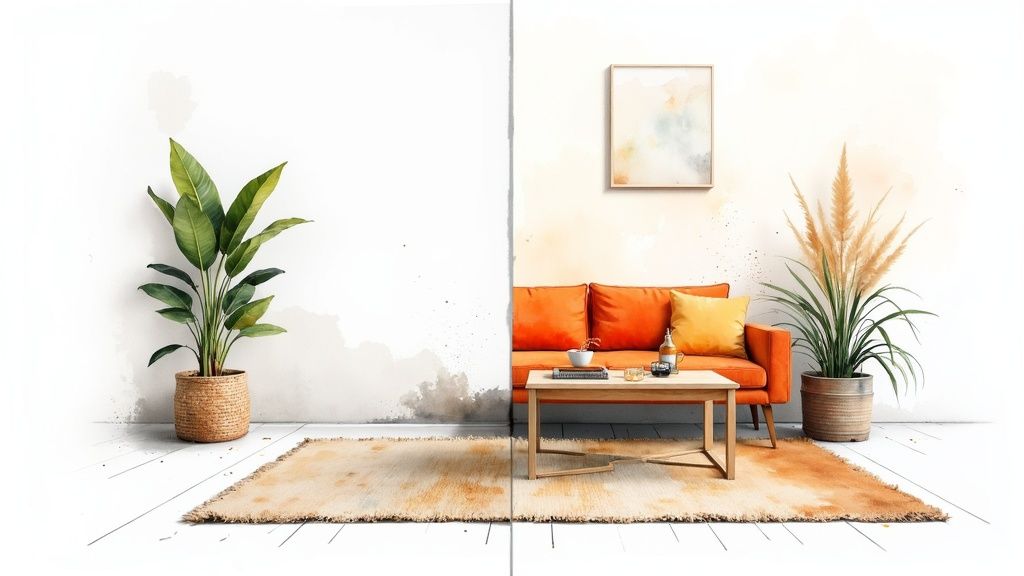
Trying to sell a home with empty rooms is like trying to sell a story with blank pages. It just doesn’t work for most people. Virtual staging for real estate is the solution—it’s the craft of digitally furnishing photos of vacant properties to turn them from empty shells into warm, inviting homes. Think of it as a crucial marketing tool that helps buyers bridge the “imagination gap.”
What Is Virtual Staging in Real Estate
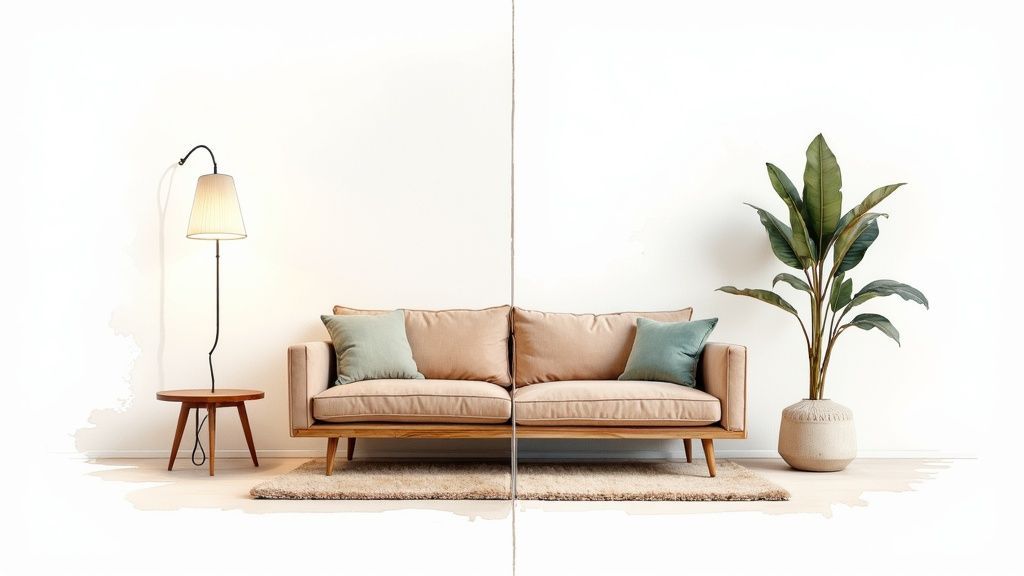
Simply put, virtual staging acts as a digital interior designer for your property listings. Forget the hassle of renting and moving heavy furniture. Instead, specialized software adds photorealistic furniture, art, and accessories directly into the photos of an empty room. The entire point is to forge an emotional connection the moment a potential buyer sees the listing online, helping them truly picture their life in that space.
This technique tackles one of the biggest hurdles in real estate marketing head-on. The truth is, most buyers find it incredibly difficult to see the potential in a vacant property. They can’t accurately gauge the size of a room, figure out where their own furniture would go, or feel any sense of “home” from four blank walls.
The Power of Visualization
Virtual staging fixes this problem by showing, not just telling. It demonstrates a room’s purpose and scale in a way that’s instantly understandable and visually appealing. That empty spare room that could be anything? You can now present it as a beautifully staged home office that feels both functional and inspiring.
It’s no surprise this approach is catching on. Its adoption has climbed dramatically, with more than half of U.S. real estate professionals now using virtual staging. That’s a huge shift from just a few years ago. You can dig into more real estate trends and statistics to see just how much the industry is evolving.
At its core, virtual staging is about selling a lifestyle, not just a property. It transforms a cold, empty space into a narrative of what life could be like within those walls, making a home far more desirable.
How It Works
The magic happens through a combination of sophisticated photo editing and, more and more, artificial intelligence. To really get a feel for the “virtual” part, it helps to understand what AI-generated content is and how it’s changing the game. In a nutshell, a designer or an AI platform inserts digital objects into a real photograph, paying close attention to critical details like:
- Lighting and Shadows: Making sure every piece of virtual furniture casts a realistic shadow that aligns with the room’s natural light.
- Scale and Perspective: Placing objects so they fit the room’s proportions perfectly, without looking stretched or out of place.
- Style and Aesthetics: Choosing furniture and decor that complement the home’s architecture and appeal to the ideal buyer.
How Does Virtual Staging Actually Work?
So, how do you go from an empty room to a beautifully furnished photo without ever moving a single piece of furniture? It all starts with one thing: a great photograph of the vacant space. This picture becomes the blank canvas for the entire digital makeover.
From there, technology and artistry take over. Whether it’s a skilled human designer or a sophisticated AI, the first step is to “read” the room. The software analyzes the photo to understand its dimensions, where the light is coming from, and the overall architectural feel. This groundwork is absolutely essential to make sure the final result looks like it truly belongs in the space.
The Traditional Designer-Led Method
Think of this as the artisanal approach to virtual staging. A real person, a talented 3D artist, steps in to act as a digital interior designer. They dive into huge catalogs of digital furniture and decor, hand-picking every single item to complement the home’s style and attract the right kind of buyer.
This is where true expertise shines. The artist meticulously places each piece of virtual furniture into the photo, carefully considering all the details:
- Scale & Perspective: Is that virtual sofa the right size for the living room? Does the angle look correct?
- Lighting & Shadows: They manually paint in shadows and highlights so the digital furniture looks like it’s really sitting in the room, affected by the light coming through the windows.
- Textures & Materials: They ensure a leather chair has the right sheen and a wooden table reflects light realistically.
This hands-on process gives you incredible control and often leads to stunningly realistic images. But, as you might guess, this level of detail takes time and skill, which usually means a higher cost and a longer wait.
The AI-Powered Revolution
Lately, Artificial Intelligence has completely changed the game. AI-driven platforms, like RoomGenius, have automated much of the heavy lifting. Instead of relying solely on a human designer, powerful algorithms do the work. You upload your photo, select a design style like “Modern Farmhouse” or “Scandinavian,” and the AI gets to work.
It intelligently analyzes the room’s layout and populates it with furniture that fits the chosen aesthetic, handling all the tricky perspective and lighting adjustments automatically.
The biggest win with AI is the incredible speed. What used to take a designer days can now be done in a matter of minutes. An agent can get a property listed with gorgeous photos almost immediately.
While you might trade a bit of the bespoke control of a human designer, the sheer efficiency, affordability, and ever-improving quality of AI have made virtual staging for real estate a go-to tool for agents who need to move fast in a competitive market.
Virtual Staging vs Traditional Staging
When you’re getting a property ready for the market, one of the biggest calls you have to make is how to stage it. Do you go the traditional route or embrace a digital approach? The fundamental difference is simple: traditional staging means physically moving rented furniture into a home, while virtual staging digitally places stylish decor into photos of empty rooms.
That one difference creates a ripple effect across your entire budget, timeline, and marketing flexibility.
Traditional staging is a serious logistical undertaking. You’re coordinating movers, renting furniture for weeks or even months, and hiring a designer to pull it all together. The bill for this can climb fast, often landing somewhere between $2,000 to over $10,000 depending on the size of the house and how long you need the furniture. It’s a significant investment.
On the other hand, virtual staging offers a much leaner, more agile alternative. There are no moving trucks, no heavy lifting, and definitely no monthly rental fees. You’re just paying a small fee for each photograph you want staged. This makes it a smart and accessible strategy for any listing, not just the luxury properties.
Comparing Key Factors Head-On
The practical differences really crystallize when you put them side-by-side. While nothing beats having physical furniture in a room for in-person tours, virtual staging often comes out ahead in nearly every other part of the marketing process—from the initial cost to how quickly you can get your listing live.
Let’s break down how the two methods stack up.
Virtual Staging vs Traditional Staging: A Detailed Comparison
This table breaks down the key differences between virtual and physical staging across several critical factors for real estate professionals and sellers.
| Factor | Virtual Staging | Traditional Staging |
|---|---|---|
| Cost | Typically $30-$150 per photo; a tiny fraction of the physical cost. | $2,000 - $10,000+ for the entire project. |
| Speed | Images are usually ready in 24-48 hours, letting you list in a flash. | The whole process can take 1-3 weeks to coordinate and install. |
| Flexibility | Instantly swap styles (e.g., from modern to coastal) to appeal to different buyers. | The style is locked in once the furniture is delivered. Making changes is a nightmare. |
| Logistics | A simple process: just upload photos to a staging platform. | Involves juggling movers, stagers, and rental companies. It’s a project. |
As you can see, the advantages in cost, speed, and agility lean heavily in favor of a digital approach.
Maximizing Your Staging Strategy
So, what’s the right call for your property? This simple visual helps break down when to use a human designer versus an AI-powered platform for your virtual staging needs.
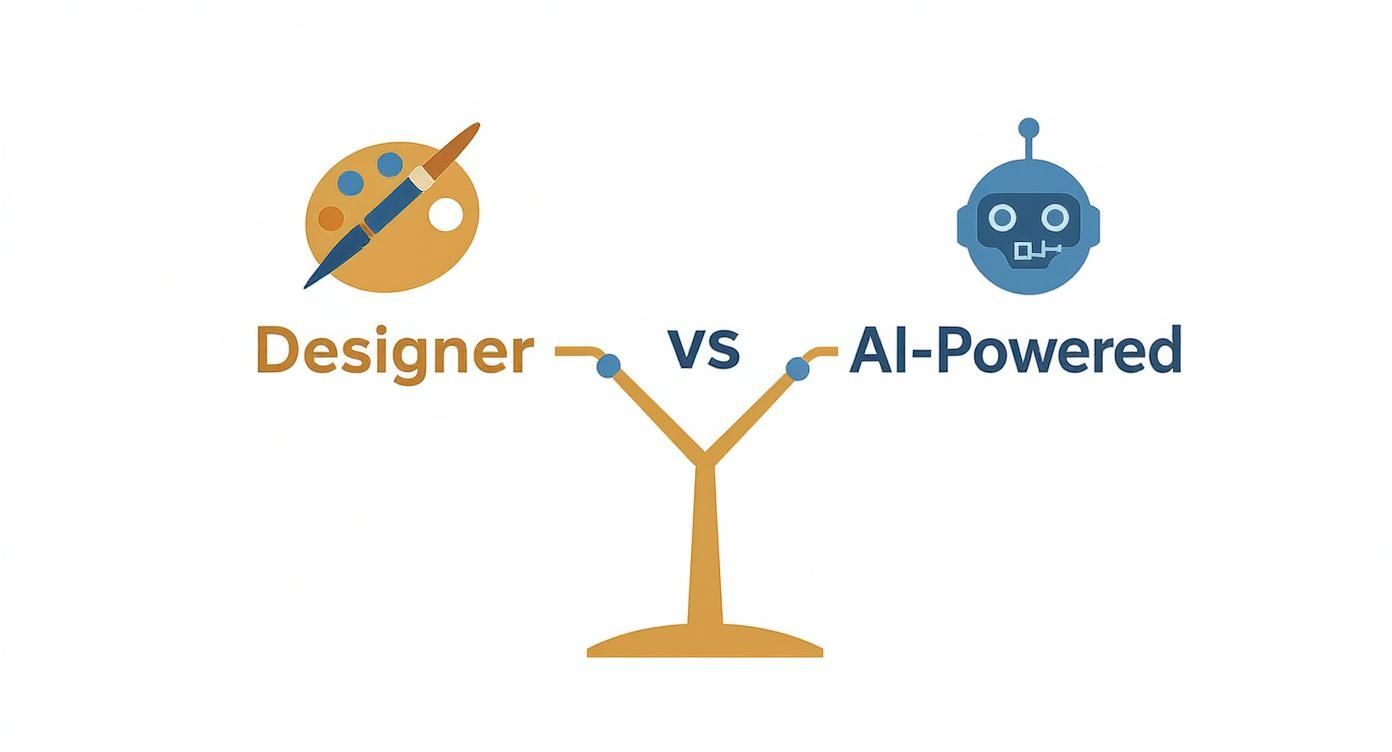
The takeaway? AI is your best bet for speed and efficiency, while a human designer gives you that extra layer of custom creative control.
Of course, no matter which path you choose, a solid foundation in the essential home staging tips for sellers is always a good idea to make sure the property itself is prepped and ready. The main challenge with virtual staging is bridging the gap between the beautiful online photos and the empty rooms buyers see in person.
The solution is simple but effective: have high-quality prints of the virtually staged photos on display during showings. These act as a powerful visual aid, helping buyers connect the digital vision with the physical space and see the home’s true potential.
Boosting Your Sale Price with Virtual Staging
While virtual staging is a fantastic marketing tool, its real worth is proven when the deal is done. This isn’t just another line item on your marketing budget; it’s a strategic move designed to directly bump up a property’s final sale price. Beautifully presented homes simply attract higher offers by creating a sense of premium value that buyers are willing to pay for.
An empty room forces a buyer to use their imagination, and that can lead them to imagine a lower price. But a well-staged room tells a story of value and lifestyle. This emotional connection often sparks more competitive bidding, pushing the final offer well above what you initially asked for.
Calculating the Impressive Return
The return on investment (ROI) from virtual staging is easily one of the best in real estate marketing. Think about a typical scenario: staging five key photos for a listing might run you somewhere between $150 to $250. If that small investment helps the home sell for just 1-2% more, the financial gain is huge.
On a $400,000 property, a simple 2% increase in the sale price puts an extra $8,000 in the seller’s pocket. Suddenly, that initial staging cost looks less like an expense and more like a serious profit-maker.
When buyers can clearly picture their life in a home, their perspective shifts. It stops being a structure and starts feeling like their home. That emotional bond is what drives them to submit a higher, more confident offer.
The Data Behind the Dollars
This isn’t just a hunch—the numbers consistently back it up. Listings that use virtual staging for real estate don’t just get more views; they attract better offers. Industry reports have shown that virtually staged homes can sell for up to 5% to 20% more than comparable empty homes.
The ROI can be absolutely staggering, often landing somewhere between 500% to 3,600%. That’s a powerful testament to its ability to maximize profit. You can see more numbers in this in-depth analysis of real estate statistics.
Of course, none of this works without a great photo to begin with. The quality of your initial photography is the foundation for everything. For a closer look, check out our guide on essential real estate photography tips to make sure your images are ready for their digital makeover.
By pairing excellent photography with compelling staging, you create a listing that justifies a premium price tag in the minds of motivated buyers. It’s one of the most effective profit-boosting moves any seller or agent can make today.
How Virtual Staging Sells Properties Faster

In real estate, time is quite literally money. Every day a property sits on the market, it costs the seller. Virtual staging for real estate tackles this head-on, collapsing the sales cycle and moving a property from “listed” to “sold” in a fraction of the time.
It all starts the moment a potential buyer starts scrolling through listings online. An empty room is a blank slate, but it’s also a question mark that most buyers can’t be bothered to answer. A beautifully staged room, on the other hand, is an invitation. This immediate visual appeal forges an emotional connection that stops a buyer mid-scroll, urging them to click and see more.
That initial hook is everything. It drives the kind of online engagement that signals real interest: more clicks, longer time spent on the listing, and more “saves” or “favorites.” You’re watching the digital footprint of a buyer who is already imagining their life in that home.
Attracting More Qualified Buyers
By presenting a move-in-ready vision of the home, virtual staging acts as a powerful filter. It tends to attract more serious buyers who are ready to make a decision, not just casual browsers. When someone can already see a functional, stylish layout, they don’t have to guess at the home’s potential.
This means that when they do show up for an in-person tour, they arrive with a positive frame of mind. The result? Far more productive showings and, ultimately, faster and more confident offers.
A staged photo helps a buyer move past the “what if” and get straight to “what could be.” It’s not just about showing a space; it’s about selling a finished, desirable lifestyle from the very first glance.
The numbers back this up. Study after study confirms that virtually staged homes sell significantly faster than their empty counterparts. In fact, a notable 30% of sellers’ agents reported that properties spent less time on the market when virtual staging was part of the marketing plan.
The Speed Advantage in Action
Picture two identical listings for a moment. One features photos of vacant, echoey rooms. The other uses virtual staging to show off a cozy living room, a perfectly arranged home office, and an inviting primary bedroom. Which one do you think gets the calls?
The staged listing will almost always generate more inquiries and schedule more tours, leading directly to a quicker sale. To see just how dramatic this difference can be, check out these powerful home staging before and after transformations. In today’s market, that speed is a serious competitive advantage.
Putting Virtual Staging into Practice
So, how do you actually get started? Moving from the idea of virtual staging to using it as a powerful marketing tool involves a few straightforward steps.
Everything starts with the right photos. Long before you even think about software or furniture styles, you need clean, high-resolution images of the empty property. These pictures are the foundation, the canvas for your work. The better the initial photos, the more realistic and convincing your final staged images will be.
Once you’ve got great photos, it’s time to think about the design. This is where strategy comes in. You’re not just decorating a room; you’re crafting a narrative for your target buyer. The style you choose should feel right for the home’s architecture and speak directly to the lifestyle of the people you want to attract. A cozy modern farmhouse look might be perfect for a home in the suburbs, whereas a sleek, minimalist vibe is often a better fit for a downtown condo.
Choosing Your Staging Style and Tools
The goal is to show the property’s potential in a way that feels both inspiring and completely achievable for a potential buyer. You’re helping them see themselves living there.
The good news is that the right tools make this process much easier. If you’re an agent who needs to move quickly, a modern virtual home staging app can be a game-changer, giving you a library of styles to experiment with. You can generate multiple looks in minutes and tailor them for different ads or social media posts.
As you select a style, keep these three things in mind:
- Architectural Harmony: Make sure the furniture complements the home’s permanent features. A mid-century modern sofa might look out of place in a Victorian home with ornate fireplaces.
- Target Audience: Think about who is most likely to buy the property. What styles do they gravitate toward? Your design choices should reflect their tastes and aspirations.
- Color Palette: Stick with a mostly neutral palette for the big items like sofas and beds. This appeals to the largest group of people. You can always bring in personality and color with smaller accessories like pillows, art, and rugs.
Ethical Practices and Maximum Impact
Now for what might be the single most important rule of virtual staging: be transparent. Your relationship with potential buyers is built on trust, and honesty is non-negotiable.
Always, always disclose that the photos have been virtually staged. A simple watermark on the image that says “Virtually Staged” or a clear note in the property description is all it takes. Most MLS platforms require this, and it sets the right expectations from the start.
Once your stunning images are ready, don’t hold back. Use them everywhere. Make them the lead photos on the MLS, your website, Zillow, and all your social media channels. You want to grab a buyer’s attention the moment they start their search.
Answering Your Top Questions About Virtual Staging
If you’re new to virtual staging, you probably have a few questions. That’s a good thing. Getting straight answers is the best way to understand how to use this tool to its full potential and feel confident doing it.
Let’s tackle some of the most common questions agents and sellers ask.
Is Virtual Staging Legal and Ethical?
The short answer is yes, virtual staging is completely legal and has become a standard practice in real estate. But there’s one golden rule: full disclosure.
To keep everything ethical and transparent, you just need to label your images. Most MLS systems require you to mark any digitally enhanced photos as “virtually staged” or something similar. This lets buyers know they’re looking at a vision of the home’s potential.
Where could you run into trouble? The line is crossed when you digitally alter the home’s permanent fixtures without saying so—like swapping out carpet for hardwood floors or removing a support column. The goal is always to help buyers imagine what’s possible, not to misrepresent the property’s actual condition.
How Much Does Virtual Staging Actually Cost?
This is where virtual staging really shines, especially when you compare it to the price tag of physical staging.
Traditional, designer-led virtual staging services typically run anywhere from $40 to $200 per photo. The cost depends on the complexity of the room and the designer’s expertise.
However, the newer AI-powered platforms are making it even more accessible. With these tools, you’re often looking at a cost between $15 and $30 per photo. This price point makes virtual staging a smart marketing move for any listing, not just the luxury properties.
The real win isn’t just the lower price tag; it’s the incredible return on investment. A small spend on staging can help a property sell faster and for a better price, paying for itself several times over.
Can I Virtually Stage a Home That’s Already Furnished?
Absolutely! This is a fantastic solution for occupied homes, and it’s often called virtual decluttering or item removal.
Designers or AI software can digitally remove existing furniture, clutter, or even dated decor from your photos. Think of it as hitting the “reset” button on a room.
Once the space is virtually emptied, you can add new, stylish furniture and decor that appeals to a wider range of buyers. It’s perfect for sellers who need to live in their home while it’s on the market, as it lets you show a clean, inviting, and impersonal space without having to move a single piece of real furniture.
Ready to turn your empty or cluttered listings into beautifully furnished homes that buyers can’t wait to see? With a platform like RoomGenius, you can use AI to create professionally staged photos in just a few minutes. Explore different design styles, unlock your property’s true potential, and give buyers a vision they can truly connect with. Start your virtual staging project today!