Sustainable Interior Design: A Practical Guide for Real Budgets
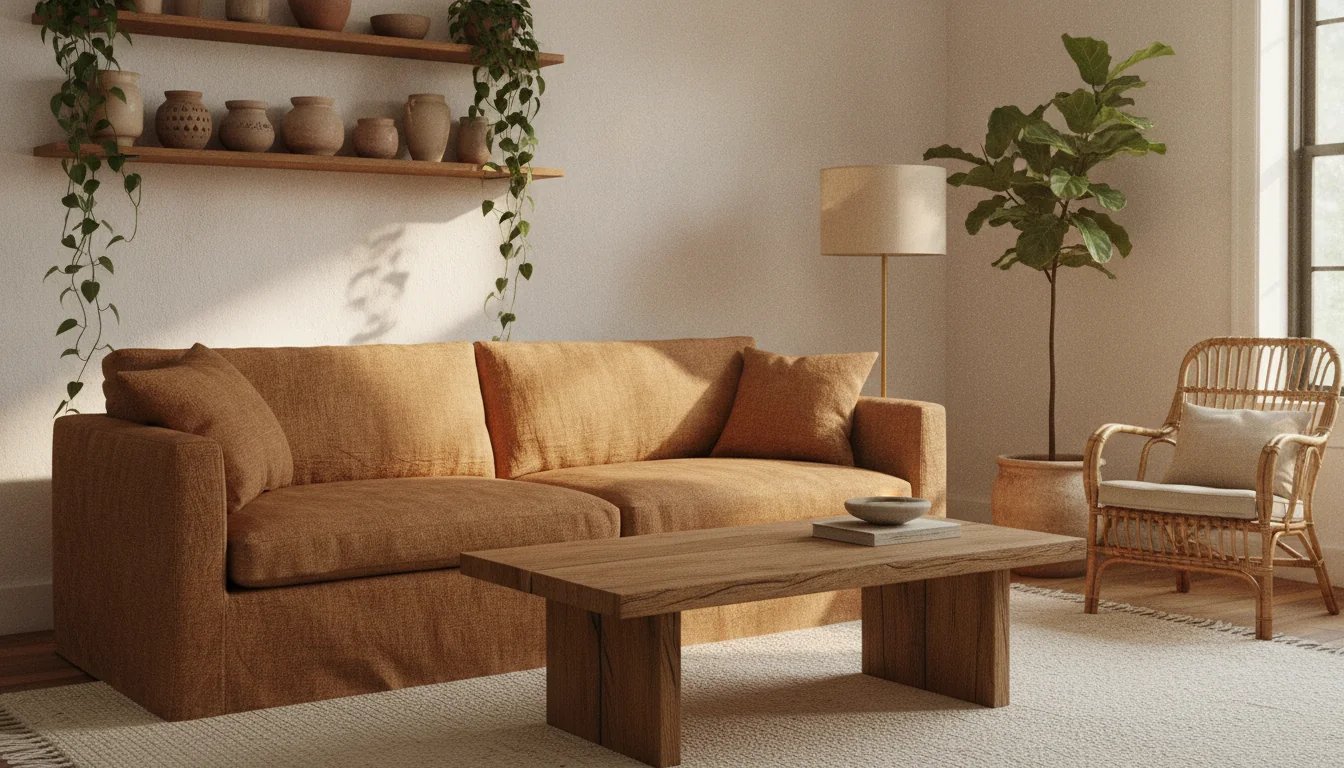
The most sustainable design decision you can make is not buying something. The second most sustainable is buying something built to last, once, and keeping it for decades. The third is buying something used and giving it another life. The last — and least impactful — is buying something new, even if it’s made from recycled materials and shipped in compostable packaging. Sustainable interior design is not a shopping category. It’s a decision-making hierarchy that starts with the question “do I actually need this?” and works down from there.
This is uncomfortable for an industry that makes money selling you things. The furniture industry, the home-decor media machine, and the influencer economy all reward the same behavior: buy more, buy often, and buy new. Sustainable design pushes in the opposite direction — buy less, buy well, and buy used when you do buy. The financial irony is that the hierarchy makes you richer too. Reusing, repairing, and buying once cost less over a decade than filling a room with cheaper, trend-driven pieces that need replacing every three years.
This guide covers what sustainable design actually means beyond the labels, the reuse-repair-buy hierarchy that governs every decision, why buying once is the most financially and environmentally sound approach, the materials and finishes with genuinely lower impact, how to style secondhand and vintage finds into a cohesive room, the sustainable choices renters can make without asking permission, and how to preview every decision before you commit money — which is the most sustainable design habit of all.
What is sustainable interior design? Sustainable interior design is the practice of furnishing and decorating a home using the minimum of new resources necessary to achieve a functional, comfortable, and aesthetically pleasing interior. It operates on a priority hierarchy: reuse what you have, repair what’s broken, buy secondhand, and only as a last resort buy new — and when you do buy new, choose pieces built to last decades rather than years. Sustainable design is not a distinct visual style (it can look like any style) but a material and behavioral discipline. It distinguishes itself from greenwashing by focusing on reduction — fewer purchases, fewer materials, fewer emissions — rather than on substituting one product for another labeled “eco-friendly.”
What sustainable design actually means (beyond labels)
The word “sustainable” on a product label tells you almost nothing useful. A sofa labeled “sustainable” because its upholstery is made from recycled bottles may have a frame that will fail in four years, a foam core that will degrade in six, and a shipping footprint that traveled eight thousand miles from factory to warehouse to your door. The recycled bottles are a fraction of the product’s total environmental impact, and they’re the fraction the brand chose to highlight. The frame, the foam, the shipping, the packaging, and the eventual disposal are all invisible on the label.
The real measure of sustainability in a furniture purchase is its expected lifespan divided by its total environmental cost. A sofa that lasts twenty years with one reupholstery is more sustainable than a sofa labeled “eco-friendly” that lasts five years and goes to landfill. A dining table built from locally sourced, certified hardwood that serves three generations of family dinners is more sustainable than a table made from reclaimed wood that was shipped from a different continent and will be discarded in a decade. The label is the least reliable signal; the construction quality, material durability, and repairability are the meaningful ones.
Three questions cut through the greenwashing every time:
How long will this piece last? The answer is in the construction, not the marketing. Kiln-dried hardwood frames, eight-way hand-tied springs, dovetail joinery in drawers, and high-quality finishes all predict longevity. A piece designed for a twenty-year lifespan is inherently more sustainable than one designed for a five-year lifespan, regardless of any label.
Can this piece be repaired? A sofa whose cushions are stapled to the frame cannot be reupholstered. A table whose legs are glued into the apron cannot be disassembled and refinished. A chair with molded plastic joints cannot be unbroken when it cracks. The pieces that can be repaired — unbolted, re-finished, re-stuffed, re-covered — are the ones that avoid landfill.
What happens when this piece is done? Furniture that is solid wood, natural fiber, and metal can be recycled, composted, or burned for energy at end of life. Furniture made from particleboard, MDF, mixed polymers, and bonded foams cannot. The end-of-life path is built into the material choice at the beginning.
The same framework applies to finishes, paint, textiles, and decor. A low-VOC paint is better than a standard paint, but the most sustainable paint choice is not painting at all. A rug made from organic wool is better than a synthetic rug, but the most sustainable rug choice is the one you already own. The hierarchy is always the same: reduce first, then choose better.
For a broader overview of how design styles affect material choices, the different types of home interior design styles guide covers the full spectrum — and the observation that the most sustainable styles (minimalist, Scandinavian, Japanese) are also the ones that naturally buy fewer things.
The hierarchy: reuse, repair, then buy
The practical application of sustainable design is a three-step decision tree that applies to every purchase, every room, and every project. It’s not a philosophy; it’s a workflow.
Step one: reuse what you have. Before you buy anything, assess what you already own. The tired armchair in the corner may need only a new cushion cover and a different position in the room. The side table that doesn’t fit the living room may work beautifully in the bedroom. The lamp with the wrong shade may need only a new shade. Most people who decide to redecorate own more furniture than they think they do, and the most sustainable piece is the one already in the house.
The practical exercise: take a photo of every room in your home. Before you add anything, ask what you can move. A dresser from the bedroom moved to the living room as a media console is a purchase avoided. A dining chair moved to the desk as an office chair is a purchase avoided. A bookshelf moved from the home office to the hallway as a landing strip is a purchase avoided. The RoomGenius AI interior design sketch workflow is specifically designed for this — you can move furniture virtually before moving it physically, testing whether the relocated piece works in its new spot.
Step two: repair what’s broken. The next check is whether the piece you want to replace is actually broken beyond repair. A wobbly chair leg can be tightened, reglued, or reinforced. A scratched tabletop can be sanded and refinished. A faded sofa can be reupholstered or slipcovered for a fraction of the cost of a new one. The repair industry is smaller than it should be, but it exists — furniture restorers, upholsterers, finishers, and welders all do work that is cheaper than replacement and extends the life of a piece by decades.
The math is different for different categories. Sofas are worth reupholstering if the frame is sound and the style is one you still love — the cost is roughly 60 to 80 percent of a new equivalent sofa. Dining tables are almost always worth refinishing, since the structure is simple and the finish is the only part that degrades. Mattresses and upholstered headboards are rarely worth repairing, since the foam and padding degrade with use. The DIY interior decorating projects guide covers the specific repair and refresh techniques that are most accessible to a weekend DIYer — painting, staining, re-covering, and hardware swaps.
Step three: buy secondhand. If you cannot reuse what you have and cannot repair what’s broken, the next step is to buy used. The secondhand furniture market is larger, better organized, and more accessible than it has ever been. Facebook Marketplace, Craigslist, eBay, Chairish, Kaiyo, and Apartment Therapy’s Re-Nest are all active channels. Estate sales, thrift stores, and consignment shops offer physical browsing. The volume of quality furniture available secondhand is staggering — the United States alone sends over twelve million tons of furniture to landfill each year, and a significant fraction of it is structurally sound, well-made furniture that someone simply didn’t want anymore.
The practical rule: if you’re buying new, you should be able to articulate why secondhand didn’t work for this specific piece. Was the right size unavailable? Was the specific style impossible to find used? Was the timeline too tight for a secondhand search? The answers are sometimes valid, but asking the question changes the default behavior from “buy new first” to “buy used first.”
Buying once: how previewing reduces waste
The most financially practical and environmentally sound furniture purchase is the one you make once and keep for decades. The buy-once approach is not about buying the most expensive version of something; it’s about buying the version that will still be functional and attractive in fifteen years, which is a different decision entirely.
The buy-once test has three criteria:
Timelessness over trend. A sofa in a neutral tone with a classic silhouette will still look good in ten years. A sofa in this year’s trending color with a dramatic silhouette will look dated in four. The same applies to case goods, lighting, rugs, and decor. The sustainable choice is not the boring choice — it’s the choice that doesn’t need to be replaced when the trend cycle turns. The mid-century modern pieces that are still in production today are the same pieces that were designed in the 1950s, and they’re still in production because they were designed to outlast the trend cycle.
Quality over quantity. A single well-made dining table that seats eight and is built from solid oak with mortise-and-tenon joinery costs more than a flat-pack table that seats six and is built from particleboard with cam-lock fasteners. Over ten years, the solid oak table costs less per year of use, and at year ten it’s still functional and attractive while the flat-pack table is wobbly, delaminating, and bound for the curb. The higher upfront cost is the sustainable choice because it avoids the purchase of a second table.
Scale accuracy. The most common reason furniture gets replaced before its time is that it doesn’t fit the room. A sofa bought too large for the living room gets replaced when the owner realizes it blocks the traffic flow. A dining table bought too small gets replaced when the family grows. A rug bought too small gets replaced when the owner learns the “front legs on the rug” rule. These are scale errors, not style errors, and they’re preventable with a preview. The how to find your home decor style guide covers the style-discovery process; the scale-discovery process is simpler — measure the room, measure the furniture, and preview the fit before buying.
| Purchase | Common mistake | Buy-once alternative | Lifespan difference |
|---|---|---|---|
| Sofa | Trending color, low-cost frame | Neutral tone, hardwood frame, performance fabric | 5 years vs 20+ years |
| Dining table | Flat-pack, too-small for room | Solid wood, properly sized, bench-made | 5 years vs 30+ years |
| Area rug | Too-small, synthetic fiber | Properly sized, wool or natural fiber | 3 years vs 15+ years |
| Coffee table | Particleboard, painted finish | Solid wood, natural finish, repairable | 3 years vs 20+ years |
| Lighting | Trend-driven shape, non-replaceable bulb | Classic silhouette, standard bulb socket, repairable | 4 years vs 20+ years |
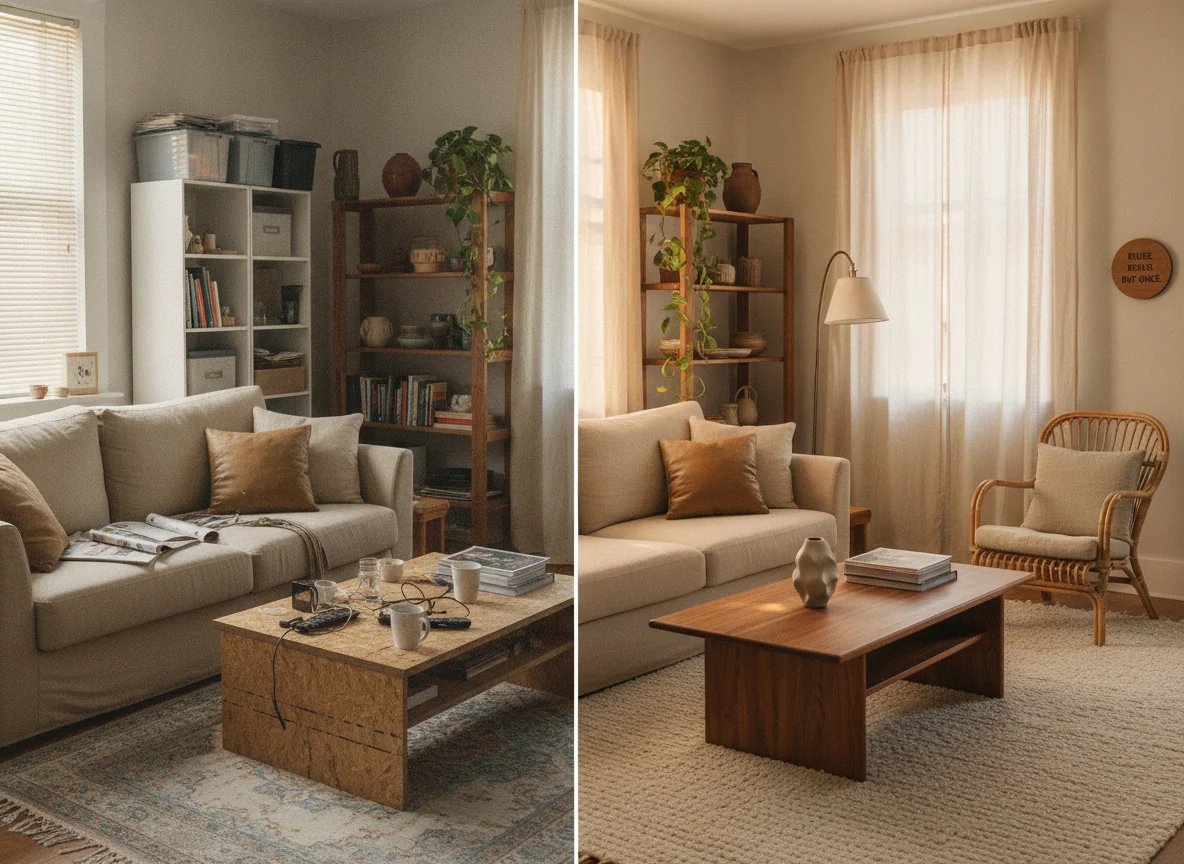
AI previewing is the tool that makes buy-once possible. The reason most people settle for a sofa that’s “close enough” is that they’re buying from a showroom floor and estimating the fit in their living room from memory. The reason most people buy a rug that’s too small is that they’re guessing the size against a floor plan they haven’t measured. AI room design tools solve both problems by showing the furniture in the actual room at actual scale before the purchase is made. The preview kills the wrong size, the wrong color, the wrong proportion before it becomes a purchase — and a wrong purchase avoided is the most sustainable action in the hierarchy.
The ai interior design app guide covers the practical workflow: upload a photo of your room, select the furniture piece you’re considering, and the AI renders it at scale in your actual space. The difference between a sofa that looks right in a showroom and a sofa that looks right in your living room is the difference between a purchase you keep and a purchase you replace.
Materials and finishes with lower impact
When you do buy new, the material and finish choices determine the piece’s environmental footprint more than any other factor. The material hierarchy is straightforward: natural, renewable, local, and durable beats synthetic, non-renewable, imported, and fragile every time.
Wood. Solid wood is the most sustainable furniture material available, provided it comes from responsibly managed forests. The certification to look for is FSC (Forest Stewardship Council), which verifies that the wood was harvested in a way that maintains biodiversity, productivity, and ecological processes. The most sustainable wood choices are also the most durable: white oak, black walnut, cherry, maple, and ash all have the density and stability to last generations. Teak and ipe are excellent for outdoor use but are often harvested unsustainably — look for FSC certification specifically for tropical hardwoods. Avoid particleboard, MDF, and plywood with urea-formaldehyde adhesives, which off-gas VOCs and cannot be recycled at end of life.
Natural fibers. Wool, cotton, linen, jute, sisal, and hemp are all renewable, biodegradable, and more durable than their synthetic counterparts. Wool rugs last 15 to 30 years with proper care; synthetic rugs last 3 to 5. Linen upholstery ages beautifully, getting softer and more lustrous with use. The natural-fiber trade-off is usually cost — wool costs roughly twice as much as polypropylene per square foot — but the lifespan ratio is four to six times longer, making the natural fiber cheaper per year of use.
Low-impact finishes. The finish on a piece of furniture determines whether it can be repaired and refinished later. Hard wax oils (Osmo, Rubio Monocoat, and similar) penetrate the wood and cure to a durable, repairable surface that doesn’t peel or chip. They contain fewer VOCs than polyurethane and can be spot-repaired without sanding the entire surface. Natural oil finishes (tung oil, linseed oil, Danish oil) are the most sustainable option and the most work to maintain — they require periodic reapplication but create no waste at end of life. Avoid lacquers and conversion varnishes that contain high levels of VOCs and create a non-repairable surface.
Metal. Steel, aluminum, and wrought iron are all highly recyclable and infinitely recyclable without quality loss. The most sustainable metal furniture is the piece made from recycled content with a powder-coated finish (no VOCs, durable, repairable). Wrought iron and cast aluminum are the most durable options for outdoor furniture — they last decades and can be repainted indefinitely.
Upholstery fill. The fill material in cushions and mattresses is the most problematic component in furniture from a sustainability perspective. Polyurethane foam is petroleum-based, not recyclable, and degrades into dust over time. Natural latex, wool, and cotton batting are all renewable, biodegradable, and more durable. The trade-off is cost — a sofa with natural latex and wool fill costs roughly 30 percent more than one with polyurethane foam — but it lasts 15 to 20 years instead of 5 to 8, and at end of life it can be composted rather than landfilled.
| Material | Sustainability score | Lifespan | Repairability | End of life |
|---|---|---|---|---|
| FSC-certified solid hardwood | Excellent | 30+ years | High — can be sanded, refinished | Biodegradable, recyclable |
| Natural latex | Excellent | 15+ years | Moderate — can be cut and re-layered | Biodegradable |
| Wool | Excellent | 15–30 years | High — can be re-stuffed, re-woven | Biodegradable, compostable |
| Powder-coated steel/aluminum | Very good | 20+ years | High — can be welded, repainted | Infinitely recyclable |
| Plywood with FSC veneer | Good | 10–15 years | Low — sanding damages veneer | Partially recyclable |
| Polyurethane foam | Poor | 5–8 years | Low — degrades to dust | Landfill only |
| Particleboard / MDF | Poor | 3–8 years | Very low — cannot be repaired | Landfill only |
| PVC / vinyl | Poor | 3–5 years | Very low | Landfill only |
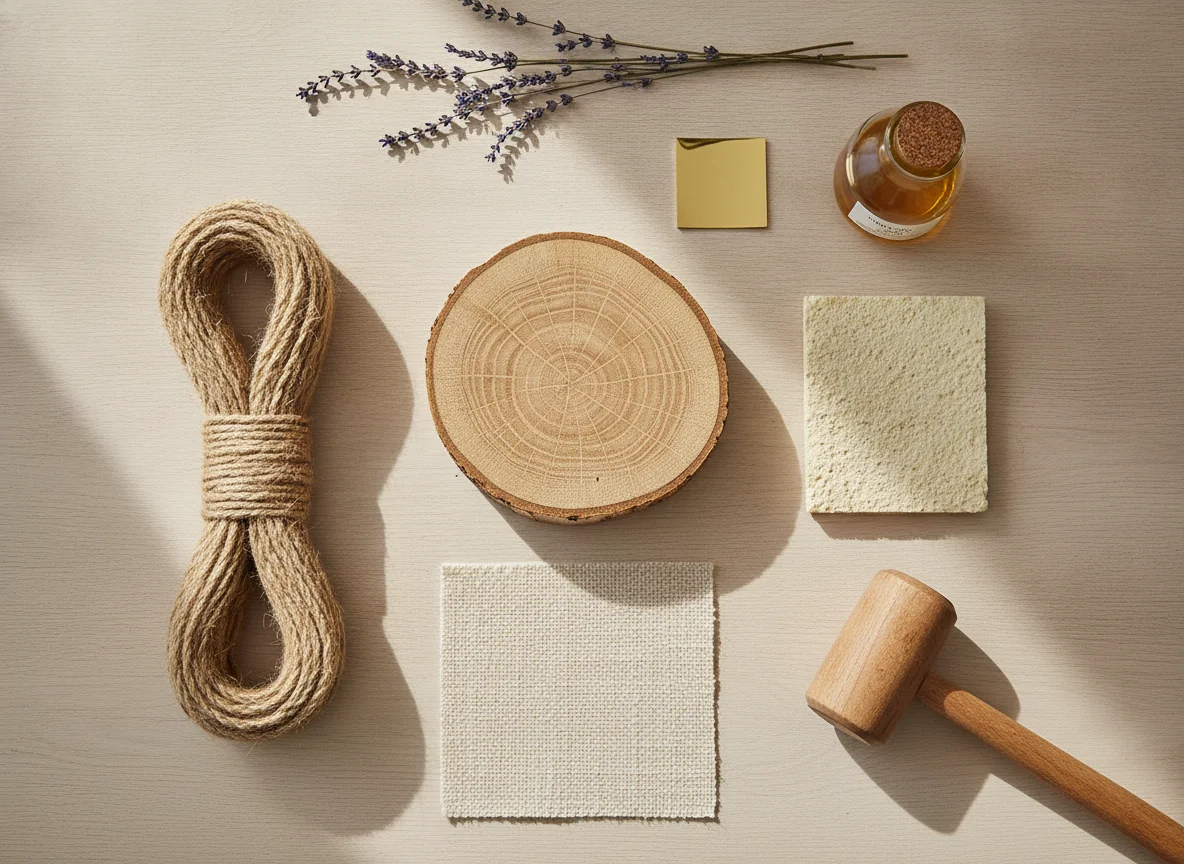
The modern minimalist home decor guide covers the aesthetic side of the same material philosophy — the minimalist approach naturally aligns with the buy-once, keep-forever material hierarchy because it doesn’t have room for furniture that needs replacing.
Secondhand and vintage, styled well
The most common objection to buying secondhand furniture is that it’s hard to make a cohesive room from a collection of found pieces. The fear is that the room will look like a thrift store rather than a designed space. The reality is that the best-designed interiors — the ones that feel layered, personal, and intentional — are almost always built from a mix of new and old, and the old pieces are the ones that give the room character.
The styling trick is to establish a unifying constraint. The constraint can be a material (all wood pieces in the same tone range), a color palette (all upholstery within a three-color family), a period (all mid-century, all industrial, all traditional), or a finish (all brass hardware, all black metal, all natural wood). The constraint provides the visual coherence; the secondhand pieces provide the variety and history. Without the constraint, the room reads as random. With it, the room reads as curated.
The practical workflow for a secondhand-first room:
Step one: pick the anchor piece. The largest piece of furniture in the room — the sofa, the dining table, the bed — is the hardest to find secondhand in the right size and condition. Start with this piece. If you find it used, the rest of the room can be sourced around it. If you buy it new, the constraint is that you commit to buying the secondary pieces used.
Step two: establish the constraint. Decide on the unifying element before you start shopping. The constraint can be as simple as “all wood legs in walnut” or “all upholstery in warm neutrals” or “no metal finishes except brass.” The constraint is what makes a room full of sourced pieces feel intentional.
Step three: layer the secondary pieces. Side tables, accent chairs, lamps, shelving, and decor are the easiest pieces to find secondhand, and they’re the pieces that give the room its personality. The anchor piece establishes the scale; the secondary pieces establish the character. A room with a new sofa and six secondhand pieces around it reads as a room that was designed, not a room that was assembled.
Step four: use the same finish. The most common visual disconnect in a secondhand-heavy room is mismatched wood tones. The fix is the same finish applied to multiple pieces. A walnut-stained side table, a walnut-framed mirror, and a walnut-legged accent chair create a visual thread that ties the room together even if the styles are different. The distressing furniture how-to guide covers the technique for making new pieces look like they belong with old ones — or for unifying mismatched finishes into a cohesive palette.
The secondhand approach also has a significant financial advantage. A fully furnished living room with a new sofa, a new coffee table, new side tables, new lighting, and new decor will cost between $4,000 and $8,000 at mid-range retail. The same room furnished with a new sofa (the anchor, bought new) and secondhand everything else will cost between $1,500 and $3,000, and the room will look more interesting, more personal, and more collected than a showroom version.
Sustainable choices renters can make
Renters face a different set of constraints than homeowners. They cannot change the flooring, the wall color, the window treatments, or the built-in lighting. They cannot install permanent shelving, swap out cabinet hardware, or replace the bathroom vanity. The common assumption is that sustainable design is less accessible to renters, because so many of the high-impact decisions are outside their control. The reality is the opposite: renters are already practicing the most sustainable design habits by default, because they move more often, buy less, and prioritize portable pieces that can go from apartment to apartment.
The sustainable renter’s playbook has three rules:
Rule one: buy furniture that moves with you. Every piece of furniture in a rental should be evaluated on whether it will work in the next apartment. A modular sofa that can be reconfigured for different room shapes is a sustainable choice. A dining table that can serve as a desk in a smaller apartment is a sustainable choice. A rug sized to the largest room you might live in (rolled up and stored in a smaller apartment) is a sustainable choice. The furniture that gets discarded when people move is the furniture that was bought for a specific room and doesn’t fit the next one.
Rule two: use non-permanent interventions. Peel-and-stick wallpaper, removable contact paper for countertops, temporary window film for privacy and light diffusion, and renter-friendly curtain rods that don’t damage walls are all sustainable because they’re reversible and reusable. A roll of peel-and-stick wallpaper that transforms a rental kitchen and is removed cleanly at move-out is more sustainable than a painted wall that needs to be repainted before the security deposit is returned.
Rule three: buy the best version of the portable pieces. The pieces that move with you — the sofa, the bed, the dining table, the good lamp — should be the buy-once pieces. The pieces that are specific to the rental — the builder-grade light fixture, the curtain rod, the shower curtain — should be the cheapest functional option. The money goes into the pieces that travel, not the pieces that stay.
The how to decorate small spaces guide covers the space-efficiency strategies that overlap heavily with the sustainable renter’s approach — every piece has to earn its footprint, and the pieces that don’t earn it get replaced, which is exactly the outcome sustainable design aims to avoid.
FAQ
What’s the single most sustainable thing I can do when redecorating?
Not buying anything new. Before you start a redesign project, inventory every piece of furniture you own and see if you can rearrange, refinish, or reupholster instead of replacing. The most sustainable redecorating project is the one that uses only what you already have. If you must buy, buy used. If you must buy new, buy something built to last twenty years.
Is “sustainable furniture” just a marketing term?
Mostly, but not entirely. The term is not regulated, so any brand can apply it to any product. The meaningful signal is in the construction details — frame material, joinery, finish type, fill material, and warranty length — not the label. A piece with a lifetime warranty, a hardwood frame, and natural fiber upholstery is sustainable regardless of what the marketing says. A piece with a one-year warranty and a particleboard frame is not sustainable regardless of the label.
Are bamboo and cork actually sustainable?
Yes, when sourced responsibly. Bamboo is a grass that grows to harvestable size in three to five years, requires no pesticides, and regenerates from the root system without replanting. Cork is harvested from the bark of the cork oak tree every nine to twelve years without harming the tree. Both are renewable, biodegradable, and durable. The caveat: bamboo processed into MDF-style board with urea-formaldehyde adhesives loses its sustainability advantage. Look for solid-strand woven bamboo or bamboo with a formaldehyde-free binder.
How do I know if a piece of furniture will last?
Three indicators: the frame (solid hardwood, not particleboard or MDF), the joinery (mortise-and-tenon, dovetail, or dowel-and-glue, not cam-lock or staples), and the warranty (a brand that offers a lifetime frame warranty is building frames that can sustain a lifetime of use). The weight is also a useful heuristic — a solid wood dining table weighs more than a particleboard one, and the weight correlates with durability.
Can I make a room look designed if everything is secondhand?
Yes — the constraint is the key. Establish a unifying material, color, or period constraint before you start shopping, and every piece you find will naturally fit within it. The most commonly praised rooms on design blogs and social media are built from a mix of new and secondhand pieces; the ones that are entirely new tend to look like showrooms, not homes.
What’s the most sustainable flooring choice for a home?
If you’re a homeowner and can choose the flooring, the most sustainable option is solid hardwood from an FSC-certified source, finished with a hard wax oil that can be spot-repaired. It lasts 50 to 100 years, can be refinished multiple times, and is biodegradable at end of life. For renters who can’t change the flooring, a large natural-fiber rug (wool, jute, or sisal) over the existing floor is the most sustainable intervention — it protects the floor, adds warmth, and can move to the next apartment.
How does AI previewing help with sustainable design?
AI previewing is the most powerful tool in the sustainable design hierarchy because it prevents bad purchases. Every time you preview a sofa, a rug, or a table in your actual room at actual scale and decide not to buy it, you have avoided the environmental cost of manufacturing, shipping, packaging, and eventually disposing of a piece of furniture. The most sustainable purchase is the one you don’t make, and AI previewing is the most effective filter for making that decision. The workflow is free, takes about two minutes, and the cost of discovering a wrong fit in a render is zero.
Preview before you buy — the most sustainable design habit there is
The sustainable interior design hierarchy is simple: reuse what you have, repair what’s broken, buy secondhand, and only as a last resort buy new. When you do buy new, buy once — a piece built from solid materials with a timeless silhouette that will still be functional and attractive in twenty years. The material choices that make a piece sustainable are the same choices that make it durable, repairable, and financially sound over a decade of use.
Every purchase you avoid is a purchase that didn’t need to be manufactured, shipped, packaged, or eventually landfilled. And the tool that makes that avoidance possible, finally, is the ability to see the furniture in your actual room before you buy it.
The RoomGenius app lets you preview any piece of furniture in your actual room at actual scale before you commit. Upload a photo of your living room, select the sofa, table, or rug you’re considering, and the AI renders it in your space in under two minutes. That’s the preview that kills bad purchases before they happen. Try it on the App Store or Google Play. Preview before you buy — it’s the most sustainable design habit there is.