10 Smart Small Space Designs to Maximize Your Home in 2025
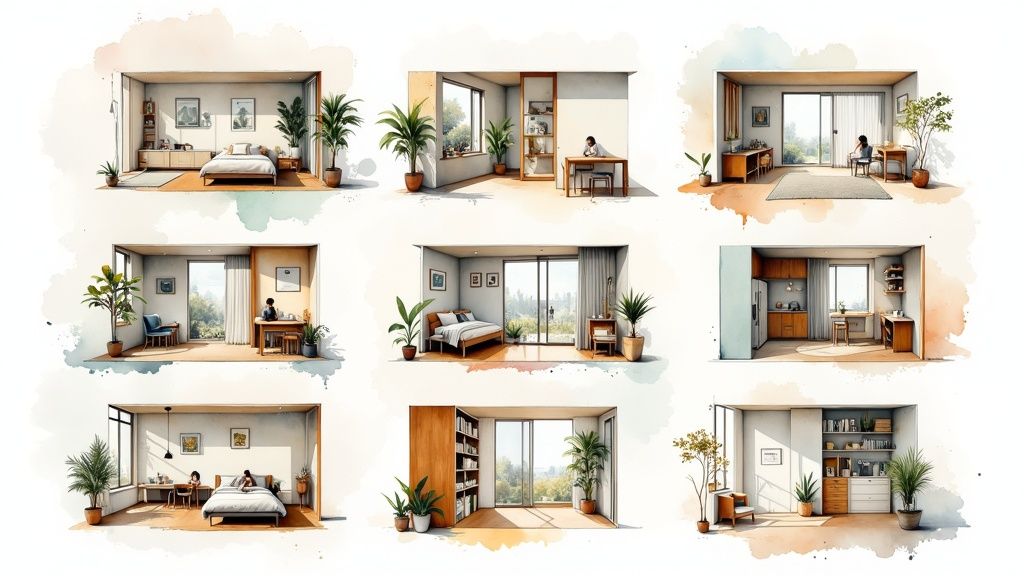
Living in a small space doesn’t mean sacrificing style, comfort, or functionality. The challenge is not the limited square footage itself, but how we utilize it. Effective small space designs are about strategic thinking, not just downsizing. This guide moves beyond generic advice like “use mirrors” and dives into ten actionable strategies that unlock the hidden potential within your home. Each solution is crafted to solve a specific problem, from maximizing storage to creating the illusion of a larger area, ensuring your environment is both beautiful and practical.
We will explore everything from multifunctional furniture and vertical storage to advanced color techniques and clever zoning for dual-purpose rooms. These aren’t just abstract concepts; they are practical blueprints for transforming compact living areas. You’ll learn how to reclaim unused corners, implement fold-down solutions, and select modular systems that adapt to your needs. To explore practical applications of space optimization within any room, delve into options like stylish and space-saving cabinets designed for compact living, which demonstrate how targeted furniture choices can make a significant impact.
This curated list is your roadmap to a more organized, spacious, and personalized home. Let’s explore how to make every square inch count.
1. Multifunctional Furniture
Multifunctional furniture is the cornerstone of effective small space designs, offering a powerful strategy to reclaim valuable square footage. This approach involves selecting pieces that serve two or more purposes, which eliminates the need for redundant, space-consuming items. By integrating functions, you create a more open, adaptable, and efficient living environment.
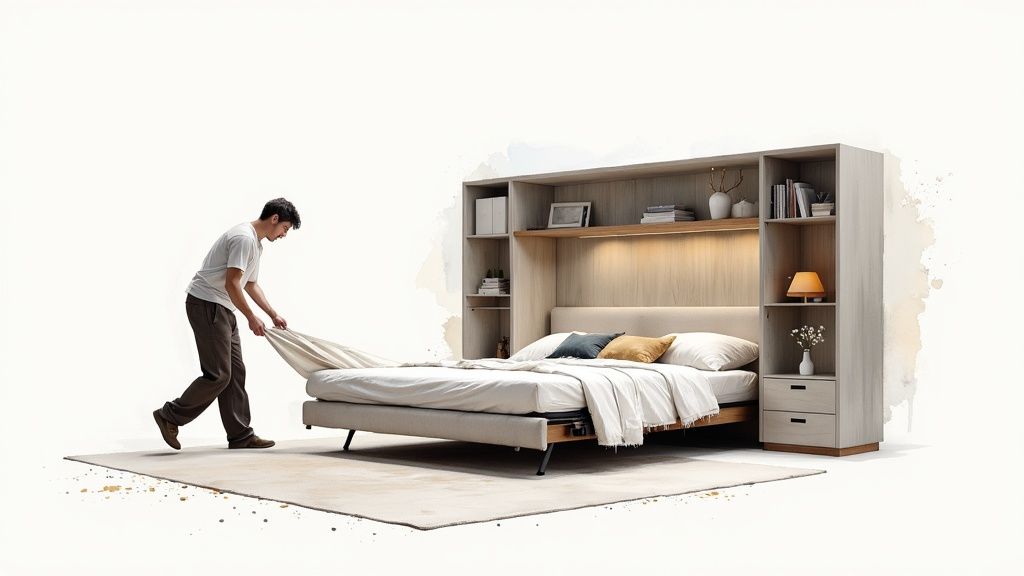
This method is ideal for studio apartments, guest rooms, or any area where a single room must wear multiple hats. For example, a Murphy bed with an integrated desk allows a bedroom to transform into a functional home office during the day, while a lift-top coffee table can double as a dining surface or workstation.
How to Implement Multifunctional Design
To successfully integrate these pieces, start by identifying the primary functions your room needs to serve.
- Prioritize a Primary Need: Does your living room also need to be a guest room? A quality sofa bed is a perfect solution.
- Measure Everything: Carefully measure your space, including doorways and clearance for moving parts, before making a purchase.
- Invest in Quality: These pieces often have moving parts. Choose well-built items from reputable brands like IKEA or Resource Furniture to ensure they last.
- Test Functionality: If possible, test the transformation mechanism in a showroom. It should be smooth and easy to operate.
By choosing smart, dual-purpose items, you maximize utility without sacrificing style. For a deeper dive into different options, you can explore various furniture types and styles on Room Genius.
2. Vertical Storage Solutions
Vertical storage is a fundamental strategy in small space designs that shifts the focus from limited floor area to expansive wall height. This approach involves using wall-mounted shelves, tall bookcases, and hanging organizers to store items upward rather than outward. By drawing the eye vertically, you not only maximize storage capacity but also create an illusion of a taller, more open room.

This technique is especially effective in rooms with high ceilings, narrow hallways, or any area where floor space is at a premium. For instance, floor-to-ceiling bookshelves can house an entire library without a large footprint, while a pegboard system in a home office keeps supplies organized and off the desk. Floating shelves in a kitchen provide accessible storage for daily-use items, freeing up valuable counter space.
How to Implement Vertical Storage
To effectively use your vertical space, begin by assessing your walls and identifying storage needs.
- Go High: Install shelving that extends as close to the ceiling as possible to draw the eye up and maximize storage.
- Mix Open and Closed Storage: Use a combination of open shelves for displaying decor and closed cabinets to hide clutter. This creates visual balance.
- Consider Weight Limits: Always use appropriate anchors and hardware for your wall type, and be mindful of the weight capacity of your shelves.
- Use Cohesive Organizers: Employ matching bins, baskets, and containers on your shelves for a clean, uniform look, a technique popularized by organizers like The Home Edit.
By building upward, you reclaim the floor and transform unused walls into highly functional storage assets. You can visualize different shelving configurations in your room using the Room Genius design tool to find the perfect layout.
3. Open Floor Plans
Open floor plans are a transformative strategy in small space designs, involving the removal of interior walls to create a single, unified living area. This approach typically combines the kitchen, dining room, and living room into one large, multifunctional space, which enhances the feeling of spaciousness and improves the flow of natural light. By eliminating physical barriers, you make even the most compact homes feel airy and expansive.
This concept is particularly effective in studio apartments, loft conversions, and small houses where traditional partitioned rooms can feel cramped and dark. An open layout encourages social interaction and allows for greater flexibility in furniture arrangement, making the environment feel more connected and adaptable to different needs.
How to Implement an Open Floor Plan
Creating distinct zones within a single space is key to a successful open floor plan.
- Define Zones with Rugs: Use area rugs to visually separate the living area from the dining space or kitchen.
- Use Strategic Lighting: Hang a statement pendant light over the dining table or install track lighting in the kitchen to create functional and visual zones.
- Choose Low-Profile Furniture: Select sofas, coffee tables, and chairs with low backs to maintain clear sightlines across the room, which enhances the open feel.
- Create Seamless Transitions: To blur the lines between indoor and outdoor living, consider installing automatic sliding doors for seamless transitions, which can make a small home feel truly boundless.
- Consider Partial Dividers: If complete openness feels daunting, use glass partitions, open-backed bookshelves, or decorative screens to suggest separation without blocking light.
4. Light and Mirrors
Harnessing the power of light and mirrors is a classic yet highly effective strategy in small space designs. This technique manipulates perception, using reflective surfaces and strategic lighting to create an illusion of greater depth and brightness. Mirrors bounce natural and artificial light around a room, making it feel more open, while a well-executed lighting plan eliminates shadowy corners that can make a space feel cramped and confined.
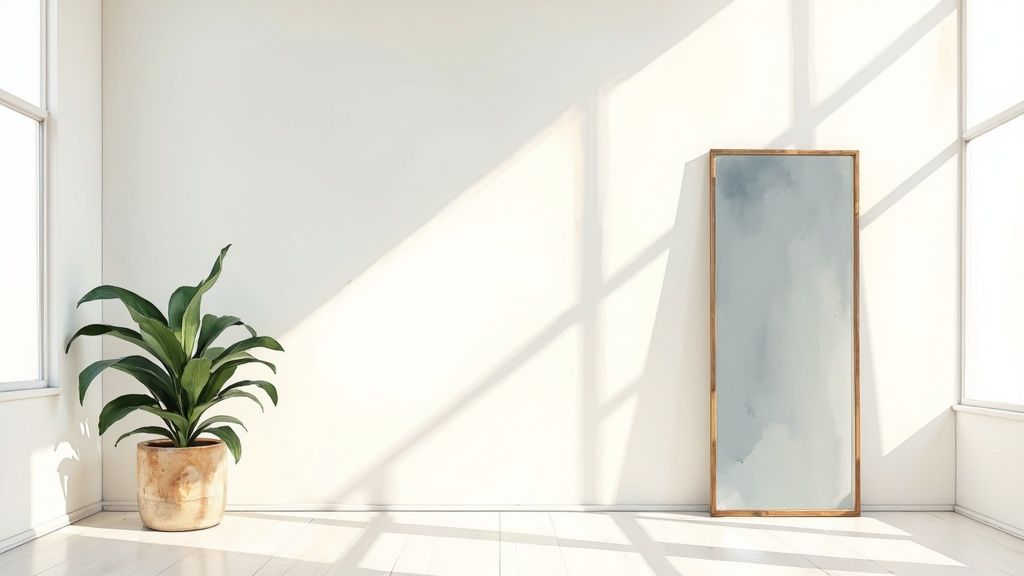
This approach is particularly useful for narrow hallways, small bedrooms, or any room that lacks abundant natural light. For instance, placing a large, floor-to-ceiling mirror opposite a window doubles the visual space and amplifies daylight. Similarly, mirrored closet doors can make a bedroom feel significantly larger without occupying any extra floor space.
How to Implement Light and Mirrors
To maximize the impact of this technique, your placement and lighting choices must be intentional.
- Reflect a View: Position a large mirror directly opposite a window to reflect the view and natural light, effectively bringing the outdoors in.
- Layer Your Lighting: Don’t rely on a single overhead fixture. Combine ambient lighting (ceiling lights), task lighting (reading lamps), and accent lighting (picture lights) to create a balanced, bright environment.
- Choose the Right Size: When it comes to mirrors, bigger is often better. A large, single mirror makes a greater impact than several small ones, which can create a cluttered look.
- Install Dimmers: Use dimmer switches on your main light sources to adjust the ambiance from bright and functional to soft and relaxing, giving you flexible control over the room’s mood.
By thoughtfully combining reflective surfaces and layered lighting, you can transform a compact room into one that feels airy, bright, and expansive.
5. Minimalist Aesthetics
Adopting minimalist aesthetics is a transformative strategy for small space designs, focusing on simplicity and intentionality to create a sense of calm and openness. This design philosophy strips away non-essential elements, leaving behind a clean, functional, and visually spacious environment. It emphasizes uncluttered surfaces, clean lines, and a restrained color palette.
This approach is perfect for anyone feeling overwhelmed by clutter or seeking a serene retreat in a compact home. By focusing on “less is more,” minimalism makes every piece count. Think of the purposeful simplicity in Japanese-inspired homes or the functional elegance of Scandinavian design; these principles can make even the smallest studio feel expansive and organized.
How to Implement Minimalist Aesthetics
To embrace minimalism, begin by consciously curating your environment and possessions. The goal is to keep only what is necessary, useful, or truly loved.
- Declutter with Purpose: Start by removing items that don’t serve a function or bring you joy, following principles like the KonMari method.
- Adopt a Neutral Palette: Stick to a limited color scheme of three to five complementary, neutral tones like white, beige, and gray to create a cohesive and tranquil backdrop.
- Invest in Quality over Quantity: Choose a few high-quality, well-made furniture pieces rather than numerous trendy, disposable items.
- Keep Surfaces Clear: Make it a habit to clear countertops, tables, and desks. Use smart storage solutions to conceal clutter and maintain a tidy look.
By integrating these practices, you can craft a space that feels both larger and more peaceful, proving that great small space designs are often about what you remove, not what you add.
6. Fold-Down and Murphy Solutions
Fold-down and Murphy solutions are transformative tools in small space designs, allowing full-sized functionality to appear and disappear on demand. This approach uses innovative engineering to create furniture that tucks away into walls or cabinets, reclaiming floor space for other activities when not in use. By doing so, you can maintain a clean, uncluttered look without sacrificing the comforts of larger items.
This strategy is particularly effective for studio apartments where a single room must serve as a living area, bedroom, and office. A classic Murphy bed can free up the entire floor for daytime use, while a wall-mounted fold-down desk provides a dedicated workspace that vanishes after hours. This makes it possible to host guests or enjoy an open-plan feel in even the most compact homes.
How to Implement Fold-Down Solutions
To successfully integrate these dynamic pieces, focus on safety, quality, and seamless integration with your existing layout.
- Invest in Quality Mechanisms: The hardware is crucial. Choose well-engineered systems from reputable brands like Resource Furniture or Clei to ensure smooth, safe, and durable operation.
- Ensure Professional Installation: These units are often heavy and complex. Professional installation is essential to ensure they are securely anchored to the wall and function correctly.
- Keep Pathways Clear: Before installing, confirm there is enough clearance to operate the furniture without hitting other items. Measure the full arc of movement.
- Consider Surrounding Storage: Maximize efficiency by choosing models with integrated shelving, cabinets, or sofas. This creates a cohesive and highly functional feature wall.
7. Nook and Corner Optimization
Nook and corner optimization is a clever strategy for maximizing every square inch of your home. This approach transforms often-wasted spaces like corners, alcoves, and awkward areas into highly functional zones. By creating purpose-built solutions for these underutilized spots, you can add storage, seating, or display space without encroaching on your main living areas.
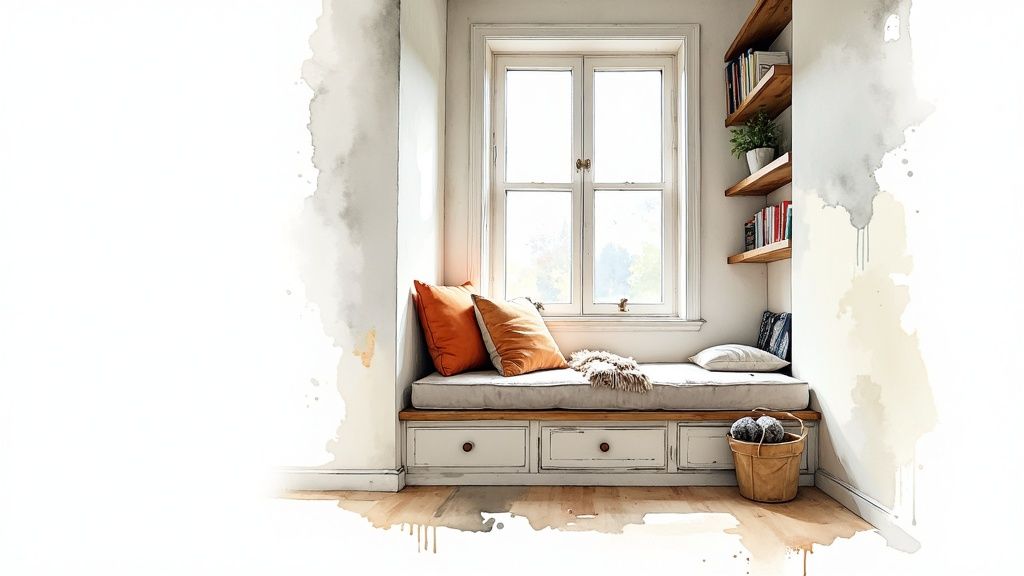
This method is perfect for adding character and utility to oddly shaped rooms or compact apartments. For instance, a window seat with hidden storage can become a cozy reading nook, while a triangular corner shelving unit turns a dead zone into an attractive display. These targeted small space designs solve the problem of unused, inefficient areas.
How to Implement Nook and Corner Optimization
To reclaim these forgotten spaces, start by identifying potential nooks and planning their new function.
- Measure Precisely: Carefully measure the height, width, and depth of the corner or alcove. Account for any baseboards or window sills.
- Prioritize Function: Decide what the space needs most. Is it a mini-home office, a breakfast nook, or extra kitchen storage?
- Consider Custom Solutions: Built-in shelving or custom cabinetry often provides the best fit and maximizes storage potential.
- Add Lighting: Illuminate the new space with a small lamp, sconce, or LED strip lighting to make it feel intentional and usable.
By strategically developing these small pockets of your home, you create a more efficient and personalized environment.
8. Color and Visual Expansion Techniques
Strategic color choices are a powerful tool in the arsenal of small space designs, capable of visually expanding a room without moving a single wall. This approach uses color theory and visual tricks to manipulate the perception of size and depth. Light, airy colors reflect more light, making a space feel open and larger, while carefully chosen accent colors can create focal points and add dimension.
This technique is essential for any compact area, from a narrow hallway to a studio apartment. For instance, painting a small bedroom in a soft white or pale gray can instantly make it feel less cramped. Adding a bold navy accent wall at the far end of a room can create an illusion of depth, drawing the eye further into the space.
How to Implement Visual Expansion with Color
To use color effectively, think of your room as a canvas where you can guide the viewer’s eye.
- Establish a Light Base: Paint the majority of your walls in light, neutral colors like off-white, cream, or soft gray to maximize light reflection.
- Create Height: Use vertical stripes on a wall or choose tall, slender decor to draw the eye upward, making ceilings appear higher.
- Add Strategic Depth: Choose one wall, often the furthest from the entrance, to paint a slightly darker or bolder accent color. This technique recedes visually, making the room seem longer.
- Choose the Right Finish: Matte or eggshell paint finishes are ideal as they diffuse light, unlike glossier finishes which can create distracting reflections and highlight imperfections.
By mastering these color strategies, you can transform a room’s perceived dimensions. To get started, you can explore expert advice on how to choose color schemes on Room Genius.
9. Modular and Scalable Systems
Modular and scalable systems are a game-changer for small space designs, offering unparalleled flexibility and customization. This approach uses interchangeable components that can be configured, reconfigured, and expanded over time. Instead of being locked into a single, static piece of furniture, you get a dynamic system that adapts to your evolving needs and space constraints.
This method is perfect for anyone who anticipates changes, such as moving to a new apartment or needing more storage as their family grows. For example, a modular shelving unit like IKEA’s KALLAX can start as a simple TV stand and later grow into a full wall library by adding more cubes. Similarly, modular closet systems allow you to add drawers, shelves, or hanging rods as your wardrobe changes.
How to Implement Modular and Scalable Systems
To effectively use modular furniture, a bit of forward-thinking is key. Start by assessing both your current and potential future needs.
- Plan Your Layout: Before buying, sketch out your ideal configuration. Use the manufacturer’s online planning tools if available.
- Start Small and Expand: You don’t need to buy the entire system at once. Begin with a core setup and add new components as your budget and needs allow.
- Invest in a Quality System: Choose reputable brands known for longevity, such as USM Haller or Vitsoe. This ensures that you can find matching components years later.
- Check Compatibility: If mixing systems, double-check that dimensions and connection mechanisms are compatible to avoid an unstable or mismatched final product.
By adopting modularity, you create a sustainable and highly personalized solution that makes the most of every inch.
10. Dual-Purpose Rooms and Zoning
Creating dual-purpose rooms through zoning is a sophisticated strategy for maximizing the utility of every square foot. This approach involves dividing a single room into distinct functional areas using furniture arrangement, visual cues, and strategic lighting. By defining specific zones, you allow a space to serve multiple roles simultaneously without feeling cluttered or chaotic, a key principle in effective small space designs.
This method is perfect for studio apartments or open-plan homes where one large area must function as a living room, dining area, and home office. For instance, you can position a sofa to create a boundary for the living zone, place an area rug under a desk to define the workspace, and hang a pendant light over a small table to designate the dining spot.
How to Implement Zoning
To successfully zone a room, focus on creating clear visual and functional separations.
- Define with Rugs: Use area rugs to anchor furniture and visually separate one zone from another. For example, a plush rug can define a cozy living area.
- Use Furniture as Dividers: Arrange larger pieces like a sofa, bookshelf, or console table to act as low-profile room dividers.
- Implement Zone-Specific Lighting: Install different types of lighting for each area. Use task lighting for a workspace and ambient lighting for a relaxation zone.
- Try a Screen: A folding screen or a curtain can provide a flexible and stylish way to physically separate spaces when needed.
By strategically planning your layout, you can create a harmonious and highly functional multipurpose room. For more inspiration on arranging your space, explore these room layout ideas on Room Genius.
10-Point Small-Space Design Comparison
| Solution | Implementation Complexity 🔄 | Resource Requirements ⚡ | Expected Outcomes ⭐📊 | Ideal Use Cases 📊 | Key Advantages 💡 |
|---|---|---|---|---|---|
| Multifunctional Furniture | Medium 🔄 (design + testing) | Moderate ⚡ (higher upfront cost) | High space savings; improved flexibility ⭐📊 | Small apartments, multifunctional rooms | Reduces footprint; cost-effective vs multiple pieces; less visual clutter 💡 |
| Vertical Storage Solutions | Low 🔄 (installation) | Low ⚡ (shelves/hardware) | Frees floor space; better organization ⭐📊 | Kitchens, studios, entryways, closets | Affordable; adds vertical interest; keeps items accessible 💡 |
| Open Floor Plans | High 🔄 (structural/design work) | High ⚡ (renovation cost) | Significantly larger feel; improved light flow ⭐📊 | Renovations, lofts, new builds | Flexible layouts; modern aesthetic; enhanced daylighting 💡 |
| Light and Mirrors | Low 🔄 (placement & lighting) | Low ⚡ (mirrors, bulbs) | Brighter, visually larger spaces ⭐📊 | Dark/small rooms, hallways, bathrooms | Inexpensive; quick visual impact; improves mood and brightness 💡 |
| Minimalist Aesthetics | Medium 🔄 (behavioral change) | Low–Moderate ⚡ (select purchases) | Calmer, more open feel; easier maintenance ⭐📊 | Small homes, those seeking low-maintenance living | Timeless look; reduces clutter; easier cleaning and decision-making 💡 |
| Fold-Down & Murphy Solutions | High 🔄 (mechanisms + install) | High ⚡ (quality hardware, pro install) | Excellent space recovery; full-size function when needed ⭐📊 | Studios, guest rooms, micro-apartments | Preserves floor area; transforms room function; durable when well-made 💡 |
| Nook & Corner Optimization | Medium 🔄 (custom planning) | Moderate ⚡ (carpentry/custom units) | More usable square inches; cozy pockets ⭐📊 | Alcoves, under-stairs, awkward corners | Utilizes wasted space; can be bespoke and characterful 💡 |
| Color & Visual Expansion Techniques | Low–Medium 🔄 (design skill) | Low ⚡ (paint, finishes) | Perceived increased depth/height; enhanced mood ⭐📊 | Any small room; renters wanting reversible changes | Customizable and reversible; low-cost visual impact 💡 |
| Modular & Scalable Systems | Medium 🔄 (planning & assembly) | Moderate ⚡ (modular units) | Adaptable layout; scalable storage over time ⭐📊 | Growing households, evolving needs, rentals | Reconfigurable; long-term cost-effective; reduces waste 💡 |
| Dual-Purpose Rooms & Zoning | Medium 🔄 (layout planning) | Low–Moderate ⚡ (furniture, dividers, lighting) | Maximizes functionality per sq ft; flexible living ⭐📊 | Home offices in bedrooms, studio zoning, multi-use rooms | Maximizes utility; supports remote work; avoids extra rooms 💡 |
Your Blueprint for a Smarter, More Spacious Home
Throughout this guide, we’ve explored a comprehensive toolkit of strategies designed to transform even the most compact areas into functional, stylish, and spacious-feeling environments. From the game-changing efficiency of Murphy beds and fold-down desks to the visual expansion created by strategic lighting and minimalist color palettes, the core principle remains consistent: every square inch counts. Mastering small space designs is less about finding more room and more about making the room you have work smarter for you.
We’ve moved beyond generic advice to provide a practical framework. You now understand how to leverage vertical real estate with floor-to-ceiling shelving, how to define distinct zones in a dual-purpose room, and how to harness the power of mirrors to create an illusion of depth. The journey from a cluttered, cramped room to an organized, airy sanctuary is built on these intentional choices.
Key Takeaways: From Concept to Reality
The most crucial takeaway is to shift your perspective. View your home’s limitations not as insurmountable barriers, but as creative challenges waiting for innovative solutions. The most effective small space designs are born from a deep understanding of your personal lifestyle and daily needs.
Remember these core pillars as you begin your transformation:
- Function First: Prioritize multifunctional and modular furniture that adapts to your life, not the other way around. Think of a coffee table that becomes a dining table or an ottoman with hidden storage.
- Visual Strategy: Employ light, color, and reflective surfaces to manipulate perception. A well-placed mirror or a cohesive, light color scheme can visually double your space.
- Intentional Curation: Embrace a minimalist mindset by carefully selecting what you bring into your home. Every object should have a purpose or bring you joy, eliminating the visual noise that makes a space feel smaller.
Your Actionable Next Steps
The next phase is about implementation. Don’t try to tackle everything at once. Start by identifying the single biggest pain point in your home. Is it a lack of storage in the bedroom? A living room that feels cramped and chaotic?
Once you’ve chosen your target area, revisit the relevant sections of this article. Begin to sketch out a plan, considering the vertical space, the forgotten corners, and the potential for dual-purpose zoning. This strategic planning is the bridge between inspiration and a tangible, beautifully designed reality. The goal is to create a home that not only looks bigger but also supports your daily routines with effortless efficiency.
Ready to see these small space designs come to life in your own home before you commit? Take the guesswork out of your project with RoomGenius. Upload a photo of your room to our AI-powered platform and instantly visualize new layouts, test furniture configurations, and experiment with color schemes to create your perfect space. Start designing with RoomGenius today!