A Practical Guide to Your Small Apartment Layout
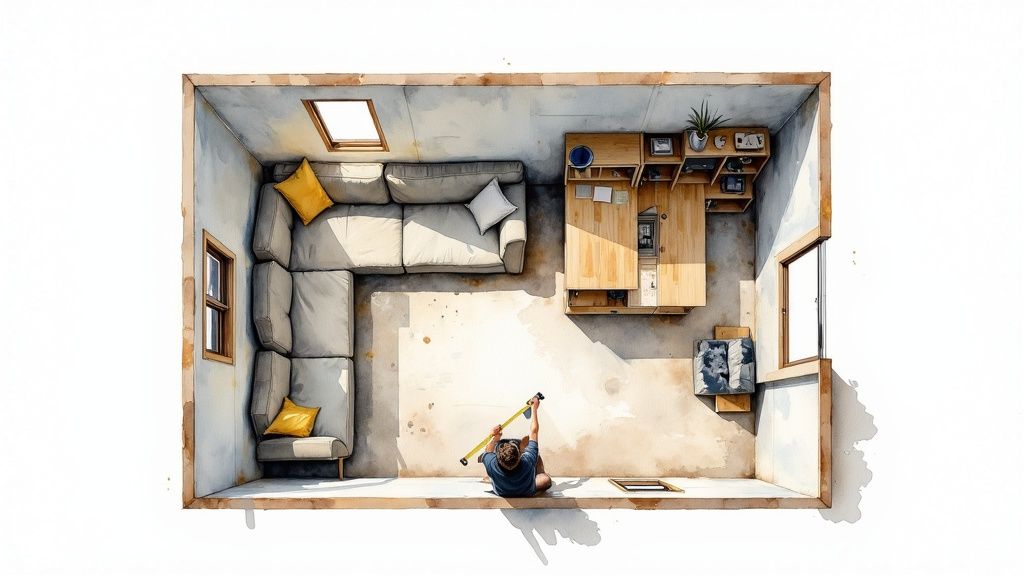
When you’re designing a small apartment layout that needs to be both functional and beautiful, it all boils down to one simple truth: every inch matters. This isn’t about cramming as much as you can into a tight space. It’s about making deliberate, smart choices that create clear zones, improve the flow, and actually reflect who you are.
Rethinking Small Space Living
Living in a smaller home isn’t just a temporary stopgap anymore; for many, it’s a conscious lifestyle choice. Tackling the design of a compact apartment can feel like solving an intricate puzzle, but that’s exactly what pushes you toward more clever and creative solutions.
Instead of seeing limitations, you start seeing opportunities. A small space forces you to be honest about what you truly need, which often leads to a more curated and intentional home. This guide will give you a real roadmap—no generic tips here—focusing on the foundational principles that make any tiny apartment feel surprisingly spacious and organized.
The Rise of Compact and Intentional Living
The move toward smaller living spaces is picking up serious steam. In 2023 alone, there was a 13% increase in people choosing to downsize. We’re also seeing renters invest more in making their spaces their own, with a 40% jump in requests for things like peel-and-stick wallpaper and a 10% increase in bookings for new curtains and lighting.
This data clearly shows that people are committed to making compact—and often temporary—spaces feel like thoughtfully designed, permanent homes. This shift means every single design element, no matter how small, has a huge role to play. Even details like window treatments can offer stylish window blind solutions for tiny spaces that boost both the look and utility of a room.
The secret to a successful small apartment layout isn’t about having less stuff. It’s about making every single item work harder for you. This means embracing multifunctional furniture, vertical storage, and clever zoning.
Core Principles for a Better Layout
Before you even think about buying furniture or picking out decor, it pays to internalize a few key concepts. Getting these ideas right will guide every decision you make, from the initial floor plan sketch to the final decorative touches.
- Zoning Over Walls: You don’t need walls to define a space. Use furniture placement, area rugs, or even lighting to create distinct “zones” for living, sleeping, and working.
- Embrace Verticality: When your floor space is at a premium, your walls become your most valuable real estate. Think up, not out, for storage and visual interest.
- Light and Reflection: Do everything you can to maximize natural light. A well-placed mirror can also work wonders, creating an illusion of depth that makes any room feel bigger.
- Function First: Every single piece in your apartment should serve a clear purpose—and preferably more than one. This is the fastest way to cut clutter and boost your home’s utility.
Getting to Know Your Space: Measurements and Zones
Before you even think about new furniture or browse Pinterest for hours, the very first thing you need to do is get intimately familiar with the space you actually have. A great small apartment layout doesn’t start with shopping—it starts with a tape measure and a solid plan. This groundwork turns an empty box into a place that truly works for you.
Don’t just get the basic wall-to-wall dimensions. You need to create a detailed map of your apartment, noting every little quirk.
- Get the exact location and size of all your windows and doors (and make a note of which way the doors swing open!).
- Mark down any radiators, built-in shelving, or other permanent fixtures that you have to work around.
- Most importantly, map out every single electrical outlet. Trust me, knowing where your power sources are will save you a world of headaches later on.
If you want to dive deeper into creating a truly professional-level sketch of your space, this guide on how to create floor plans is a fantastic resource. It’ll walk you through documenting every crucial detail before you move a single thing.
Turning Your Floor Plan into Functional Zones
Once you have your measurements down, it’s time to start zoning. This is where you assign a purpose to each part of your apartment, creating invisible “rooms” without putting up any walls. It’s the secret to making a studio feel less like one giant, chaotic room and more like a collection of distinct, usable spaces.
Think about your day-to-day life. Where will you sleep? Where will you work? Where will you eat, and where will you kick back and relax? Each of these core activities needs its own dedicated zone, no matter how small.
This simple process flow is the perfect mindset for tackling a small space: you have to rethink your assumptions, design with intention, and you’ll completely transform your home.
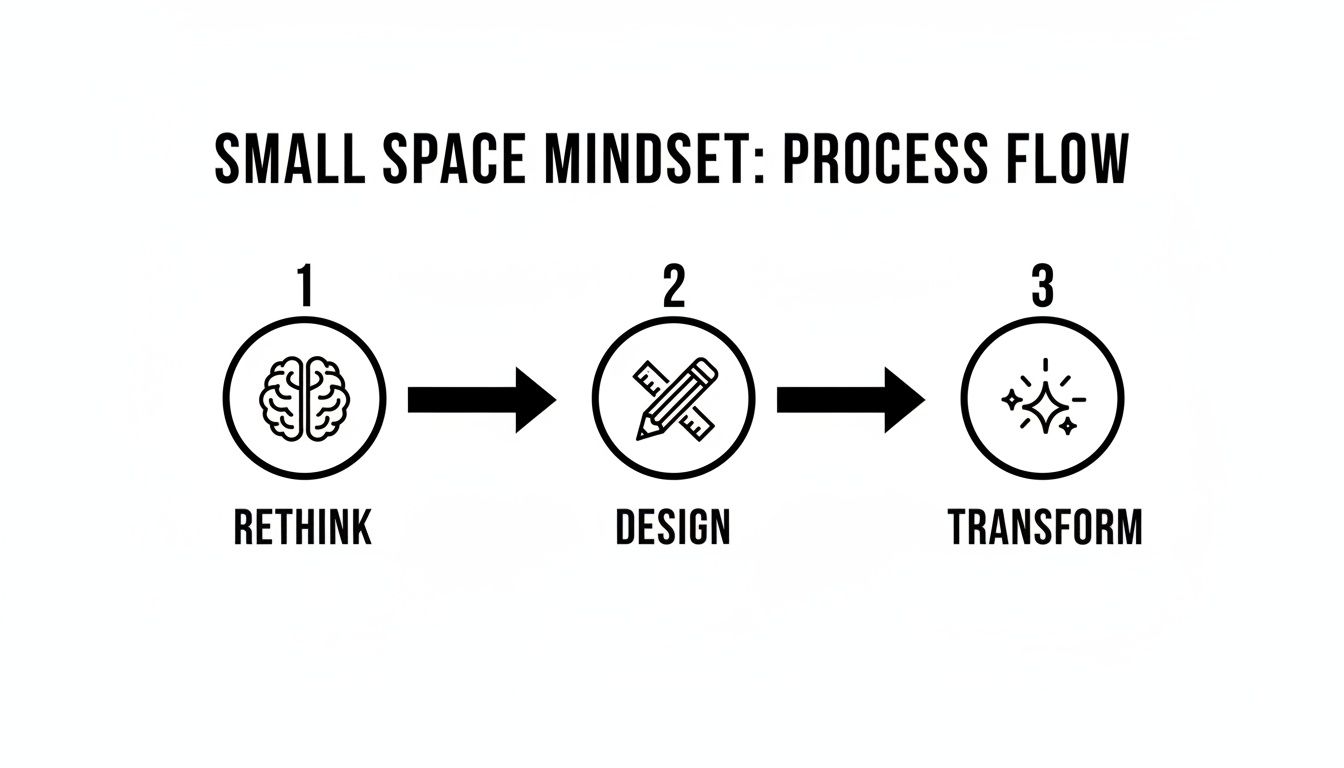
The key takeaway here is that a brilliant layout is born from smart strategy, not just from buying cool furniture.
How to Define Spaces Without Walls
Zoning is all about visual cues, not physical barriers. One of the easiest and most effective ways to do this is with a well-placed area rug. A rug can instantly anchor your living room furniture, creating a clear visual boundary between your seating area and, say, your dining nook right next to it. Just be careful not to pick a rug that’s too small—that’s a classic mistake that actually makes a space feel choppy and even smaller.
Pro Tip: For living areas, a good rule of thumb is to choose a rug that’s big enough for at least the front legs of your sofa and any armchairs to sit on it. This simple trick makes the whole zone feel unified and intentional.
Looking for other simple yet powerful zoning tricks? Try these:
- A tall, open bookshelf: This is perfect for carving out a semi-private sleeping area in a studio. The open-back design keeps it from feeling heavy and allows light to pass through, maintaining an airy feel while still creating separation.
- A slim console table: Placing one against the back of your sofa acts as a subtle but effective border. It also gives you a handy surface for a lamp or a few decorative items, signaling the end of one zone and the beginning of another.
- Strategic lighting: A single pendant light hanging over a small table immediately declares “this is the dining area.” It visually separates that spot from the kitchen prep space, even if they’re only a few feet apart.
By combining accurate measurements with thoughtful zoning, you give every single square foot a clear purpose. This creates a natural, intuitive flow that turns a cramped apartment into a clever, organized, and genuinely comfortable home.
Choose Furniture That Works Smarter, Not Harder
In a small apartment, every single piece of furniture has to earn its keep. This isn’t just about picking out smaller versions of standard items; it’s about a total shift in mindset. You need to choose pieces that are perfectly scaled to your room and, more importantly, are incredibly versatile. The right furniture can completely transform your apartment layout, making it feel open and far more functional than the square footage might suggest.
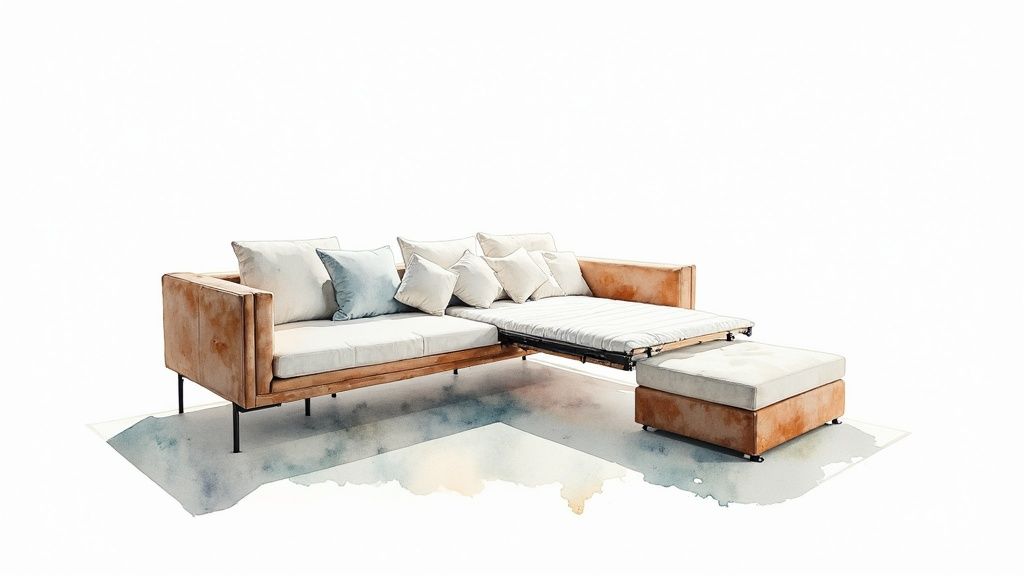
Before you buy anything, think about its physical and visual weight. A bulky, overstuffed sofa with thick, rolled arms might look cozy in a showroom, but in a small living room, it will devour precious inches and visually dominate the space. A much smarter choice is a sofa with slim arms and a clean silhouette—it gives you the exact same amount of seating but takes up a much smaller footprint.
The Power of Proportional Pieces
Getting the scale of your furniture right is everything. It’s probably the most common mistake I see: people cramming oversized pieces into a small room. But here’s the flip side: furnishing a room with only tiny items can make it feel cluttered and disjointed, like a dollhouse. The real goal is to find that perfect, harmonious balance.
One of my favorite tricks? Select furniture with visible legs. When a sofa, armchair, or console table is raised off the floor, you can see more of the floor underneath. This simple detail creates a powerful illusion of spaciousness. Light and air flow more freely, instantly making the entire room feel larger and less crowded.
By choosing furniture that is appropriately scaled and visually light, you prevent the space from feeling cramped. Think streamlined forms, slender legs, and reflective or transparent materials like glass or acrylic to minimize visual bulk.
Embrace Multifunctional Marvels
The true heroes of any small apartment are the pieces that pull double or even triple duty. A single-use item is a luxury you just can’t afford when every square inch counts. Instead, seek out clever, convertible furniture that adapts to your needs throughout the day.
Investing in these hardworking items means you need fewer pieces overall, which directly translates to less clutter and more open, livable space. For more ideas, check out our detailed guide on the best furniture for small apartments.
Here are a few game-changing examples I always recommend:
- The Lift-Top Coffee Table: This thing is a lifesaver. It easily converts from a standard coffee table to a comfortable dining or work surface. For many people, this completely eliminates the need for a separate dining table—often the hardest piece to fit into a studio or one-bedroom.
- The Storage Ottoman: It’s a footrest. It’s extra seating for guests. Add a tray, and it’s a coffee table. And the best part? Its hollow interior provides the perfect hidden spot to stash blankets, pillows, or board games.
- The Modern Daybed or Sofa Bed: Forget the clunky, uncomfortable pull-out couches of the past. Today’s designs are stylish and genuinely comfortable, serving as chic seating during the day and a cozy guest bed at night without sacrificing an ounce of style.
- Nesting Tables: Instead of one large side table, a set of nesting tables offers incredible flexibility. You can keep them stacked to save space day-to-day, then pull them apart for extra surface area when you have company.
By carefully selecting furniture that is both properly scaled and highly functional, you’ll create a layout that feels spacious, organized, and perfectly suited to your life.
Think Vertically: Mastering Wall Space and Clever Storage
When you’re working with a small footprint, the only way to go is up. I’ve seen it time and time again in countless apartment designs—your walls are your single greatest asset for creating a small apartment layout that feels organized, open, and intentional. It’s time to think beyond just a couple of shelves and really start conquering that vertical real estate.
Before you start installing anything, though, the first step is always to declutter. You can’t organize clutter, and clearing out what you don’t truly need or love makes space for smart solutions. Sometimes, that requires a bit of help, like finding a great junk removal company to give you a completely clean slate to work with.
Once you’ve pared down your belongings, you can focus on building your storage upward.
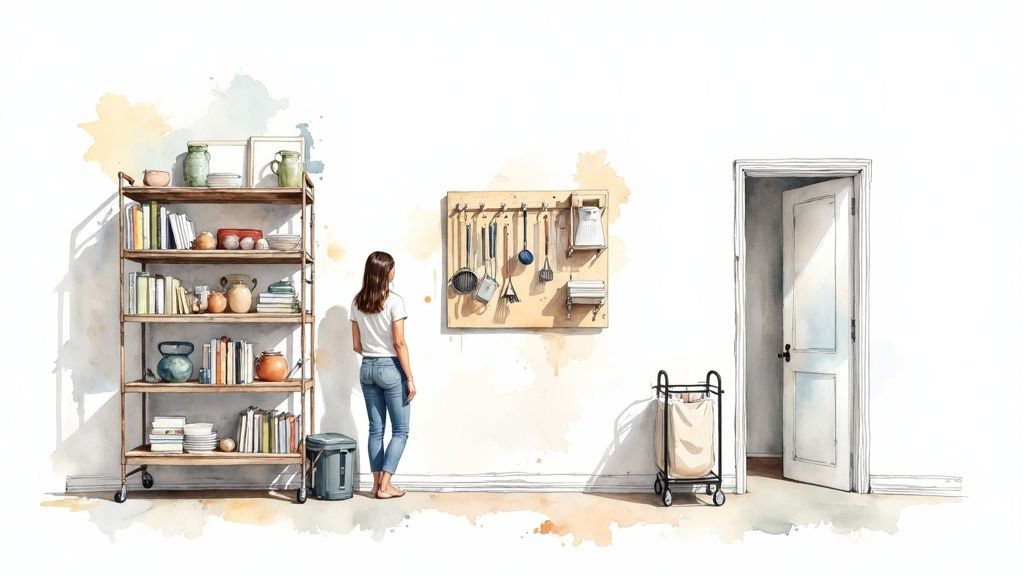
Floor-to-ceiling bookcases are a classic for a good reason. They instinctively draw the eye upward, which creates a subtle illusion of height. More importantly, they offer a massive amount of storage for books, decorative items, and stylish bins. Modular shelving systems are another fantastic option, letting you build a custom solution that fits your wall dimensions perfectly and can adapt as your needs change over time.
Uncovering Those Hidden Storage Nooks
Your apartment is probably hiding more storage potential than you realize. Beyond the obvious walls, look for those little “in-between” spaces that are perfect for tucking things away—items you need but don’t necessarily want on display 24/7.
Take a look at that awkward gap between your fridge and the wall. A slim, rolling pantry cart can slide right in, creating the perfect home for spices, oils, or canned goods. I’ve used this trick in my own kitchen, and it instantly freed up an entire cabinet.
Here are a few other often-missed opportunities I always recommend:
- Over-the-door organizers: These are incredibly versatile. Don’t just use them for shoes! Hang one on your pantry door for snacks, inside a closet for scarves and belts, or on the bathroom door for toiletries.
- Under-bed storage: This is prime real estate. Grab some low-profile bins or drawers on wheels to stash seasonal clothing, extra bedding, or shoes. Your closet will thank you.
- Wall-mounted pegboards: A pegboard in the kitchen is a total game-changer. It provides super flexible, vertical storage for pots, pans, utensils, and mugs, getting all that bulky stuff off your precious counters and out of your drawers.
By strategically using both vertical and hidden storage, you’re not just organizing—you’re actively reclaiming floor space. This makes your apartment feel bigger, improves traffic flow, and creates a much more serene living environment.
Smart Storage Solutions Compared
Choosing the right storage really comes down to your specific space, your budget, and how much installation you’re willing (or allowed) to do. Some of my favorite solutions are renter-friendly and require zero drilling, while others are more permanent fixtures. Here’s a quick comparison of the most popular options I’ve worked with.
| Storage Type | Best For | Pros | Cons |
|---|---|---|---|
| Floating Shelves | Displaying decor, books | Minimalist look, customizable placement | Limited weight capacity, requires drilling |
| Pegboard System | Kitchens, offices, craft areas | Highly flexible and adjustable | Can look cluttered if not organized well |
| Slim Rolling Cart | Narrow gaps in kitchens/bathrooms | Utilizes awkward spaces, mobile | Small capacity, may not fit all gaps |
| Over-the-Door Rack | Closets, pantry, bathroom doors | No installation, frees up cabinet space | Can prevent door from closing properly |
Ultimately, the most successful storage strategies I’ve seen involve a smart mix of these options. By combining a tall bookcase with a few well-placed hidden solutions, you can design a highly efficient small apartment layout that truly makes the most of every last inch.
Proven Layouts for Common Apartment Footprints
Theory is great, but seeing a smart small apartment layout in action is what really makes the concepts click. Most of us are dealing with a few common, and often awkward, footprints—like those long, narrow studios or boxy one-bedrooms where everything feels on top of everything else.
Let’s walk through some proven starting points for these exact kinds of tricky spaces. Think of these not as rigid rules, but as flexible templates. The idea is to give you a solid foundation so the whole process feels less intimidating and a lot more manageable. Once you see the logic behind why something works, you can start applying it to your own place with confidence.
The Long and Narrow Studio
Ah, the classic “bowling alley” apartment. This layout is notoriously difficult, and the biggest mistake is lining everything up against one wall. The trick is to break up the long run of the room into distinct, functional zones.
-
Sleep Zone: Tuck your bed at the far end of the apartment, as far from the entrance as you can get. This move instantly creates more privacy and separates your personal space from your social one. A tall, open-backed bookshelf makes a fantastic room divider here; it defines the space without killing the light.
-
Living Zone: Float a small, apartment-sized sofa in the middle of the room. If you’re not using a physical divider like a bookshelf, just having the back of the sofa facing the bed area creates a powerful psychological separation. Anchor this whole setup with an area rug to clearly say, “This is the living room.”
-
Kitchen/Dining Zone: It just makes sense to keep this closest to the front door. A small, round bistro table with two chairs can be tucked neatly into a corner, giving you a dedicated dining spot that doesn’t get in the way of the main path through the apartment.
For a deeper dive into maximizing these specific footprints, our complete guide to the perfect studio apartment layout offers even more detailed strategies and visual examples.
My favorite strategy for a narrow space is to create a clear “S” shaped traffic flow. This forces you to weave from side to side as you walk through, making the apartment feel wider and more dynamic instead of just one long, straight hallway.
The Compact One-Bedroom
When you have a separate bedroom, the main challenge shifts to the living area. This single room often needs to be a living room, dining room, and maybe even a home office. The goal here is to keep it feeling open and airy while making sure every activity has its place.
A great approach I often recommend is the “perimeter” layout. Start by placing your biggest piece of furniture—almost always the sofa—against the longest, uninterrupted wall. From there, arrange the rest of your items around the edges of the room. This keeps the center clear, which is key for creating a sense of spaciousness and easy movement.
A coffee table with hidden storage or a slim console table under a window can add a ton of function without adding visual clutter. It’s all about making the room feel intentional, not just like a collection of furniture.
Answering Your Small Apartment Layout Questions
Even with a solid plan, you’re bound to run into a few tricky spots. Designing for a small space comes with its own unique set of challenges, so let’s walk through some of the most common questions I hear.
How Can I Make My Studio Feel Less Like One Big Bedroom?
The key here is creating distinct zones. You can do this visually without building walls.
A well-placed area rug is your best friend—it instantly anchors the “living room” area, separating it from where you sleep. Another great trick is to use a physical, but not solid, divider. Think about a tall, open-backed bookshelf or even a decorative folding screen. These pieces add separation and structure while still letting light pass through, which is crucial for keeping the space from feeling cramped.
What’s the Single Biggest Layout Mistake People Make?
Hands down, it’s choosing furniture that’s way too big for the room. I see it all the time. A massive, overstuffed sofa or a clunky dining table can absolutely devour a small space, making it feel crowded and difficult to navigate.
Always, always opt for pieces with a smaller footprint. Look for “apartment-sized” furniture, slim profiles, and clean lines. This keeps the room feeling open and airy and, most importantly, protects your precious traffic flow.
This is more important than ever. With about 40% of U.S. renters living alone, the demand for smart, compact living is on the rise, even pushing trends like office-to-apartment conversions. You can read more about this shift in housing and what it means for city dwellers.
The best layouts are all about flow and proportion. If you have to turn sideways to squeeze past the coffee table, something is wrong with the scale or the placement.
How Do I Add Personality Without Making It Feel Cluttered?
Focus on decor that pulls double duty or makes a big impact without taking up much space. A large mirror is a classic for a reason—it bounces light around and creates an illusion of depth. Floating shelves are perfect for showing off your favorite things without eating up floor space.
When it comes to art, think bigger, not more. One large, impactful piece of art makes a much stronger statement than a gallery wall of tiny, scattered frames. It feels intentional and keeps your walls from looking chaotic.
Feeling inspired but a little stuck on where to begin? RoomGenius can take the guesswork out of it. Just upload a photo of your room, and it will generate multiple layout and design ideas for you to explore. Give RoomGenius a try and see the possibilities.