Rustic Industrial Interior Design A Definitive Guide
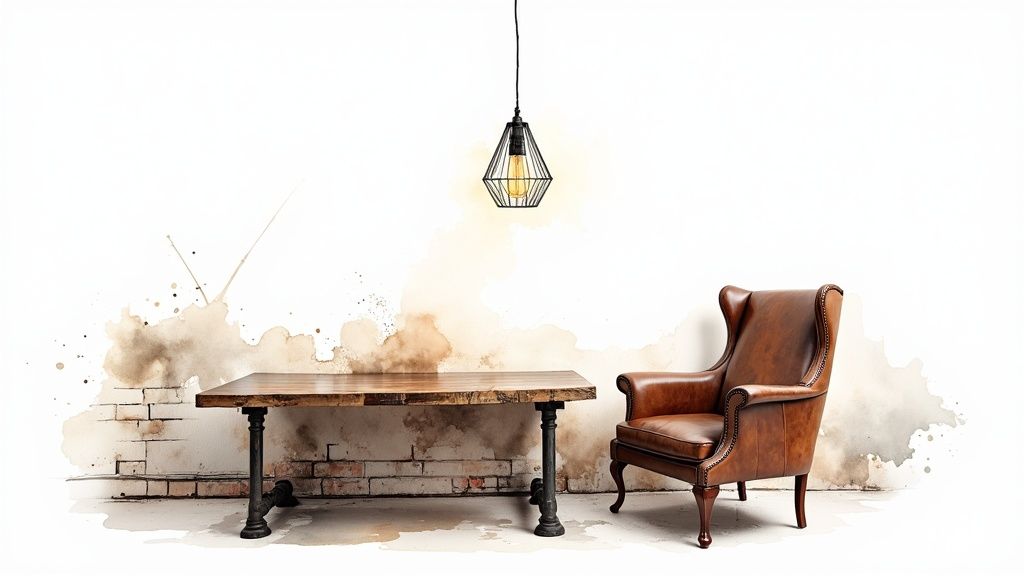
Picture an old 19th-century factory, its sturdy bones repurposed into a warm, inviting home. That’s the heart and soul of rustic industrial interior design. This style is a fascinating conversation between two seemingly opposite worlds: the raw, functional honesty of industrial spaces and the cozy, nature-inspired warmth of rustic decor. The result? A space that feels both powerful and deeply personal.
What Exactly Is The Rustic Industrial Look?
At its core, rustic industrial design is all about blending hard and soft, old and new. It’s like a handshake between a rugged, no-frills workshop and a comfortable, handcrafted cabin in the woods. One side brings the strong architectural elements—think exposed brick walls, steel beams, and polished concrete floors. The other side steps in to soften those hard edges with reclaimed wood, comfortable natural fabrics, and a touch of handmade charm.
This isn’t about following a strict set of rules. It’s about finding that sweet spot, that perfect balance. It’s a popular choice among many different types of home interior design styles because it manages to feel both historic and completely current, both lived-in and thoughtfully designed. A solid grasp of understanding the distinction between interior architecture and interior design can also help put this style into a broader context.
A Tale Of Two Styles
The real magic of the rustic industrial look is woven into its history. It pulls inspiration straight from the factories and warehouses of the 19th and early 20th centuries. The Industrial Revolution, which spanned from about 1760 to 1840, laid the groundwork for this aesthetic. Years later, as those industrial giants fell silent, artists and pioneers moved in, transforming them into sprawling lofts and studios and, in the process, creating a whole new design language.
To really see how this works, it helps to break down the two parent styles before they’re combined.
Rustic vs Industrial Key Differences
| Characteristic | Rustic Style | Industrial Style |
|---|---|---|
| Materials | Natural wood, stone, leather, wool | Exposed brick, steel, concrete, iron |
| Color Palette | Warm, earthy tones (browns, greens, tans) | Neutral, cool tones (grays, blacks, whites) |
| Overall Vibe | Cozy, warm, handcrafted, nature-inspired | Raw, utilitarian, minimalist, functional |
| Key Features | Reclaimed wood beams, stone fireplaces, handmade furniture | Exposed ductwork, metal-framed windows, concrete floors |
This table shows the distinct personalities of each style. Rustic is all about organic comfort, while industrial celebrates raw function. The beauty of the combined style is how it uses each one’s strengths to create a balanced, compelling whole.
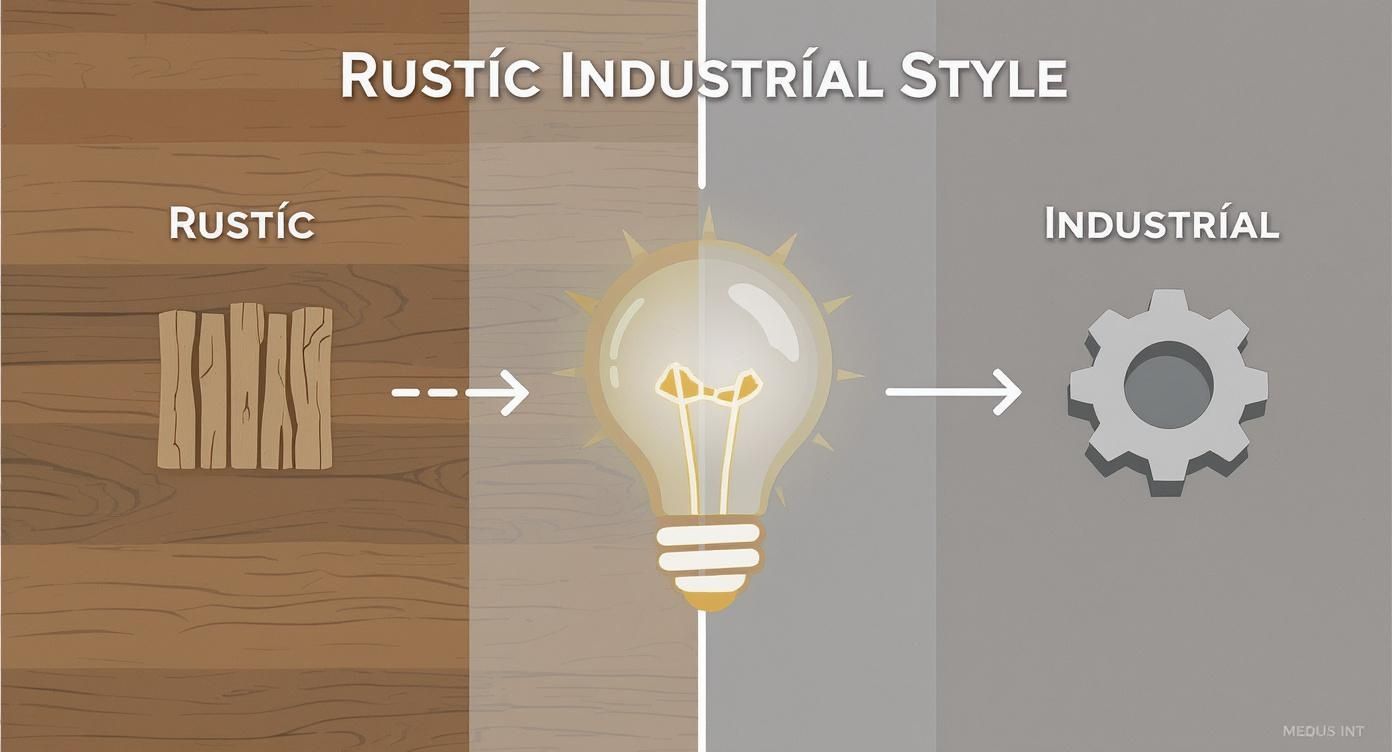
As the diagram shows, it’s a true fusion. The natural, earthy feel of rustic design seamlessly merges with the unfinished, functional elements of industrial style, creating something entirely new yet strangely familiar.
The Core Philosophy
The goal isn’t just to drop a farmhouse table into a room with a metal pipe ceiling. It’s about making it feel like those elements were always meant to be together, telling a single, cohesive story.
The success of rustic industrial interior design lies in its ability to tell a story. Each piece—from a weathered leather sofa to a steel-framed window—should contribute to a narrative of history, utility, and comfort.
This design approach is all about authenticity. It doesn’t hide a building’s bones; it celebrates them. Structural beams, exposed ductwork, and brick walls become the main event. In the same way, the so-called “flaws” in reclaimed wood—the knots, grains, and old nail holes—aren’t imperfections. They are marks of character, adding a layer of history and soul that makes a space truly unforgettable.
The Hallmarks Of Rustic Industrial Style
To really get rustic industrial design, you have to learn to see it as a collection of parts, not just a vague idea. It’s like being a chef who can identify every single ingredient in a complex dish just by taste. The style is all about a confident mix of specific materials, textures, and colors that create a conversation between a gritty factory floor and a cozy farmhouse.
Understanding these key ingredients is the secret to creating a space that feels authentic and balanced, not just thrown together. Every element has a job, from the tough-as-nails backbone of metal and brick to the soulful warmth of aged wood and soft fabrics.
The Foundational Materials
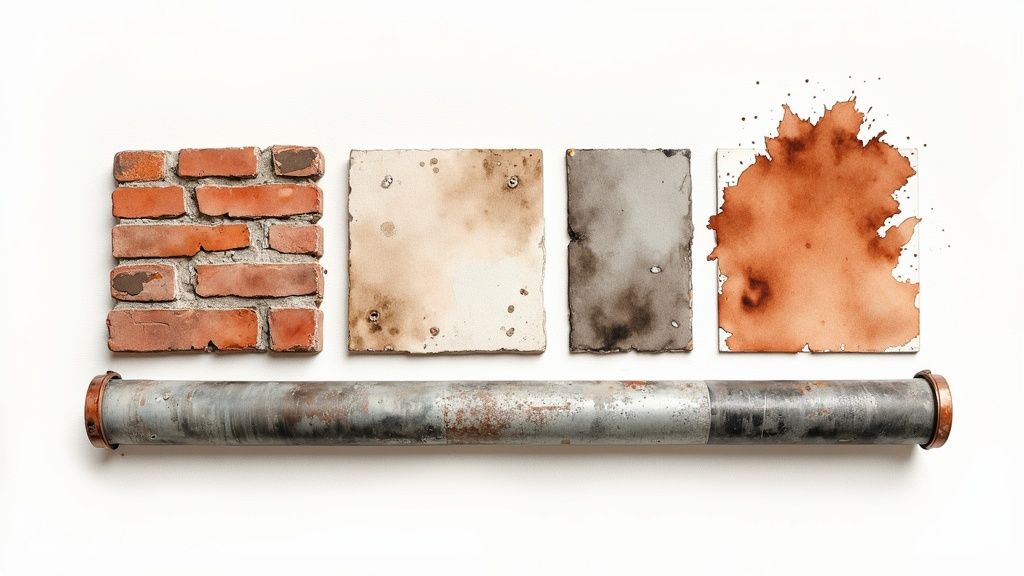
At its core, rustic industrial style is a celebration of raw, honest materials. These are the non-negotiables, the building blocks that give the style its signature look and feel. The real beauty is in their imperfections—the dings, the scrapes, the history.
-
Reclaimed Wood: This is the heart and soul of the rustic side. Unlike brand-new lumber, reclaimed wood comes with a story. Its knots, grains, and weathered patina tell you it had a life long before it entered your home. It shows up everywhere from flooring and ceiling beams to dining tables and accent walls, bringing in that essential warmth and organic texture.
-
Exposed Brick: Nothing says “industrial” quite like exposed brick. It adds a sense of history and a rich, tactile surface to any room. Whether it’s the original brickwork of an old loft or a well-chosen veneer, it creates a powerful backdrop that grounds the entire design.
-
Metal (Steel, Iron, Copper): Metal provides that strong, clean-lined structure of the industrial look. You’ll see blackened steel, raw iron, and even touches of copper or brass in window frames, staircase railings, light fixtures, and furniture legs. These pieces add a sharp, modern edge that plays perfectly off the softer rustic elements.
-
Concrete: Often found on floors or countertops, concrete offers a smooth, cool, and beautifully minimalist surface. It’s the ultimate utilitarian material, providing a neutral canvas that makes the warmer textures of wood and leather really pop.
The real magic of this style is in the contrast. It’s the friction between a cold, hard concrete floor and a plush, warm wool rug. It’s a sleek steel beam sitting above a rough-hewn wooden mantel. That’s what creates the visual interest and emotional depth.
This deliberate push-and-pull is what keeps the style from feeling flat. It ensures the space is neither too cold and sterile nor too quaint and cluttered.
The Defining Color Palette
The color scheme in a rustic industrial space is almost always grounded in a sophisticated mix of neutrals. This lets the textures of the materials do all the talking. The palette is more about creating a mood than splashing around bright hues.
Think of a palette that feels both urban and earthy at the same time:
- Neutral Foundations: Shades of gray, from a light dove to a deep charcoal, form the modern, industrial base.
- Earthy Tones: The warm browns, tans, and beiges you get from wood and leather bring in that rustic comfort.
- Dramatic Accents: Black is used with purpose for contrast—think metal frames, light fixtures, and trim.
- Warm Whites: To keep the space from feeling too dark or heavy, off-whites and creamy tones are used to soften the look and bounce light around.
The growing appeal of this style is part of a bigger shift. The global interior design market, valued at USD 294.39 billion in 2024, is seeing huge growth in mixed styles that value sustainability and character. Projections show a compound annual growth rate of about 6.3% through 2034. Discover more about these interior design market trends.
The Importance Of Texture
Beyond the materials and colors, texture is the final, crucial layer. It’s what makes the space feel inviting and lived-in, not like a museum exhibit. A great rustic industrial design engages your sense of touch by layering different surfaces against each other: the smoothness of polished concrete, the roughness of brick, the grain of wood, and the softness of textiles.
Make sure you’re incorporating textures like:
- Worn Leather: A distressed leather sofa or armchair is a classic piece that adds instant character and a sense of history.
- Chunky Knits: Think thick wool blankets and woven throws tossed over hard-edged furniture to add a layer of coziness.
- Natural Fibers: A jute or sisal rug adds a welcome organic texture underfoot and helps define a space.
- Linen and Cotton: Simple, unpretentious fabrics for curtains and cushions keep the look grounded and approachable.
By confidently combining these hallmarks, you stop just admiring the style and start actively creating it.
How To Bring Industrial Charm Into Any Room
This is where the real fun begins—taking the core ideas of rustic industrial design and making them come alive in your home. It’s all about translating the raw materials and earthy palettes into a space you can actually live in, and doing it thoughtfully, room by room.
This isn’t about stamping the same look everywhere. Each room serves a different purpose, so the trick is to strike a unique balance between ruggedness and comfort. A living room needs to feel welcoming, a kitchen has to be a workhorse, and a bedroom should be your personal sanctuary. By keeping the room’s function front and center, you can weave that authentic rustic industrial character into every corner of your house.
Crafting An Inviting Living Room
The living room is the heart of the home, so it’s the perfect stage for a bold rustic industrial statement. Your goal is to create a space that has that “wow” factor but still feels like a place you can kick your feet up and relax in. The best way to start is with a major anchor piece that screams “rustic industrial.”
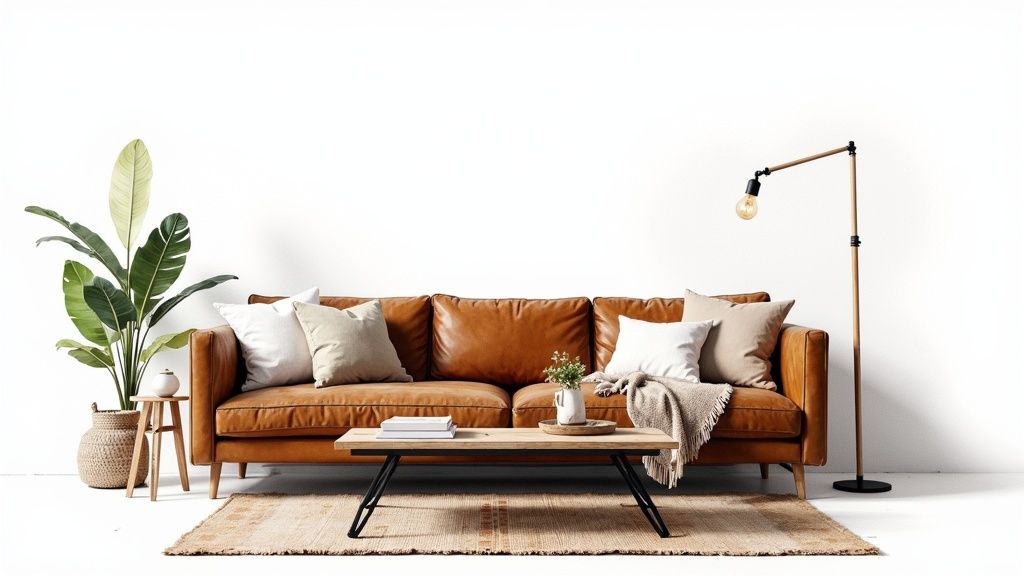
A distressed leather sofa is the classic choice. It’s tough, gets better with age, and has a rich, worn-in texture that’s hard to beat. Pair that with a coffee table made from reclaimed wood on a heavy cast iron base. Just that one combination immediately sets the tone, perfectly capturing the style’s signature contrast between soft, weathered materials and hard, raw elements.
For the floor, think about going with polished concrete flooring. It provides a clean, neutral canvas that really makes the warmer textures of your furniture and textiles pop.
- Soften the Edges: To keep the room from feeling too cold or stark, layer in plenty of textiles. A big, plush area rug, some chunky knit throws tossed over a chair, and simple linen curtains will do the trick.
- Layer Your Lighting: A mix of lighting is crucial for setting the right mood. Hang a large, metal-framed pendant light as a centerpiece, but also bring in floor lamps with warm Edison bulbs for cozier reading spots.
- Decor That Works: Choose decor that’s not just for looks. A rolling factory cart makes a fantastic and unique side table, while a tall shelving unit made from pipes and wood planks adds a strong vertical line and practical storage.
Designing A Functional And Stylish Kitchen
The kitchen is a natural home for the rustic industrial look. After all, it’s a space that’s already built around function and durability. This style just leans into that, adding a whole lot of character in the process. Picture a high-end restaurant kitchen softened by the charm of a country farmhouse.
For countertops, concrete and butcher block are your top contenders. Concrete gives you that sleek, industrial edge, while a thick wooden countertop introduces immediate rustic warmth. As for the backsplash, you can’t go wrong with classic white subway tile set with dark grout—it creates a clean, graphic look that plays beautifully against exposed brick or open shelving.
In a rustic industrial kitchen, everything should feel intentional and hardworking. Open shelving made from reclaimed wood planks and industrial pipes not only looks great but also keeps everyday items accessible, reinforcing the style’s utilitarian roots.
This is a design that celebrates honesty in both its materials and construction.
Essential Kitchen Components:
- Farmhouse Sink: A deep, wide apron-front sink is a rustic staple that’s as practical as it is beautiful. It instantly becomes a focal point.
- Industrial Faucets: Look for a faucet with a high-arc, spring-spout design. A finish in matte black or burnished metal adds that professional, no-nonsense touch.
- Durable Seating: If you have a kitchen island, pull up some simple bar stools with metal frames and unadorned wooden seats.
Creating A Cozy Bedroom Sanctuary
A bedroom has one primary job: to be a peaceful retreat. When you bring rustic industrial design in here, you’ll want to lean more heavily on the “rustic” side to make sure the space feels warm and cozy, not cold and clinical. The secret is to soften all those hard industrial lines with layers of texture.
Start with a simple bed frame—one made from black iron or a low-profile platform bed built from reclaimed wood works perfectly. This creates a minimalist foundation. From there, it’s all about piling on the comfort with natural, high-quality textiles.
Think layered bedding: soft linen sheets, a fluffy cotton duvet, and a chunky wool or faux fur throw blanket draped across the foot of the bed. It’s this contrast between soft textures and the hard lines of the bed frame that makes the room feel so incredibly inviting.
For storage, get creative. A vintage metal locker can be repurposed into a truly unique wardrobe or nightstand, while a simple wooden chest offers a home for extra blankets. Keep your color palette muted and soothing—shades of gray, beige, and off-white will help create that serene atmosphere you need for a good night’s sleep.
The Industrial Bathroom Retreat
The bathroom is a fantastic place to experiment with rustic industrial design on a smaller scale. It’s a style that feels clean, durable, and packed with personality. You can make a powerful statement with a concrete vanity top or a long, trough-style sink.
Pair your vanity with a mirror framed in dark metal or weathered wood. When it comes to fixtures, choose faucets and showerheads in finishes like matte black, aged brass, or oil-rubbed bronze to complete the look. Open pipe shelving is the perfect solution for storing towels and toiletries, adding to the utilitarian vibe while keeping the space from feeling cramped.
- Lighting is Key: Wall-mounted sconces on either side of the mirror are a hallmark of the style, especially if they have cage guards or exposed bulbs.
- Flooring Matters: Ground the space with large-format tiles that mimic the appearance of concrete or natural slate.
- Add Warmth: Don’t forget the finishing touches. A small wooden stool next to the tub, a woven laundry basket, and a stack of plush, high-quality towels will ensure the room feels comfortable and not overly clinical.
This table provides a quick cheat sheet for bringing the rustic industrial look to life throughout your home.
Room-Specific Rustic Industrial Elements
| Room | Key Furniture Pieces | Essential Decor & Lighting |
|---|---|---|
| Living Room | Distressed leather sofa, reclaimed wood & metal coffee table, open-pipe shelving | Large metal pendant light, Edison bulb floor lamps, chunky knit throws, plush neutral rug |
| Kitchen | Butcher block or concrete countertops, metal & wood bar stools, farmhouse sink | High-arc industrial faucet, open shelving, subway tile backsplash with dark grout |
| Bedroom | Iron or reclaimed wood bed frame, vintage metal lockers, simple wooden chest | Layered natural textiles (linen, wool), minimalist sconces, muted color palette |
| Bathroom | Concrete vanity, trough-style sink, wood-framed or metal-framed mirror | Matte black or bronze fixtures, caged-bulb sconces, large-format slate-look tiles |
By focusing on these key pieces and textures, you can create a cohesive yet distinct feel in each room, all tied together by that signature rustic industrial charm.
Selecting The Right Furniture And Lighting
This is where your rustic industrial vision really comes to life. Picking the right furniture and lighting isn’t just about filling a room; it’s about curating pieces that tell a story of hard work, history, and comfort. The magic happens when you select items that feel authentic and personal, creating a perfect balance of scale, material, and character.
I always tell my clients to start with the “anchor” pieces. These are the heavy hitters—the substantial items that command attention and really define how a room is used. They’re the workhorses of your design, grounding the whole look and giving the eye a place to land.
Curating Statement Furniture Pieces
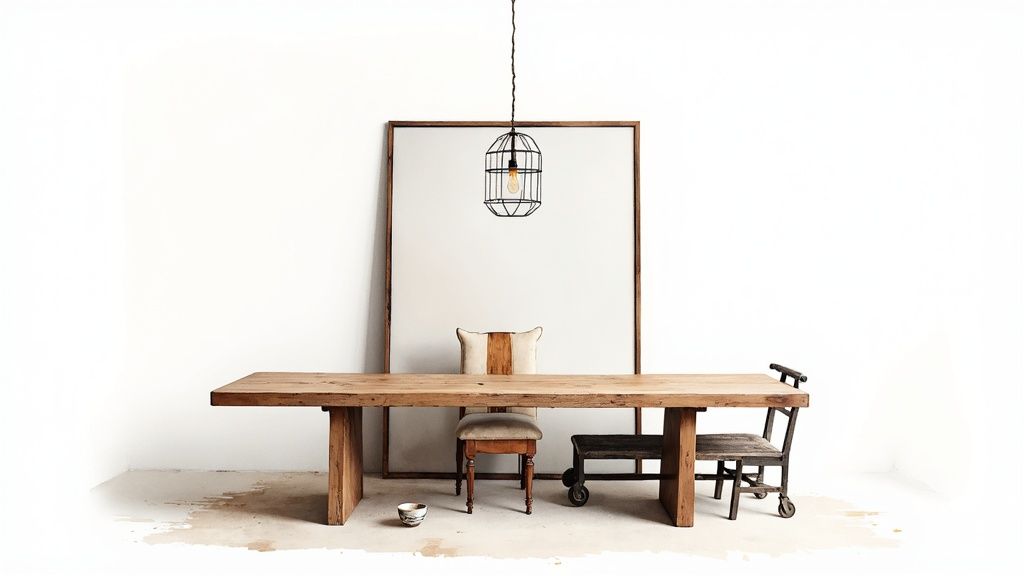
Statement furniture in this style should feel solid, purposeful, and honestly built. Forget fussy ornamentation; think raw materials and sturdy construction. A massive dining table made from reclaimed wood with a heavy cast-iron base, for example, is the perfect anchor for a dining room. Its sheer presence immediately sets the tone.
Another great trick is using a large, metal-framed mirror leaned casually against a wall. It not only makes the space feel bigger but also injects a strong industrial vibe. The goal is to pick pieces that have a sense of gravity to them but don’t completely overpower the room. They should feel like they’ve always been there—as if you stumbled upon them in an old workshop and gave them a new home. If you need more ideas, our guide on different furniture types and styles is a great resource.
The best rustic industrial furniture doesn’t just occupy space; it has a narrative. A vintage factory cart repurposed as a coffee table or a set of old metal lockers used for storage adds a layer of history that new items simply cannot replicate.
This focus on repurposing is a true hallmark of the style. It’s all about seeing the hidden potential in objects with a past, celebrating their dings and scratches, and giving them a new, functional role in your home.
Illuminating Your Space With Intent
In a rustic industrial space, lighting is so much more than a utility. It’s one of your most powerful design tools, allowing you to sculpt the mood and highlight cool architectural features. The right fixtures can take a room from feeling cold and cavernous to warm and inviting in an instant. Think of them as the jewelry of the space—the final touch that pulls everything together.
It’s interesting to see how tastes shift. Market data shows the popularity of pure rustic decor dipped slightly from a 9% preference in 2018 down to 6% by 2020. This tells us people are moving toward blended, hybrid styles like rustic industrial, which shows its staying power and evolving appeal.
Here are a few of my go-to lighting options that absolutely nail the look:
- Edison Bulbs: You can’t go wrong with these. The warm, amber glow from an exposed filament is iconic for this style. Use them in pendants, sconces, or even simple cord fixtures for instant vintage character.
- Cage Pendants: Those tough metal cages around bulbs are a direct callback to old factory safety lighting. Hanging a few in a row over a kitchen island or dining table creates a fantastic visual rhythm.
- Track Lighting: It’s incredibly versatile. Track lighting is perfect for washing a brick wall with light or spotlighting a piece of art, adding a modern, functional edge.
- Pipe-Style Sconces: I love using wall sconces made from industrial piping. They add a raw, mechanical detail to hallways, bathrooms, or when placed on either side of a statement mirror.
When you carefully choose furniture that feels substantial and lighting that is both functional and atmospheric, you’re not just decorating—you’re building a space rich with character that is true to the rustic industrial spirit.
Common Design Mistakes To Avoid
Getting the rustic industrial look right is all about balance. It’s a style that’s meant to feel authentic and a little bit rugged, but it’s surprisingly easy to get it wrong. Veer too far one way and you’re in a cold, sterile warehouse; too far the other, and it just looks cluttered. Let’s walk through the most common slip-ups I see and how to steer clear of them.
The biggest mistake? Forgetting the warmth. People often get so excited about the “industrial” part—the metal, the concrete, the exposed pipes—that they end up with a room that feels more like a factory floor than a welcoming home. It can be visually interesting, sure, but it’s not a place you want to kick back and relax in.
Overlooking The Importance Of Warmth
The fix is simple: consciously layer in softness. Don’t hold back on textiles. A thick, high-pile rug is a game-changer on a polished concrete or hardwood floor. Think about adding chunky knit blankets over the arm of a leather sofa and piling on the cushions to invite people in.
This is where the rustic side of the style really gets to shine. Warm, reclaimed wood is your best friend for fighting back against the coldness of metal and brick. You’re always looking for that perfect mix of hard and soft, cool and warm.
Think of it as a conversation between your materials. A room filled with nothing but hard surfaces will feel harsh and echo every little sound. When you bring in wood, leather, and plush fabrics, you’re inviting the industrial elements to feel like a deliberate choice, not an oversight.
Curated Character vs. Clutter
Another trap people fall into is confusing character with clutter. We love repurposed, vintage finds in this style, but it’s a slippery slope. A few carefully selected pieces can tell a fascinating story, but too many just scream “junkyard.”
The secret is giving your key pieces some breathing room. That incredible factory cart you found and turned into a coffee table? It completely loses its wow factor if it’s drowning in a sea of other small, distressed knick-knacks. You have to edit.
Here are a few pointers to keep things feeling curated, not chaotic:
- Embrace Negative Space: Not every wall needs art and not every corner needs a plant. White space is your friend—it makes the things you do display feel more important.
- Balance Old and New: Pair that weathered, antique piece with something sleek and modern. A distressed wood table looks amazing with clean-lined metal chairs. This contrast is the heart of the style.
- Get the Lighting Right: This is non-negotiable. A dark room filled with heavy wood and metal will feel like a dungeon. You need to layer your lighting—a main overhead fixture, task lamps for reading, and some ambient light to create a warm, inviting atmosphere.
By keeping these potential pitfalls in mind, you can dial in your rustic industrial look and create a space that’s got that perfect blend of edge and comfort.
Bringing Your Vision to Life With AI
It’s one thing to have a mood board full of gorgeous rustic industrial images, but it’s another thing entirely to translate that vision into your own living room. That leap from inspiration to reality can feel huge, and it’s where a lot of design projects stall.
Thankfully, you don’t have to rely on guesswork anymore. Imagine being able to see exactly how that exposed brick wall or those steel-framed windows would look in your actual space before you commit a dime or a drop of paint. That’s exactly what an AI design tool does.
You start by simply uploading a photo of your room. Tell it you’re going for a rustic industrial look, and in just a few seconds, it will generate a whole range of design ideas perfectly mapped to your room’s unique dimensions and layout.
Experiment Without Commitment
This is where the real fun begins. You can play around with all the signature elements of the style without any risk.
Worried that a full brick accent wall might overwhelm your bedroom? Generate a preview and see for yourself. Curious if polished concrete floors will clash with your favorite leather sofa? An AI tool shows you in an instant. It takes the anxiety out of making big decisions.
This freedom to experiment is what makes the process so powerful. You can swap out furniture, test different material combinations, and rearrange layouts with a few clicks. It stops feeling like a high-stakes gamble and becomes a genuinely creative process.
By visualizing different layouts and material palettes, you can fine-tune the balance between raw industrial features and warm rustic comfort. This ensures the final result feels both authentic to the style and perfectly suited to your personal taste.
From Digital Mood Board to Action Plan
These tools do more than just show you a pretty picture; they give you a clear path forward. The AI can actually recommend specific furniture and decor that fit the rustic industrial vibe, essentially creating a custom shopping list for you.
Suddenly, you’re not just looking at a rendering. You have a direct link to find that perfect reclaimed wood coffee table or those vintage-style Edison bulb pendants you fell in love with.
It turns a simple design concept into a full-blown project roadmap. You get the visual, you get the shopping list, and most importantly, you get the confidence to make it all happen. To see this in action, check out our guide on using an AI app for interior design and start your own transformation.
Frequently Asked Questions
https://www.youtube.com/embed/6IYOKjZCWlI
Diving into a new design style always brings up a few questions. Let’s tackle some of the most common ones that come up when creating a rustic industrial look at home.
Can I Use Rustic Industrial Design in a Small Apartment?
You absolutely can. The trick in smaller spaces is being smart about scale and selection. Instead of a full-on brick wall that might feel overpowering, think about using a lightweight brick veneer on just one accent wall. You get the same rugged feel without visually shrinking the room.
Stick with lighter wood tones for your furniture and floors to keep the space feeling open and airy. Metals are your friend here—especially reflective ones like polished steel—as they bounce light around beautifully. Most importantly, look for multi-functional furniture with clean lines and use tall, narrow shelving to draw the eye up and keep your floor space clear.
Is Rustic Industrial Design Expensive to Create?
Not at all—in fact, it can be incredibly budget-friendly. One of the best things about this style is how it celebrates salvaged and repurposed materials. It’s all about character and history, not pricey designer labels or flawless finishes.
Flea markets, antique shops, and architectural salvage yards are your best friends. These places are goldmines for unique, affordable pieces that bring genuine soul into your home for a fraction of what you’d pay for new items.
DIY projects are another fantastic way to keep costs down. Building your own pipe shelves, crafting a headboard from reclaimed pallet wood, or refinishing an old metal filing cabinet are all great ways to get the look while adding a personal touch.
How Do I Keep the Style From Looking Too Cold or Masculine?
The secret is all about balance. You have to consciously soften the hard, raw industrial elements with plenty of cozy textures. Think of it as adding layers of comfort.
- Soften with Textiles: Lay down a plush area rug to define a seating area, drape a chunky knit throw over a leather sofa, and pile on pillows in natural fabrics like linen and cotton.
- Bring in Greenery: A few houseplants can make a huge difference. They add a living, organic touch that literally breathes life into a space and breaks up all the neutral tones.
- Warm Up the Lighting: A good lighting plan is crucial. Use warm-toned bulbs and install dimmers so you can easily shift the mood from bright and functional to cozy and intimate.
By thoughtfully layering in these softer, more natural elements, you ensure your home feels welcoming and comfortable, not like a sterile, uninviting warehouse.
Ready to stop guessing and start seeing? With RoomGenius, you can upload a photo of your own room and watch your rustic industrial design ideas come to life in seconds. Get AI-generated layouts, furniture suggestions, and a clear path forward to creating the space you’ve been dreaming of.