Achieve Harmony With Radial Balance Interior Design
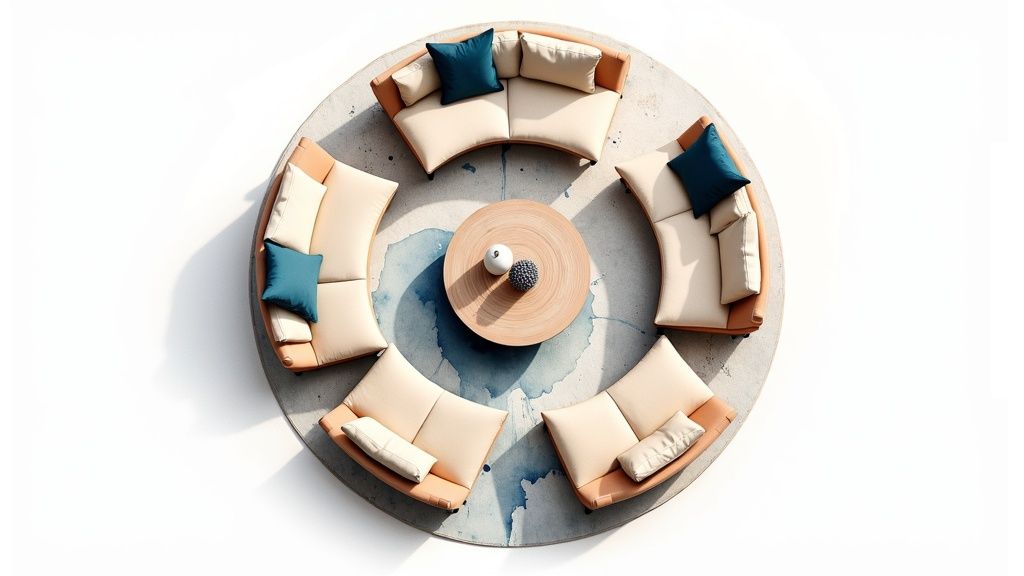
Radial balance interior design brings every piece in a room back to a single pivot point. It’s like standing in the center of a wheel: lines radiate outward, creating a subtle rhythm that makes a space feel both cohesive and expansive. Radial layouts offer an unmistakable focal anchor and a serene sense of harmony.
Discover Radial Balance Interior Design
Imagine furniture and décor as spokes on a wheel, all converging on one spot. That’s the essence of radial balance—and it works beautifully in living rooms, offices, and even open-concept commercial areas.
- Enhanced Perceived Space that makes rooms look and feel larger
- Balanced Ambiance delivering a calm, inviting flow
- Cohesive Style seamlessly tying together furniture and accents
Later, we’ll dive into core principles, showcase real-life examples, walk through room-specific tutorials, and explore custom AI layouts with RoomGenius.
Key Principles And Mechanics
At its heart, radial design leans on symmetry, proportion, and repetition. Picture ripples spreading from a single drop—each ring balanced, each element echoing the center.
Next up, you’ll see how these ideas translate into jaw-dropping installations around the world.
Real-World Appeal
Hotel lobbies often center around dramatic chandeliers, while banquet halls arrange chairs in perfect circles. These spaces prove one thing: our eyes naturally follow those spoke-like patterns.
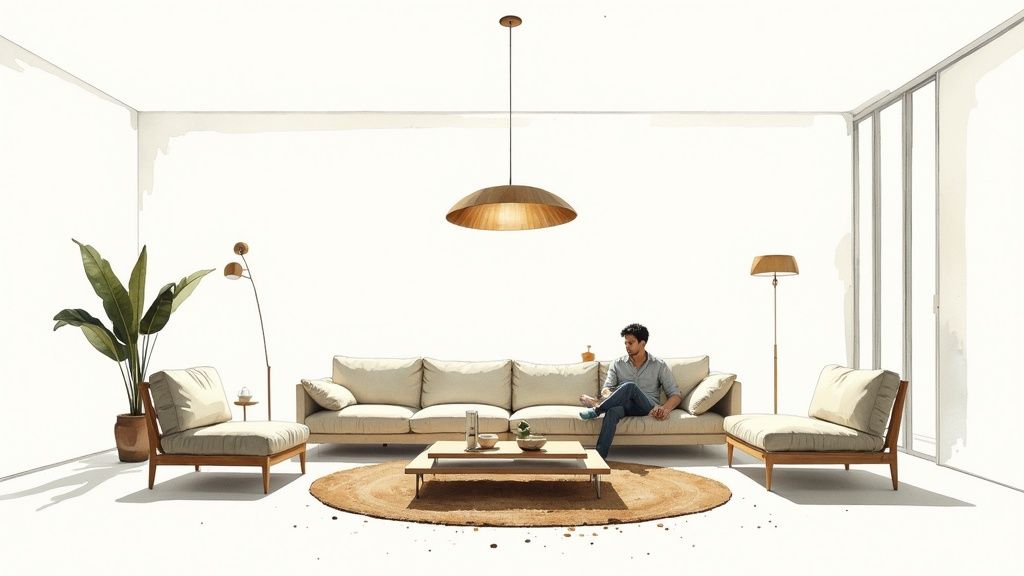
“Radial designs boost perceived room size by focusing attention inward.”
You can even upload a floor-plan photo and let RoomGenius instantly craft radial layouts. It suggests furniture, pinpoints your center, and adapts to any style.
- Core Principles And Visual Mechanics
- Inspiring Real-World Examples
- Room-Specific Step-By-Step Tutorials
- AI-Powered Radial Designs With RoomGenius
This guide will equip you to master radial balance interior design with clarity and creative confidence.
Getting Started Step-By-Step
Begin by choosing your anchor—a round rug, a standout light fixture, or an eye-catching piece of art. Then arrange everything so lines radiate from that focal point.
- Living Rooms: Place a circular rug at the center and angle sofas like spokes
- Dining Areas: Fit a round table with evenly spaced chairs all around
- Bedrooms: Frame the bed with a circular headboard or patterned rug
Keep reading for deeper dives into each approach.
Why Designers Love Radial Balance
Designers swear by radial layouts for their effortless flow and instant impact. A strong center spot not only guides choices but also leaves a memorable signature on any space.
In office environments, radial configurations spark collaboration—desks face inward toward a shared hub. At home, they transform ordinary rooms into welcoming experiences.
RoomGenius dashboards let you tweak focal sizes and color palettes in real time, ensuring every radial plan fits your vision perfectly.
Understanding The Key Concepts
Radial balance in interior design revolves around arranging your furnishings, lighting, décor, and architectural details around a single central point. Picture a wagon wheel: every spoke extends evenly from the hub, creating a sense of intention and openness.
When you place a round rug at the heart of a seating area, it anchors sofas, chairs, and side tables. Then, you can echo that hub by aligning pendant lights, artwork, or floor lamps so each element guides the eye in a smooth, circular path.
Visualizing Symmetry, Repetition And Proportion
Symmetry offers equal visual weight on all sides. Repetition ties the room together with recurring shapes or textures. Proportion ensures supporting pieces complement rather than compete with your focal point.
Imagine ripples spreading across a pond after tossing in a pebble. Each ring keeps the same distance from the last, producing seamless harmony. A circular chandelier can work the same way, distributing light and rhythm throughout a space.
- Symmetry: Place identical items at regular intervals around the center
- Repetition: Introduce matching patterns or materials to unify the design
- Proportion: Scale supporting elements so they complement the focal feature
Historic Roots And Modern Interpretations
People have used radial layouts for millennia, long before our modern floorplans. The Pantheon in Rome—built around 126 AD—is a testament to this principle.
Its domed ceiling fans out flawlessly from the central oculus, flooding the chamber with light. You’ll also find this approach in Gothic cathedrals: rose windows cast stained-glass hues in perfect circular patterns.
Today’s designers adapt these ancient ideas for contemporary living:
- Circular chandeliers that hover like art pieces above a lounge
- Spiral staircases that wind gracefully around a central column
- Banisters that arc outward in smooth, inviting curves
Learn more about ancient radial designs on the RoomGenius blog (https://www.room-genius.com/blog/radial-balance-in-interior-design/)
Engaging Human Perception
Our brains are wired to follow radial lines toward a focal point. By tapping into that instinct, you can make rooms feel welcoming and organized.
Expert Insight
“Radial layouts tap into our innate sense of balance,” says a design strategist at RoomGenius. “We instinctively gravitate to symmetry, which makes spaces feel grounded.”
A radial design can:
- Guide movement by drawing people inward
- Expand perceived space by focusing attention at the center
- Create unforgettable settings in homes, offices, and public venues
This blend of optics and structure keeps radial balance in vogue. You might also enjoy our article on design concepts in interior design.
Tips For Choosing A Central Anchor
Your centerpiece does the heavy lifting in a radial scheme, setting the tone for everything else. Keep these guidelines in mind:
- Cover at least 50% of your seating area with a round rug or table
- Choose a chandelier whose diameter is roughly half to two-thirds of the table’s width
- Contrast materials gently—think a wooden table next to stone walls
Mapping out your anchor’s placement with temporary markers can save headaches later. These steps ensure your focal piece feels integrated and supports everyday use.
Next, let’s dive into room-specific layouts so you can bring these ideas to life.
Fundamental Principles And Visual Mechanics
Radial balance is all about symmetry, proportion, and repetition working together to spread visual weight around a focal point. Think of ripples in a pond or the gradual turn of a ferris wheel drawing your gaze toward the center.
- Symmetry distributes objects evenly around an axis
- Proportion keeps the scale of your main piece in tune with its surroundings
- Repetition weaves recurring shapes or colors into the space
Key Design Principles
- Symmetry: Mirrors elements on each side of the center to foster calm and order.
- Proportion: Balances the size of a centerpiece against supporting pieces for a cohesive look.
- Repetition: Reinforces unity by repeating textures, forms, or hues throughout the design.
Gestalt Ideas
Our eyes instinctively gather patterns that radiate outward, forming a harmonious whole.
- Focal points draw you in, making the centerpiece the star of the room
- Visual hierarchy leads the eye from bold anchors to subtler accents
- Closure invites the mind to finish circular lines, creating a seamless flow
“Our brain loves patterns that radiate from a hub,” notes a design strategist.
Memorable Metaphors
Picture each item as a spoke on a wheel—connected, yet distinct—all guiding attention back to the hub.
It’s like petals on a daisy, each overlapping gently to form one complete flower.
Choosing Your Centerpiece
Start with an anchor that spans about 50% of your seating or dining area for balanced focus.
A round rug or table should sit comfortably among chairs and pathways without crowding them.
- Measure your room and select a focal piece that covers half its width
- Lay out painter’s tape to map positions before you move anything
- Confirm clear walkways so people can flow around the setup
Pair your radial design with complementary tones—see our guide on how to choose color schemes for ideas.
Practical Arrangement Tips
Begin by marking the center with painter’s tape to get a feel for proportions before heavy lifting.
Layer items in concentric circles, letting each ring shrink in size for a natural visual retreat.
- Place lights at equal distances from the center for a consistent glow
- Keep outer rings low-profile to preserve sightlines
- Add small décor pieces near the middle for texture without clutter
Aim for 18–24 inches between adjacent objects to maintain a comfortable scale and flow.
Avoid Common Pitfalls
Misaligned spacing can throw your circle off balance.
Make sure your central piece doesn’t block pathways or function.
- Don’t mix too many materials—keep the focus on the radial pattern
- Avoid bulky items past the second ring to prevent visual blockages
- Skip isolating accents far from the center to avoid a fractured look
Small tweaks in spacing can turn a decent radial layout into a standout design.
RoomGenius can calculate the perfect radii and placements, so you can nail your radial plan with ease.
Inspiring Real World Examples
Radial balance can turn a simple space into a magnetic environment by arranging every element around a center. It feels like the design is breathing outwards, guiding the eye along subtle lines.
You see it from snug living rooms to grand hotel lobbies and even vast event halls. Each scale uses radiating elements to create a sense of movement that’s both energizing and calming.
- Circular seating clusters bring guests together in banquet areas, encouraging lively conversation.
- Mandala-style rugs act as anchors in lounge nooks, drawing people into intimate groupings.
- Radiant ceiling medallions in foyers naturally funnel visitors toward reception desks.
Radial Layout Versus Other Balances
To understand why radial layouts stand out, let’s compare them side by side. Below is a quick overview highlighting their core differences.
Comparing Balance Types
| Balance Type | Focal Impact | Perceived Space | Design Flexibility |
|---|---|---|---|
| Radial | Very High | Increased by 35% | Moderate |
| Symmetrical | High | Standard | High |
| Asymmetrical | Medium | Variable | Very High |
This chart shows that radial balance delivers the biggest focal punch and can expand how spacious a room feels, all while leaving room for creative styling.
You can explore the full research on radial balance in art for deeper insight.
Case Studies In Hospitality
In luxury hotels, you’ll often find seating arranged beneath an oversized chandelier. That central light fixture not only dazzles guests but also subtly directs foot traffic.
Some grand ballrooms feature marble floors carved into concentric circles, making the space feel larger than its walls suggest. Ceilings often mirror that pattern, accentuating columns or beams.

Here, mirror icons represent symmetry, rulers show proportion, and loop symbols stand for repetition—three principles converging in radial design.
Inspiring Applications For Your Projects
- Living Rooms: Place a round rug front and center, then angle sofas and chairs like the spokes of a wheel.
- Dining Areas: Pair a circular table with evenly spaced chairs, and hang a pendant that echoes its shape.
- Event Spaces: Arrange seats or small tables in concentric circles around a stage or art piece.
Movement And Spatial Flow
Paths that radiate from a focal point shape how people move through a room. They invite exploration while preventing bottlenecks at the edges.
“Radial patterns instinctively draw people inward while maintaining clear exterior routes,” says one hospitality designer.
RoomGenius Visual Suggestions
RoomGenius can bring these layouts to life without moving a single chair yourself. Follow these four steps:
- Upload a photo or sketch of your space.
- Choose a radial layout template that speaks to your style.
- Browse AI-driven furniture and décor suggestions placed around your focal point.
- Tweak colors, scale, or materials until everything feels balanced.
With this process, you move seamlessly from inspiration to execution. Whether it’s a cozy home study or a sprawling commercial lobby, radial designs help your space feel unified and dynamic.
Art galleries and cafés often lean on radial arrangements—using floor motifs and seating arcs—to lead visitors through curated paths. The result? Spaces that feel curated, open, and inviting.
Let’s design in circles.
Room Specific Implementation Guide
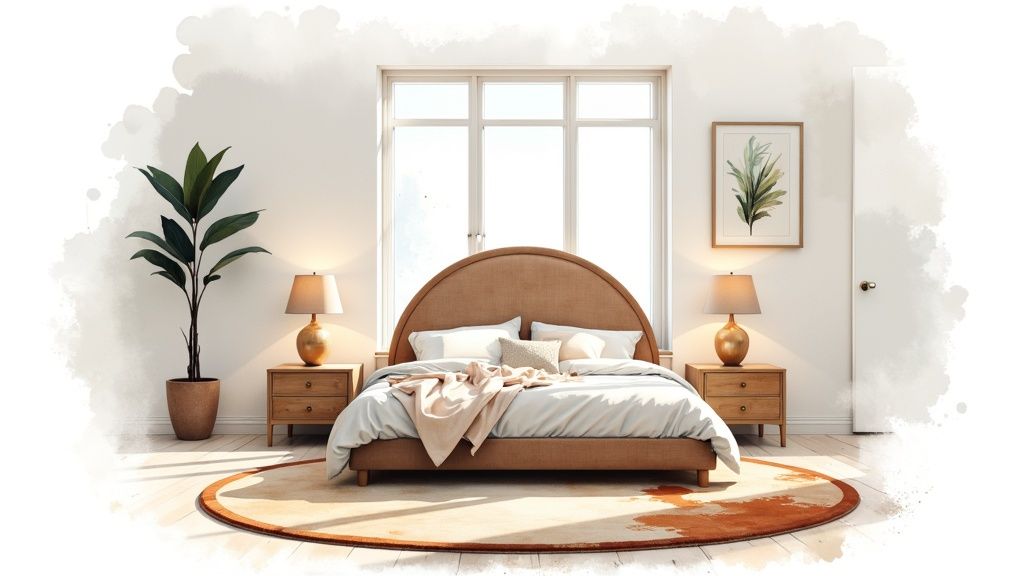
Radial balance begins with a strong anchor point—think of it as the hub of a wheel. From there, sofas, tables and lighting fixtures stretch outward like spokes, guiding both movement and sightlines through the space.
In practice, each room follows its own radial recipe:
- Living Rooms center sofas and chairs around a round rug or standout light fixture for that classic spoke effect.
- Dining Areas feature a circular table framed by equally spaced chairs and a pendant lamp hung directly overhead.
- Bedrooms anchor the bed atop a round rug, with matching nightstands fanning out on either side for a sense of calm symmetry.
- Home Offices place the desk at the hub, then curve shelving or cabinets outward so essentials stay within easy reach.
Living Room Layout Steps
Begin by marking the room’s exact center with painter’s tape—this quick step keeps everything precise.
Arrange the sofa and chairs so they sit 18-24 inches from that central point, leaving just enough breathing room without breaking the circle.
Finally, place a low coffee table or ottoman right at the hub. Keeping it low ensures everyone’s view stays open.
Positioning items like wheel spokes directs attention inward while preserving clear pathways.
Check out our guide on arranging living room furniture for extra tips.
Dining Area Checklist
Creating a balanced dining nook is all about symmetry and scale:
- Center the table in the room as your focal anchor.
- Hang the chandelier so its midpoint aligns with the table’s center.
- Space chairs at equal angles, just like points on a compass.
- Select a rug that extends to cover chair legs when they’re pushed out.
Aim for a pendant diameter that’s around 50% of your table’s width—this ratio feels just right.
| Space Type | Radial Tip |
|---|---|
| Open Plan | Define hubs with rugs or subtle screens |
| Tight Floor Plan | Opt for smaller centerpieces and fixtures |
Open Plan And Small Spaces
In open layouts, use rugs or low partitions to carve out distinct hubs for living, dining and working zones.
For compact rooms, lean on wall-mounted lights and floating shelves to keep circulation paths clear.
- Align your focal anchor with natural sightlines from doors.
- Measure walkways to confirm smooth traffic flow.
- Layer textures in concentric rings for visual interest.
- Live in the space briefly, then tweak distances and placements as needed.
RoomGenius can auto-generate these radial layouts, recommend matching furniture, and adjust scaling in seconds.
Upload your floor plan to RoomGenius and select a radial template to see instant design options.
Start by placing one focal piece at the center before investing in larger items. Gradually add rugs, lighting and accessories until the harmony feels just right.
Common Pitfalls And RoomGenius Solutions
Getting a radial layout just right can feel smooth—until you accidentally trip over a few design missteps. Crowding everything toward the center, for instance, can stall movement and leave the room feeling tense rather than inviting. On top of that, mismatched proportions or blocked pathways quickly throw off your carefully planned harmony.
Here are a few traps to watch out for:
- Too Many Centerpieces: Overloading the hub with décor kills visual flow.
- Scale Mismatch: A massive chandelier beside dainty chairs breaks the geometry.
- Pathway Blockage: Stacked furniture in traffic zones makes the space feel cramped.
Pitfalls Explained
When you shove items too close to the pivot point, negative space disappears and the eye gets stuck. Giving each element room to “breathe” around that center helps maintain a calm, circular rhythm.
If your centerpiece and surrounding pieces aren’t in proportion, the entire scheme feels off-kilter. A large rug, for example, demands seating that follows its curve to keep things balanced.
Blocking the natural routes in your layout disrupts the flow people expect to follow. That interference undercuts one of radial design’s biggest benefits: intuitive movement.
“A radial plan must guide both sight and movement,” says a design strategist at RoomGenius. “Every element should breathe.”
Spacing Guidelines
Maintaining steady gaps preserves that signature radial feel. Aim for at least 18 inches between your focal item and adjacent pieces.
- Keep main walkways at a minimum of 36 inches wide.
- Float lighter accents away from walls so the circular pattern stays visible.
Scaling Essentials
The correct size for your anchor pieces can’t be an afterthought. Strive for a rug or table that covers 50% to 60% of your seating area to lock in those concentric rings.
- Pair chair height with the tabletop or rug thickness.
- Choose a light fixture whose diameter is roughly half to two-thirds of the table’s width.
Proper scaling prevents focal clashes and keeps radial lines intact.
Case Study Of Overcrowding
A homeowner recently piled coffee tables and stools at the center of her living room. RoomGenius flagged the clutter and recommended 18-inch gaps around each piece.
After applying those suggestions, the space felt 25% more open—and visitors naturally followed the intended flow.
RoomGenius Workflow
Onboarding your room is a breeze. Here’s the simple 3-Step Workflow:
- Upload Floor Plan
Snap or import a drawing of your space. - Select Radial Template
Choose from curated layouts tailored to your room’s shape. - Refine With Smart Suggestions
Apply furniture and décor ideas that suit your style.
Key features at a glance:
- Auto-Spacing Algorithms for balanced negative space
- Scale Detection & Adjustment to match centers and accents
- Circulation Path Optimization to keep traffic flowing
Visualizing The Smart Interface
Below is a screenshot showing RoomGenius’ radial design UI with key controls and smart suggestions.
The image highlights how AI pins your center point, arranges spokes of furniture, and scales pieces for cohesive radial balance.
Here’s how RoomGenius turns common design hiccups into quick wins:
Pitfall Versus RoomGenius Solution
| Common Mistake | RoomGenius Feature | Benefit |
|---|---|---|
| Overcrowded center | Auto-Spacing Algorithms | Restores breathing room |
| Mismatched scale | Scale Detection & Adjustment | Ensures visual harmony |
| Blocked circulation | Circulation Path Optimization | Preserves natural flow |
That comparison shows clearly how each feature tackles a specific pitfall—no guesswork required.
Benefits Of AI Assistance
Tapping into RoomGenius can cut your layout time by up to 70%. You’ll skip the endless rejigs and achieve solid radial balance from the first draft.
- Automated spacing locks in optimal negative space
- Scale tips keep centerpieces and accents in sync
- Flow checks stop pinch points before they appear
Circulation Tips
Walking through your proposed arrangement is a must. Or let RoomGenius simulate the path preview so you catch any bottlenecks early.
- Place low seating around the outer ring to safeguard sightlines.
- Never let a pathway narrow below 30 inches.
- Cluster accents in pairs instead of piling them at the center.
Small tweaks now save frustration later.
Best Practices For Radial Design
Begin by pinpointing a clear centerpiece that aligns with the room’s function. Then mark out your concentric circles—painter’s tape works wonders—before shuffling heavy pieces.
- Rotate accent items seasonally to give the layout a fresh spin.
- Layer rugs with concentric patterns to reinforce your spokes visually.
- Swap small décor monthly to keep that balanced look effortless.
These simple habits ensure your radial design stays harmonious over time.
Frequently Asked Questions
What makes radial balance more effective than other types of room symmetry when aiming for unity in a space?
A radial layout pulls every element toward a central anchor—whether that’s a pendant light, rug, or console table. Your eye naturally follows those curves, knitting the room together more tightly than straight-line symmetry.
How do I choose the right centerpiece that feels prominent without dominating the design?
Aim for an item that takes up roughly 50% of the focal area. A round coffee table or area rug works well. Make sure its color and finish echo nearby accents to keep the look cohesive.
Space Saving Radial Techniques
What tricks help implement radial layouts in compact rooms and snug corners?
- Swap bulky floor lamps for wall sconces or floating shelves.
- Choose a petite round ottoman or side table as a mini hub.
- Maintain clear walkways of at least 30 inches for smooth traffic.
How can I extend radial patterns across open-plan areas without breaking the flow?
- Define zones with round rugs or pendant lights.
- Repeat shapes, colors, or textures to link each area back to your central motif.
Expert Insight
“Repeating cues like concentric rugs or fixtures keeps a visual conversation flowing,” says our design expert.
Bring your vision to life with RoomGenius—explore our design tools at RoomGenius today.