How to Increase Property Value and Boost Your Home's Worth
Figuring out how to increase your property’s value is less about throwing money at it and more about making smart, targeted investments. It really boils down to a blend of high-impact cosmetic fixes and strategic renovations that buyers genuinely care about. You want to focus your time and budget on the projects that will give you the most bang for your buck when you decide to sell.
The Blueprint for a More Valuable Home
So, where do you start? The real secret is to create an actual, actionable plan that goes beyond generic advice. A great strategy balances those quick, satisfying wins with the bigger projects that deliver a serious return on investment (ROI). We’ll break it all down into four key areas: maximizing that all-important curb appeal, modernizing the rooms that matter most, boosting energy efficiency, and adding a few smart home touches.
Knowing where to put your money is half the battle. Not every home improvement is a winner, and what’s a hot ticket in one neighborhood might fall flat in another. For example, a minor kitchen remodel—think new countertops and fresh cabinet faces—often gives you a better ROI than a super high-end, chef’s-kitchen overhaul. Why? Because it appeals to a wider pool of buyers without pricing your home out of the local market. The same goes for small, visible changes like a fresh coat of paint or new cabinet handles; they can dramatically shift how a buyer perceives your home for a tiny fraction of the cost.
Prioritizing Your Projects
Before you swing a single hammer, you need to think about the potential impact of each project. To really get a handle on what moves the needle, it’s worth exploring a comprehensive guide on increasing property value and ROI—it offers some fantastic insights for making smarter decisions.
So, where should you focus first? Here are the heavy hitters:
- Cosmetic Updates: These are your low-cost, high-impact champions. We’re talking about painting walls in fresh, neutral colors, swapping out dated light fixtures, and replacing old, tarnished cabinet hardware. These small changes make a space feel instantly modern and well-cared-for.
- High-Traffic Room Renovations: Kitchens and bathrooms always have and always will offer the best returns. Stick to timeless updates like durable quartz countertops, sleek new faucets, and clean, simple tile.
- Curb Appeal: You never get a second chance to make a first impression. A little landscaping, a freshly painted front door, and a clean, well-maintained exterior can boost your home’s perceived value before a buyer even walks through the door.
- Energy Efficiency: More and more, buyers are looking at the long-term cost of a home. Upgrades like new windows or better insulation can be a major selling point for anyone concerned about future utility bills.
The goal isn’t just to spend money—it’s to invest it wisely. A successful project is one that not only makes your home a better place to live but also adds tangible value that you’ll get back at the closing table.
To help you map out your plan, I’ve put together a quick summary of different improvement strategies. This should give you a clearer picture of typical costs and what kind of return you can realistically expect.
Property Improvement Strategies at a Glance
| Improvement Type | Typical Cost | Potential ROI | Best For |
|---|---|---|---|
| Minor Kitchen Remodel | $15,000 - $40,000 | 70% - 110% | Homes with a solid layout but dated finishes. |
| Bathroom Remodel | $10,000 - $25,000 | 60% - 70% | Enhancing universal appeal and modern functionality. |
| Landscaping & Curb Appeal | $1,000 - $7,500 | 100% - 200%+ | Making a killer first impression and attracting more buyers. |
| Interior & Exterior Paint | $2,000 - $6,000 | 50% - 100% | A quick, cost-effective refresh for almost any property. |
This table shows that you don’t always have to take on a massive project to see a great return. Often, the smaller, more thoughtful upgrades can make the biggest difference.
High-Impact Upgrades on a Small Budget
Thinking you need a massive budget for renovations that actually move the needle on your property’s value? Think again. Some of the most powerful improvements are surprisingly cheap and can be knocked out in a weekend. These projects deliver an instant visual payoff, making your home feel clean, modern, and far more appealing to buyers without draining your bank account.
The secret is focusing on the things that hit you the moment you walk into a room. I’m talking about the wall color, the feel of the hardware, and the quality of the light. Get those right, and you’re already halfway there.
A Fresh Coat of Paint Goes a Long Way
Never, ever underestimate what a few cans of paint can do. It’s consistently one of the highest ROI projects out there for one simple reason: it completely transforms a space. That dark, moody accent wall or the very specific color you loved five years ago? It can make rooms feel smaller and dated, forcing buyers to do the mental work of imagining the space differently—and most won’t bother.
Your best bet is to stick with light, neutral colors. They create a bright, airy backdrop that appeals to the widest audience possible, essentially giving them a blank canvas to picture their own life in.
- Greige (Gray + Beige): This is my go-to. It’s a sophisticated chameleon that works with both warm and cool-toned furniture.
- Off-White: You get that crisp, clean look without the sterile feeling of pure white. It just feels welcoming and spacious.
- Soft Grays: A modern classic. It adds a touch of elegance and plays well with nearly any accent color someone might bring in.
Even if you hire a pro, you’re only looking at a few hundred dollars for a medium-sized room. If you’ve got a roller and some free time, your only cost is supplies. The impact you get for that minimal investment is huge.
This is a great breakdown of where a home’s value really comes from.
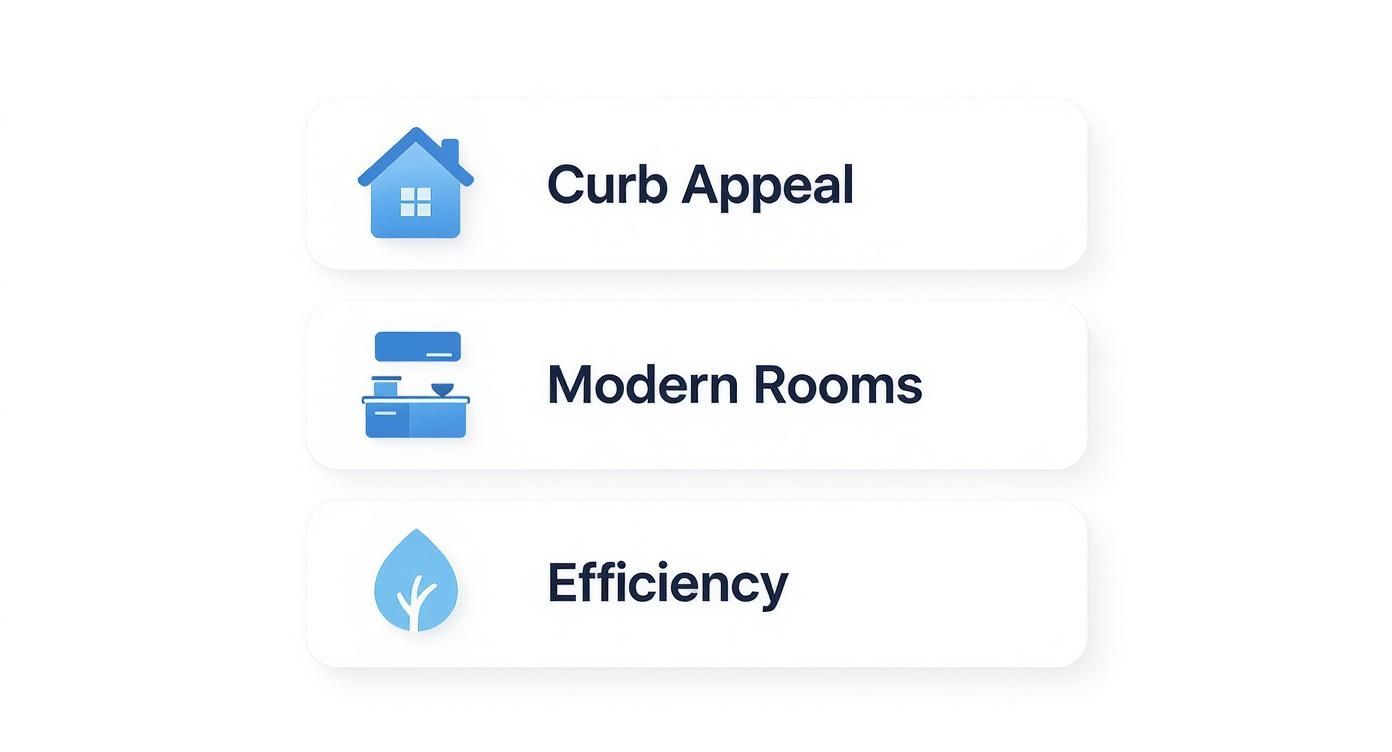
As you can see, value is a three-legged stool: curb appeal, modern rooms, and efficiency. And a little bit of effort in each area goes a long, long way.
Modernize Hardware and Fixtures
Dated hardware is like wearing scuffed-up shoes with a sharp suit—it just kills the whole vibe. Spending an afternoon swapping out old, tarnished brass doorknobs, cabinet pulls, and light fixtures is a ridiculously easy fix that instantly brings a kitchen or bathroom into the current decade. It’s a small detail that screams “this home is well-maintained.”
Not sure what finish to choose? Here’s what’s popular right now:
- Brushed Nickel: A timeless, subtle choice that fits in just about anywhere.
- Matte Black: This creates a fantastic, bold contrast, especially if you have light-colored cabinets.
- Satin Brass: Gives you that touch of modern warmth without the shiny, dated look of 80s-era polished brass.
You can often replace every single handle and pull in your kitchen for under $200, but the perceived value it adds is so much greater. The same goes for bathrooms—a new faucet and showerhead can make the whole room feel refreshed. If you’re looking for more inspiration, we have a whole guide packed with affordable bathroom remodel ideas.
A home’s value is often judged by the sum of its parts. Small, cohesive details like matching, modern hardware create a polished and premium feel that buyers notice and appreciate.
Let There Be Light
Lighting is everything. It dictates the mood and the perceived size of a room. Those heavy, dark curtains or dusty old blinds? They’re light vampires, making even big spaces feel cramped and depressing. Tearing them down is one of the easiest, most satisfying fixes you can make.
Opt for simple, clean-lined blinds or lightweight curtains that let you control privacy while flooding the room with natural light. Look up, too. That clunky old ceiling fan or dated chandelier can be swapped for a sleek, modern fixture that becomes a stylish focal point. Sometimes, all it takes is changing the lightbulbs to a brighter, daylight-rated LED to completely change the atmosphere. These little tweaks work together to create an inviting home that feels truly move-in ready.
Smart Renovations That Pack the Biggest Financial Punch
While quick, cosmetic fixes offer a fantastic immediate boost, sometimes you need to go bigger to really move the needle on your home’s value. When you’re ready to put more money into a project, the name of the game is strategy, not sentiment. This isn’t about crafting your personal dream space; it’s about creating a widely appealing home that makes buyers eager to pay top dollar.
The undisputed champions in this arena? Kitchens and bathrooms.
These are the high-traffic, high-impact zones where buyers linger the longest during a showing. They carry a huge emotional weight in the final decision. I’ve seen it time and again: an outdated kitchen or a grimy bathroom can torpedo a deal, while a fresh, modern one can be the very thing that seals it.
The good news is you don’t have to tear everything down to the studs to see a fantastic return.
The Kitchen: The Heart of Home Value
The kitchen is the command center of a modern home, and buyers will scrutinize every inch of it. A thoughtful remodel can seriously increase your property value, but the real trick is hitting that sweet spot between a minor refresh and a full-blown gut job.
A minor kitchen remodel is almost always the smartest investment you can make. It’s all about focusing on the high-impact surfaces and fixtures without messing with the room’s layout. Think of it as a strategic facelift.
- Reface or Repaint Cabinets: Don’t rip them out. Instead, have your existing cabinet boxes professionally painted and just install new doors. You get 90% of the impact for about a third of the cost. It’s a no-brainer.
- Upgrade Countertops: Say goodbye to dated laminate and hello to a durable, elegant surface like quartz. It’s less porous than granite, comes in countless clean, modern styles, and is a huge selling point for buyers.
- Install a New Backsplash: You can’t go wrong with a simple white subway tile backsplash. It’s timeless, affordable, brightens the whole kitchen, and appeals to just about everyone.
- Update Appliances: If your appliances are a mismatched, aging crew, upgrading to a consistent stainless steel or black stainless suite gives an immediate lift to the room’s perceived value.
This kind of project is laser-focused on maximizing appeal while keeping costs in check. That’s how you get the best possible return.
A major kitchen overhaul—the kind that involves new layouts, moving plumbing, and custom cabinetry—can easily sail past $80,000. The irony is that it often returns less at resale than a more modest, targeted update. Focus on what buyers see and touch first.
Maximizing Bathroom Appeal and ROI
Right behind the kitchen, bathrooms are the next critical area to tackle. A clean, updated bathroom sends a powerful signal to buyers that the entire home has been well-maintained. And just like with the kitchen, a minor-to-mid-range remodel is where you’ll see a better ROI, not in a lavish, spa-like transformation.
Your goal is to create a space that feels fresh, clean, and functional. I always advise clients to focus their budget on these key areas:
- Vanity and Fixtures: Swap that old, clunky vanity for a more modern floating or furniture-style one. It instantly makes the room feel larger. Pair it with a new faucet in a contemporary finish like brushed nickel or matte black.
- Tile and Grout: If the tile is in decent shape but the grout is dingy, just have it professionally cleaned and re-sealed. It can make the floor look brand new. If the tile itself is hopelessly dated, replacing it with a simple, large-format neutral tile is a solid move.
- Lighting: Get rid of that awful “Hollywood” strip light above the mirror. A stylish sconce or a modern vanity light will make the space feel bigger, brighter, and way more inviting.
These targeted upgrades can completely transform the feel of a bathroom without the headache and expense of moving walls or plumbing. For more ideas on how to transform your home with smart updates, check out our guide on modern home remodeling techniques.
The Numbers Behind Smart Renovations
Focusing on these strategic renovations isn’t just good advice; it’s a proven way to increase property value. Market data consistently shows strong returns.
On average, you can expect to recoup 60-70% of what you spend on kitchen and bathroom upgrades. More specifically, a minor kitchen remodel often returns about 62% of its cost, while a bathroom remodel frequently brings back around 64%. These aren’t just cosmetic fixes; they are functional and aesthetic improvements that genuinely boost buyer interest and, ultimately, the offers you receive.
Creating Outdoor Value and Unforgettable Curb Appeal
That first look a buyer gets of your home? It doesn’t happen in the kitchen. It happens from the curb, the second they pull up. That initial gut reaction, known as curb appeal, is your single biggest chance to make a winning impression and can dramatically boost your property’s value before anyone even walks through the door.
A tidy lawn is just the starting point. To really stand out, you need to think about strategic landscaping. A simple, well-defined garden bed with a fresh layer of dark mulch makes plant colors pop and gives the entire yard a polished, professionally-cared-for look. It’s a cheap trick with a huge payoff.
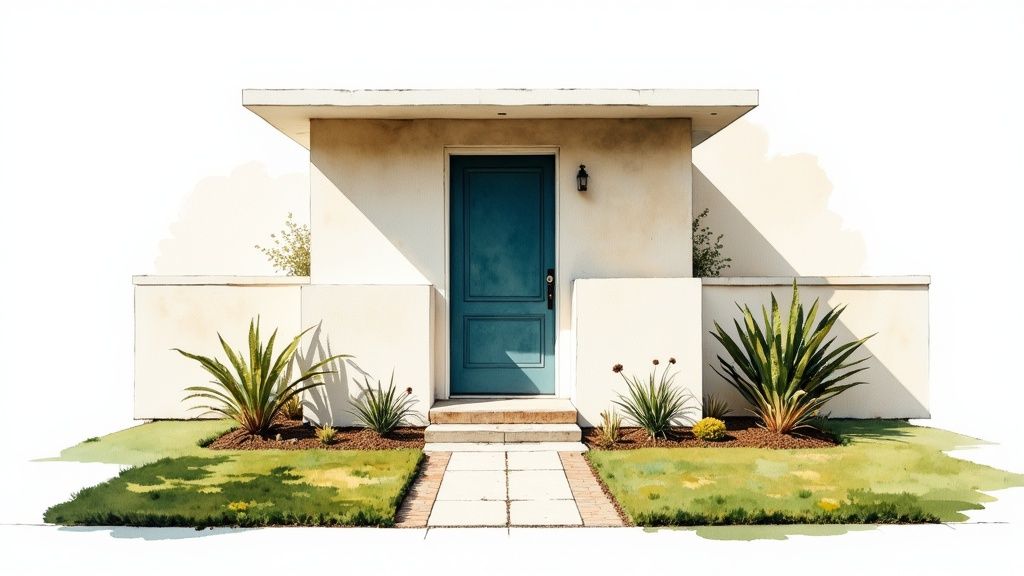
Smart Landscaping for Lasting Impact
When you’re picking out plants, think smart, not just pretty. Sure, annuals give you a quick burst of color, but perennials are the real investment, returning year after year with minimal fuss.
Here are a few low-effort, high-impact ideas that buyers love:
- Drought-Resistant Perennials: Think lavender, sedum, or black-eyed Susans. They offer gorgeous, lasting color without needing constant watering—a major plus for buyers worried about upkeep and water bills.
- Evergreen Shrubs: Plants like boxwoods or hollies provide green, year-round structure, so your home looks great even in the middle of winter.
- Strategic Tree Planting: A single mature tree can add thousands to your property value. Planting a young one now is a smart play for the future that also helps lower cooling costs in the summer.
Making these thoughtful choices signals to buyers that your home is easy and affordable to maintain. It’s a subtle but incredibly powerful message.
Quick Wins for Your Home’s Facade
Don’t forget the house itself. Little flaws on the exterior can create a negative vibe that’s hard to shake. Take a walk around your property and look for those quick fixes that make a world of difference.
Fixing a cracked walkway or pressure washing a grimy driveway are simple weekend projects that instantly elevate your home’s appearance. Another game-changer? A fresh coat of paint on the front door. A bold color—a deep navy, a sunny yellow, or a classic red—creates an inviting focal point.
A huge part of your home’s exterior presence is the garage door. Knowing how to choose a garage door for your home can be a game-changer for your curb appeal. A new door can actually recoup over 100% of its cost at resale, making it one of the smartest exterior upgrades you can make.
Don’t overlook the “jewelry” of your home’s exterior. Upgraded house numbers, a new mailbox, and updated outdoor light fixtures are small details that, when cohesive, create a polished and expensive look.
Creating a Backyard That Sells
Your hard work shouldn’t end at the front lawn. Today’s buyers see the backyard as a true extension of the living space, and you don’t need a massive budget to make it shine.
The trick is to define a specific area for relaxation or entertaining. This helps potential buyers immediately picture themselves living there. A simple paver patio with a couple of comfy chairs and a fire pit can transform a boring patch of grass into a functional outdoor room. A well-maintained wood deck also consistently delivers a high return on investment.
When you create these defined spaces, you’re not just selling a property; you’re selling a lifestyle of summer barbecues and quiet morning coffees. Nailing these visual cues is a huge part of what makes a home feel irresistible, a topic we dive deeper into in our guide on effective real estate staging tips. By investing in both the front and back of your property, you create a complete package that boosts value and gets your home sold faster.
How Market Trends and Interest Rates Affect Your Home’s Value
Making smart upgrades to your property is a huge piece of the puzzle, but it’s only one side of the coin. The other, equally critical side is understanding the market you’re selling into. Honestly, even the most stunning kitchen remodel won’t hit its full potential if you list your home at the absolute wrong time.
Think of the real estate market like a tide. When the tide is high (a seller’s market), pretty much all boats rise. But when it’s low (a buyer’s market), even beautifully staged properties can struggle to get their asking price. Timing your sale to catch a rising tide is a strategic move that can literally add thousands to your bottom line.
Reading the Local Market Tea Leaves
So, how do you know if the market is working for you or against you? You don’t need a crystal ball—you just need to know which numbers to watch. These local indicators give you a clear snapshot of whether buyers or sellers have the upper hand at any given moment.
Here are the key metrics I always track:
- Days on Market (DOM): This is just the average time it takes for a local home to go under contract. A low DOM, say under 30 days, signals a hot market where things are moving fast. A high DOM means buyers are taking their time, and you’ll face more competition.
- Sale-to-List Price Ratio: This simple percentage tells you how close homes are selling to their initial asking price. When you see a ratio at or above 100%, it means homes are selling for at least list price, often thanks to bidding wars. That’s the classic sign of a seller’s market.
- Months of Supply Inventory: This metric tells you how long it would take to sell every home currently for sale. Anything less than four months of supply points to a strong seller’s market where demand is outpacing the number of available homes.
You can usually find this data through your local real estate board or by connecting with a good local agent who has their finger on the pulse of the market.
The Overlooked Power of Interest Rates
Beyond what’s happening on your street, the biggest driver of home values is often mortgage interest rates. They have a direct, powerful impact on a buyer’s purchasing power.
When rates are low, borrowing money is cheap. This means buyers can afford a more expensive home for the same monthly payment, which in turn fuels demand and drives property values up.
Conversely, when rates climb, the cost of a mortgage skyrockets. This shrinks the pool of qualified buyers and reduces how much they can afford to spend. The result is often a market that cools off, with slower price growth or even small dips. We saw this play out recently—monthly payments on a typical home can jump by hundreds or even thousands of dollars when rates climb.
Even with some headwinds, the global real estate market showed its resilience through 2023 and 2024. As rates started to ease, demand picked back up. In fact, Knight Frank’s 2025 outlook projected global house price growth to hit 3.6% in early 2025, largely because central banks are expected to ease up.
Understanding the interest rate environment is critical. If projections show rates are about to fall, it might be smart to wait a few months to list. A small drop can bring a whole new wave of motivated buyers into the market.
Timing Your Improvements for Maximum Impact
Knowing these market dynamics helps you strategically time not just your sale, but your renovations, too.
In a red-hot seller’s market with almost no inventory, you might get away with fewer cosmetic updates simply because buyers are desperate. But in a more balanced or buyer’s market, that freshly updated kitchen or fantastic curb appeal can be the exact thing that makes your home stand out and sell quickly.
By aligning your property improvements with the rhythm of the real estate market, you position yourself to capture the highest possible value. It’s the best way to ensure every dollar you invest in your home comes back to you—and then some.
Still Have Questions? Let’s Talk Specifics
Once you’ve wrapped your head around the big-picture strategies, the smaller, more specific questions start to pop up. You’re no longer just thinking about how to increase property value, but wrestling with the “what ifs” and “is it worth its.” Let’s tackle some of the most common dilemmas I see homeowners face.
Which Home Improvements Are a Waste of Money?
We all know a great kitchen remodel is a pretty safe bet, but some projects can actually hurt your resale value. The big mistake is pouring money into upgrades that are either too niche or way too grand for the neighborhood.
Swimming pools often top the list of bad investments. For a lot of buyers, a pool doesn’t scream “luxury;” it screams “expensive maintenance, high utility bills, and a huge safety worry.” The same goes for overly personal projects. That incredible home theater, custom wine cellar, or dedicated craft room you love? It shrinks your potential buyer pool down to a tiny fraction of the market. These features only work for a select few, making them a gamble for general resale value.
Here’s the biggest financial trap: over-improving for your neighborhood. If you install a $100,000 kitchen in a community where the nicest homes sell for $300,000, you’ll never see that money again. Your home’s value is always tied to the properties right next door.
Does Professional Home Staging Really Add Value?
One hundred percent, yes. Don’t think of staging as an expense—it’s a marketing investment, and it has a clear return. It’s that final, crucial touch that helps a buyer walk in and feel an immediate emotional connection. It helps them see a house as their future home.
And the numbers don’t lie. The National Association of Realtors found that 82% of buyers’ agents said staging made it far easier for their clients to visualize themselves living in a property. That feeling often translates directly into more money. A properly staged home can fetch 1% to 5% more than a comparable unstaged one. On a $400,000 house, you’re talking about an extra $4,000 to $20,000 in your pocket—an amount that easily covers the few thousand dollars staging typically costs.
Should I Bother With a Home Inspection Before I List My House?
Getting a pre-listing inspection is one of the smartest strategic moves you can make as a seller. It completely flips the script of the sale, putting you in the driver’s seat instead of just reacting to problems.
If you wait for the buyer’s inspector to find that hidden roof leak, faulty electrical panel, or foundation crack, you’re setting yourself up for a tense, last-minute negotiation. The buyer will likely demand a steep price reduction or repair credits. Worse, a major surprise can scare them off entirely, causing the whole deal to fall apart.
Commissioning your own inspection gives you a massive advantage:
- Find and Fix on Your Time: You get to handle any needed repairs on your own terms, often for much less than a buyer would demand as a credit.
- Price with Total Confidence: You know the exact condition of your home, so you can set a fair and accurate price right from the start.
- Build Instant Trust: Handing a clean inspection report to potential buyers is a powerful signal that your home is solid and well-maintained. It builds confidence and encourages better offers.
Ultimately, it’s all about getting ahead of the surprises for a smoother, faster, and more profitable sale.
Are Energy-Efficient Upgrades Worth the Investment?
They absolutely are, especially now when buyers are so much more aware of the long-term costs of owning a home. You might not get a 100% dollar-for-dollar return at resale, but energy-efficient features are a massive selling point that can make your home stand out.
Think about it from a buyer’s perspective. Upgrades like modern double-paned windows, a well-insulated attic, or a high-efficiency HVAC system speak directly to their worries about rising utility bills and environmental impact. This lower cost of ownership can be a huge deciding factor, justifying a higher offer and helping your home sell much more quickly than an older, inefficient one down the street.
Ready to see what your next high-ROI project could look like? With RoomGenius, you can visualize potential designs for your kitchen, bathroom, or any other space in just a few seconds. Stop guessing and start seeing what’s possible. Try RoomGenius today and design your next project with confidence.