Finding the Best Furniture for Small Apartments
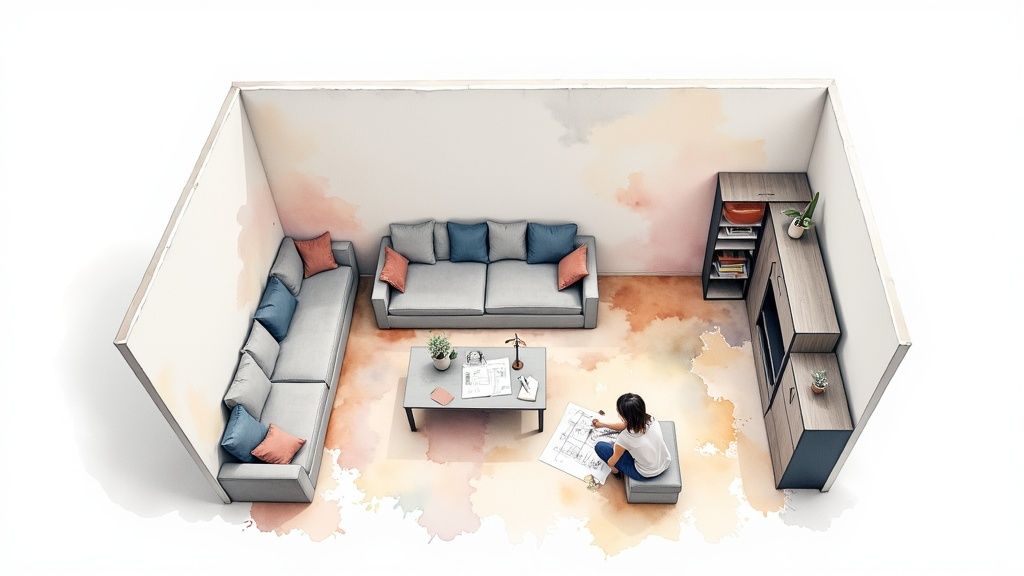
When you’re working with a small apartment, the best furniture choices are a smart mix of multifunctional pieces, items with a light visual weight, and designs that make the most of vertical space. Think about a storage ottoman that’s also extra seating, a glass coffee table that seems to disappear, or a tall, skinny bookshelf that pulls your gaze upward. The real secret is making every piece work hard for its spot.
From Clutter to Clarity: A New Approach to Small Spaces
Decorating a small apartment isn’t about what you have to give up; it’s an exercise in clever, stylish living. It’s easy to feel hemmed in by limited square footage and assume you have to choose between function and style. But that’s just not true. The right furniture can make even the tiniest room feel open, organized, and inviting. This guide is your roadmap to getting there.
The guiding principle is simple: every single item in your home needs to justify its existence. It has to earn its keep. This means picking pieces that solve a real problem—like a lack of storage, a need for a WFH setup, or a place for friends to sit—without adding visual or physical clutter.
The Foundation of Great Small Space Design
Before you even browse a single website, the first step is a mental shift. Stop thinking of your apartment as “small” and start seeing it as “efficient.” This one change in perspective unlocks a ton of creative solutions.
Here’s what that looks like in practice:
- Measuring with Purpose: This goes way beyond just making sure a sofa can fit through the door. It’s about mapping out how you’ll walk around the room, leaving enough “breathing room” (negative space), and ensuring each piece works together harmoniously.
- Embracing Double Duty: We’ll dive into how furniture that pulls its weight in more than one way—like a lift-top coffee table that becomes a desk or a bed with built-in drawers—can be a game-changer for cutting down on clutter.
- Harnessing Visual Tricks: You’ll learn how the right materials, colors, and scale can fool the eye and create the illusion of more space. A simple floating shelf, for example, provides storage without the visual bulk of a traditional bookcase.
The goal isn’t just to cram furniture into a room; it’s to build a functional, beautiful system for living. Great design doesn’t depend on square footage—it depends on smart, thoughtful choices.
To get you started, here’s a quick look at the core ideas we’ll be building on.
Core Principles for Small Apartment Furniture
| Principle | Why It Matters | Example in Action |
|---|---|---|
| Multifunctionality | Reduces the number of items needed, saving precious floor space. | A storage ottoman that serves as a coffee table, footrest, and extra seating. |
| Visual Lightness | Creates an illusion of openness and prevents the room from feeling crowded. | An acrylic console table or a sofa with raised legs that lets you see the floor underneath. |
| Verticality | Draws the eye upward, making ceilings feel higher and the room feel larger. | A tall, narrow bookshelf or ladder-style shelving that maximizes wall space. |
| Proper Scale | Ensures furniture fits the room’s proportions, avoiding a cramped or “dollhouse” feel. | Choosing a loveseat or an apartment-sized sectional over a bulky, oversized sofa. |
By keeping these principles in mind, you can turn a tight space into a home that feels organized, stylish, and completely yours. For a deeper dive into specific furniture recommendations, this comprehensive guide to the best furniture for small spaces is an excellent resource. Armed with the right strategy, you’ll see that even the smallest apartments can be big on style and comfort.
How to Measure Your Space Like a Pro
Before you even think about browsing for furniture, let’s talk about the most crucial first step. It’s easy to fall in love with a gorgeous sofa online, but the biggest mistake people make when furnishing a small apartment isn’t about style—it’s buying something that just doesn’t fit. Getting your measurements right isn’t just a task; it’s the foundation for every single decision you’ll make from here on out.
Think of it like a strategy game. Every inch you map out is a point scored for a room that actually works. If you rush this part, you’re setting yourself up for the headache of returns or, even worse, getting stuck with a beautiful piece that turns your living room into an obstacle course.
This simple flowchart breaks down the core strategy you need to nail it.
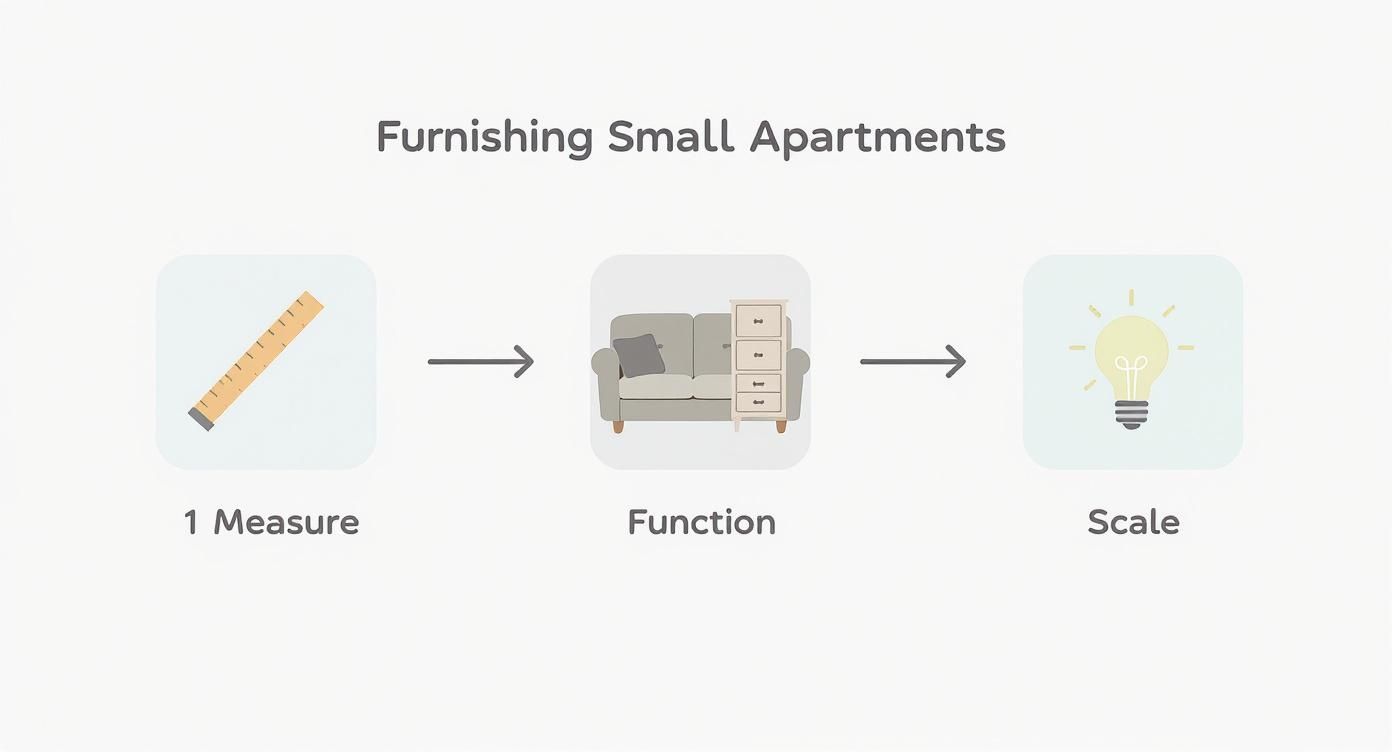
As you can see, it comes down to three key things: first, measure your space accurately. Second, figure out what you need your furniture to do. And third, choose pieces that are the right scale for the room. Get these right, and you’re golden.
Go Beyond Just Length and Width
Measuring a room is about more than just two numbers. You need to create a complete map of the space, including all its little quirks and permanent fixtures. A quick, even rough, sketch can save you from a world of pain later.
Grab a tape measure, a pencil, and some paper (graph paper works wonders here!). Start with the basic length and width to get the outline. Now, let’s fill in the details that really make a difference.
- Map All Obstacles: Pinpoint the exact location and size of every window, door, radiator, light switch, and electrical outlet. That perfect accent chair is suddenly useless if it covers the only outlet you have for a reading lamp.
- Check Your Swings: Don’t forget to measure how much space your doors need to swing open—this includes closet and cabinet doors, too. It’s a tiny detail that has a huge impact on how your room functions day-to-day.
- Look Up!: Measure the vertical space from floor to ceiling. This is absolutely critical for tall pieces like bookcases or wardrobes, which can be amazing space-savers but only if they actually clear the ceiling.
Think of what you’re creating as a ‘blueprint for living.’ This isn’t just about making sure things don’t bump into each other; it’s about designing a space that feels effortless to be in.
Charting Your Traffic Flow
Once you have your map, it’s time to think about traffic flow. These are the invisible lines you walk every single day—from the entryway to the couch, from the bedroom to the kitchen. The goal is to keep these pathways clear.
A good rule of thumb is to leave at least 30 to 36 inches for main walkways. For smaller paths, like the gap between your sofa and coffee table, 18 inches is usually enough. This ensures you can move around without having to turn sideways and squeeze through. Mark these paths on your sketch so you can see how much floor space you’re really working with. For a deeper dive, our guide on how to measure a room for furniture has even more pro tips.
And one last thing: think about delivery day. Measure the width and height of every doorway, hallway, elevator, and staircase your new furniture has to travel through. There’s nothing more soul-crushing than realizing your dream couch fits perfectly in the living room… but can’t get through the front door. A few extra measurements now will save you from that nightmare scenario.
Embracing Multifunctional and Modular Furniture
Living in a small apartment is like a chess game—every single move, and every piece of furniture, is critical. This is exactly where multifunctional and modular furniture come in to save the day. Think of them less as static objects and more as active players on your team, designed specifically to win back precious square footage. They are the heroes of efficiency, turning one room into a space that can shift and adapt to whatever you need, whenever you need it.
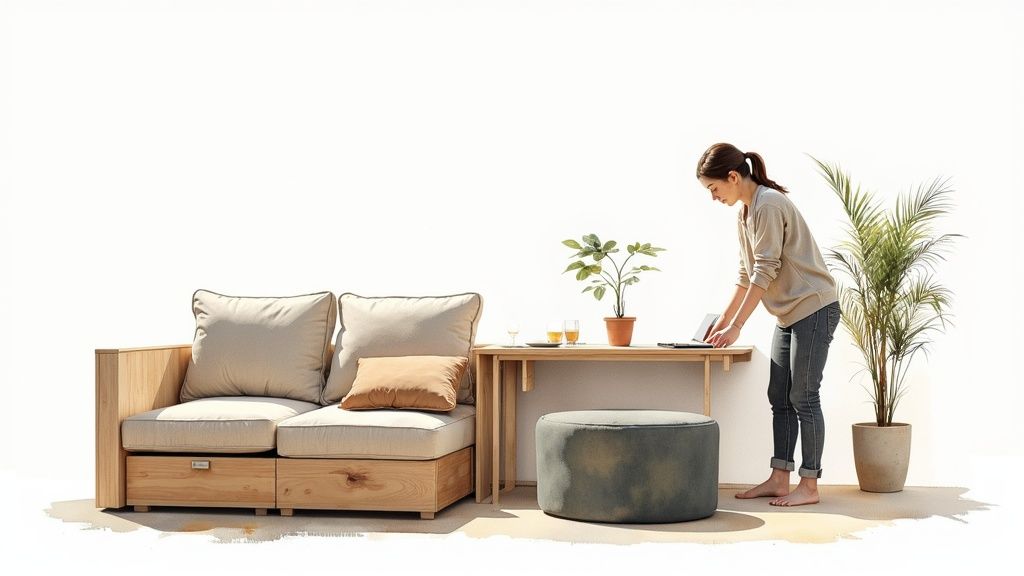
A lift-top coffee table isn’t just a spot to toss your mail; it’s a pop-up desk for work-from-home days and a dining table for two come evening. That stylish ottoman with hidden storage? It’s a footrest, extra seating when friends drop by, and a secret home for blankets or board games. Each piece does the job of two or three others, which immediately cuts down on clutter and opens up your floor plan.
This isn’t just a clever trend; it’s a smart response to the way we live in cities today. The demand for furniture that works harder is only growing.
The Power of Double-Duty Design
Choosing multifunctional pieces really boils down to a “work smarter, not harder” philosophy for your home. Instead of buying more furniture to solve every little problem, you pick smarter furniture that solves several problems at once. Making this mental shift is the key to creating a small apartment that feels open and organized, not cramped and chaotic.
The proof is in the numbers. The global market for multifunctional furniture hit around USD 15.9 billion in 2024, and it’s not slowing down. This growth is a direct result of more people living in cities and smaller homes, making things like sofa beds with built-in storage or foldable tables non-negotiable. You can read more about the multifunctional furniture market growth at gminsights.com.
Here are a few of my favorite multifunctional champions:
- Convertible Sofa Beds: Forget the lumpy, back-breaking sleeper sofas of the past. Today’s models are genuinely stylish couches by day and comfortable beds by night, completely eliminating the need for a dedicated guest room.
- Expandable Dining Tables: These are a lifesaver for anyone who loves to entertain but doesn’t have space for a huge table all year round. They stay compact for daily meals and then easily expand to fit everyone for a dinner party.
- Nesting Tables: A set of two or three tables that stack together is the definition of flexibility. You get multiple surfaces when you need them, but they tuck away into a single footprint when you don’t.
The Ultimate Flexibility of Modular Systems
While multifunctional furniture pulls double duty, modular furniture brings something just as valuable to the table: adaptability. Think of modular pieces as LEGO bricks for your home. They’re made of separate, standardized units that you can combine, rearrange, and even add to as your life changes.
This makes modular systems one of the best choices for small apartments, particularly if you’re renting or know you won’t be in the same place forever.
A modular sectional that fits perfectly in your current studio can be reconfigured into a completely different shape for your next, larger apartment. It’s an investment that grows with you, so you aren’t forced to buy new furniture every time you move.
Here’s why modular pieces are so great:
- Customization: You can build a seating or storage setup that is perfectly tailored to your room’s exact dimensions and your specific needs.
- Scalability: Start with just a few core pieces and add more modules later when your budget or space allows.
- Versatility: The same set of modular cubes could be a TV stand in one layout, a bookshelf in another, or even a clever room divider.
When you bring both multifunctional and modular designs into your home, you’re doing more than just filling a room. You’re building a responsive, intelligent system for living. This strategic thinking ensures every square inch is pulling its weight, transforming your small apartment into a place that’s as functional as it is stylish. To see how these pieces can work together, check out our guide on different furniture types and styles.
Using Scale and Materials to Create Space
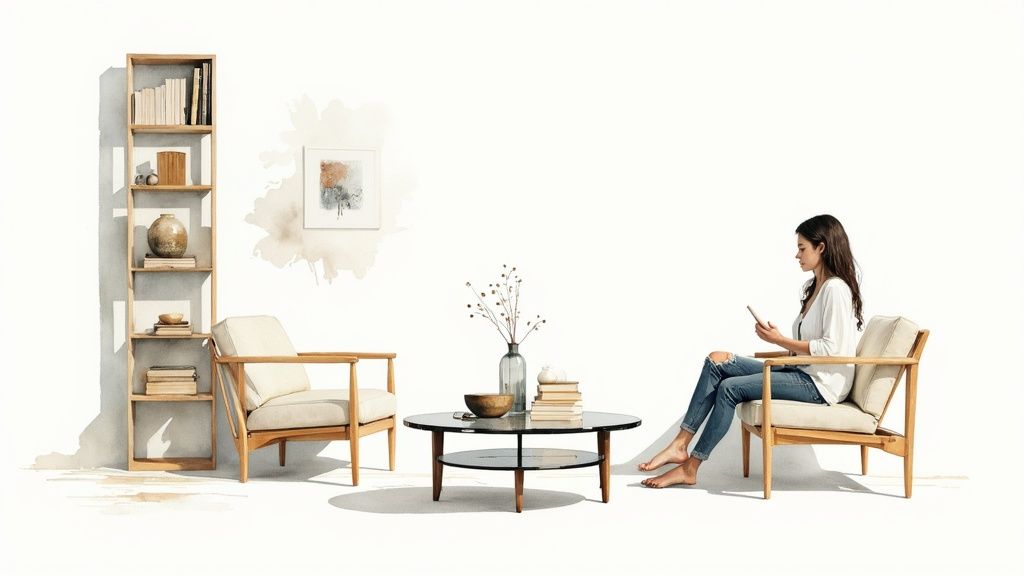
The best furniture for a small apartment does more than just fit. It pulls off a little visual magic trick, convincing your eyes that the room is bigger than it actually is. This isn’t about sorcery; it’s about two powerful design principles: visual weight and scale.
Think of visual weight as how heavy something looks, not how much it actually weighs. Picture two coffee tables, both the exact same size. One is a solid block of dark, chunky wood. The other is a sheet of glass resting on thin metal legs. The dark wood table feels heavy and massive, while the glass one seems to float. It has a much lower visual weight because your eye can see right through it to the floor.
Tapping into this concept is a game-changer for tight quarters. When you choose pieces that feel lighter and less bulky, the whole room breathes better. It instantly feels more open and less cramped.
Lighten the Load with Smart Materials
The materials you pick can make or break a small space. Your best bets are materials that either reflect light or are see-through—it’s a classic interior design trick for a reason.
It’s also why the small space furniture market is absolutely booming. Valued at USD 23.4 billion in 2023, it’s expected to nearly double by 2032 as more people look for smart solutions to rising real estate costs. You can dig into the trends in the small space furniture market at futuremarketinsights.com to see just how big this movement is.
Here’s how to put this idea into practice with your material choices:
- Glass and Acrylic: These materials are the undefeated champions of visual lightness. A clear coffee table or console gives you a surface to use without blocking the view, making it feel like it’s barely there.
- Light-Colored Woods: Stick to woods like birch, light oak, or maple. They have a much softer presence than heavy, dark woods like walnut or mahogany, which helps keep the room feeling bright and airy.
- Mirrored Surfaces: A well-placed mirrored cabinet or side table is a secret weapon. It bounces light around and reflects the room back on itself, creating a real illusion of depth.
Finding the Goldilocks Scale
Scale is all about proportion—making sure your furniture is the right size for your room and for the other pieces in it. You’re looking for that “just right” feeling. A huge, overstuffed sectional will completely swallow a small living room, making it feel claustrophobic.
But here’s the twist: going too small isn’t the answer either. Filling your apartment with only tiny furniture can create a “dollhouse effect,” making the space feel cluttered and visually chaotic instead of cozy.
The key is balance. Start with one main “anchor” piece that’s properly scaled for the room, like an apartment-sized sofa. Then, fill in around it with complementary items of different sizes, like a slim armchair and some nesting side tables. This mix of scales creates a much more interesting and balanced layout.
And here’s one last pro tip: pieces with legs are your best friend. A sofa, chair, or cabinet raised on slender legs lets you see more of the floor. That simple, uninterrupted sightline makes the entire room feel more spacious. It’s a small detail that delivers huge results.
Smart Storage Solutions That Conquer Clutter
In a small apartment, clutter isn’t just a nuisance—it’s a space thief. It gobbles up precious square footage and can make even the most stylish room feel chaotic. The trick to winning the war on disorganization isn’t about getting rid of everything you own; it’s about finding smarter places to put it.
This means looking beyond those flimsy plastic bins and thinking about storage that’s built right into your decor. The best furniture for small spaces pulls double duty, hiding your belongings in plain sight while looking great doing it.
Go Vertical to Maximize Your Space
When you run out of floor space, the only way to go is up. Your vertical space is a goldmine, and most people don’t even realize they have it. By drawing the eye upward, you not only create a ton of storage out of thin air but also trick the brain into thinking the room is taller and more open.
Forget about those clunky, oversized bookcases. Instead, try one of these vertical storage heroes:
- Tall, Narrow Bookshelves: A pair of sleek “book towers” on either side of a doorway or window can hold an incredible amount of stuff without a big footprint. They add a touch of drama and height.
- Wall-Mounted Shelving: Floating shelves are a minimalist’s best friend. They offer a home for books, plants, and photos without the visual bulk of a grounded piece of furniture.
- Ladder-Style Shelves: These lean against the wall, giving you an airy, stylish alternative to a traditional bookcase. They’re perfect for that awkward corner in the living room or bathroom.
Uncover Hidden Storage Opportunities
Some of the best storage solutions are the ones you can’t even see. Furniture with hidden compartments lets you stash away all the daily clutter—remotes, mail, chargers—so your surfaces stay clear and your mind stays calm. It’s all about making every single piece in your home work harder.
This is a core idea behind minimalist furniture, which is exploding in popularity for its clean looks and space-saving smarts. In fact, minimalist cabinets and storage are projected to grow at a CAGR of around 9.8% between 2024 and 2030, simply because we all need more efficient storage in our homes. With roughly 60% of minimalist furniture sold for residential use, it’s clear that people are catching on. You can read more about minimalist furniture market trends on grandviewresearch.com.
When you integrate storage into the furniture you already need, you stop needing extra pieces that just add to the clutter. Your bed, coffee table, and even your seating can become secret storage powerhouses.
Keep an eye out for these clever, double-duty designs:
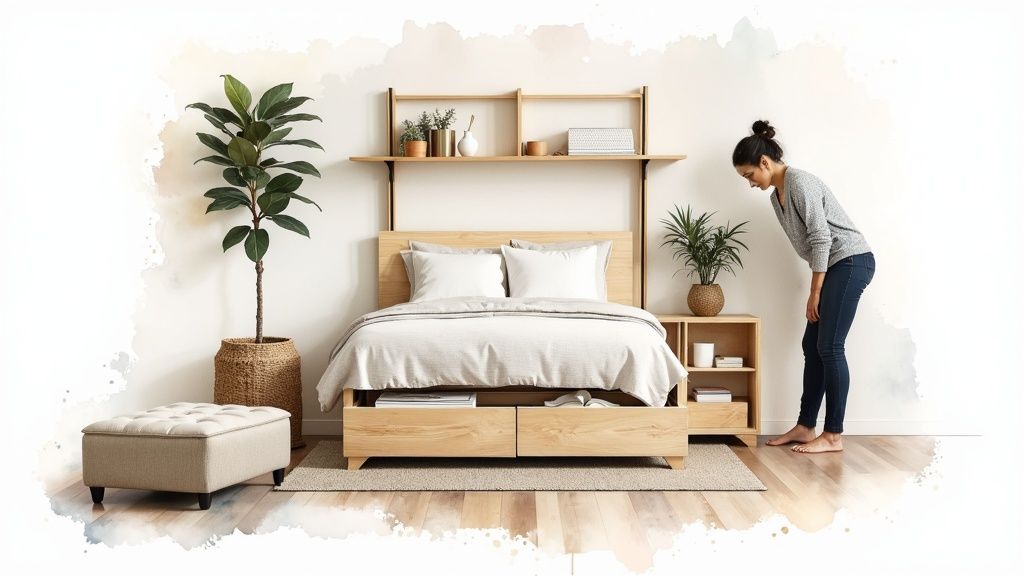
- Storage Beds: A bed with drawers underneath or a hydraulic lift that reveals a huge hidden compartment is a total game-changer. It’s the perfect spot for off-season clothes, extra bedding, and shoes.
- Lift-Top Coffee Tables: These are brilliant. The top lifts up to create a perfect surface for working or eating on the couch, revealing a deep storage space for magazines, laptops, and blankets.
- Storage Ottomans and Benches: An ottoman can be a footrest, an extra seat, and a side table, all while hiding board games or throw pillows inside. A storage bench by the door is the ideal drop zone for shoes and bags.
When you start thinking this way, storage stops being an afterthought and becomes a core part of your design. The right furniture doesn’t just hold your things; it helps create a calm, organized home that feels so much bigger than it actually is.
Visualize Your Layout Before You Buy
https://www.youtube.com/embed/fuh4PzJdmyw
You’ve done the hard work. You measured your space, daydreamed about multi-functional pieces, and you get how scale and materials can trick the eye. So what’s next? Bridging that nerve-wracking gap between a great plan and a great-looking room.
The single biggest fear when buying furniture is the unknown. Will that sofa actually fit? Will it make the room feel like a crowded shoebox? Instead of just crossing your fingers and hoping for the best, you can see exactly how it will all come together before spending a single dollar.
This is where visualization tools become your secret weapon. They let you play interior designer without any of the heavy lifting or buyer’s remorse. Moving a real-life sofa is a back-breaking chore; rearranging a digital one takes two seconds.
Step Into Your Future Room
Imagine snapping a photo of your empty living room and instantly seeing it filled with different furniture arrangements. This isn’t some far-off concept; tools like RoomGenius make this a reality today. You just upload a picture of your space and let its AI generate design ideas, showing you precisely how specific furniture styles will transform your room.
Look at how this works. You start with a photo of what you have now, and instantly, you can see a completely redesigned version in a new style. It’s the ultimate way to test-drive a new look before you commit.
This whole process takes the guesswork out of picking the right furniture. You can see for yourself how a loveseat on tall legs opens up the floor, making the room feel airier than a bulky model that sits flat on the ground. It gives you the confidence to make smart choices because you’ve already seen the final result.
By visualizing first, you’re not just buying furniture; you’re investing in a layout that you already know works perfectly for your home and lifestyle.
How to Test Your Layout Virtually
Playing around with a digital tool is easy and, honestly, kind of fun. It’s a sandbox where you can try out all the principles we’ve talked about to find that perfect balance. Once you have your measurements and a few furniture ideas, planning the layout is the most critical step. For some hands-on advice, you can find expert tips on arranging bedroom furniture for a perfect layout that work well in any small space.
Here’s a simple way to approach it:
- Upload Your Space: Start with a clear photo of the room or just a basic floor plan with your measurements.
- Experiment with Placement: Drag and drop different pieces. Does that armchair really work better by the window, or should it go in the corner? Check your traffic paths. Is there enough room to walk?
- Check Scale and Proportion: Virtually place that apartment-sized sectional and a small coffee table in the room. Does it feel balanced? Play with the sizes until it feels just right.
- Compare Styles: Instantly see the difference a piece can make. Swap that heavy, dark wood media console for a light, minimalist one and watch how the room’s visual weight changes.
Think of it as a dress rehearsal for your apartment. This digital practice run ensures your final choices aren’t just beautiful, but are genuinely functional for your space. To dive deeper into this method, check out our guide on using an online room layout planner to design your room like a pro.
Answering Your Top Small Apartment Furniture Questions
Even with the best plan in hand, you’re bound to have a few nagging questions. Let’s tackle some of the most common dilemmas people face when furnishing a small apartment, so you can move forward with confidence.
Can I Actually Use Dark Furniture in a Small Room?
Yes, you absolutely can—as long as you’re strategic about it. It’s true that light-colored furniture is the easy-button for making a room feel bigger, but you don’t have to banish rich, dark tones completely. It all comes down to balance.
Say you find a gorgeous charcoal sofa or a deep espresso bookshelf. The trick is to offset its visual heaviness. Look for pieces with slim profiles or raised legs, which create a sense of spaciousness underneath. Then, surround that dark anchor piece with lighter elements like a cream-colored rug, pale walls, or a well-placed mirror to bounce light around. This way, your favorite dark piece makes a statement without making the room feel like a cave.
What’s the One Piece of Furniture I Should Splurge On?
If you can only invest in one key item, make it a high-quality, multifunctional sofa. Hands down. Your sofa is almost always the largest piece in your living space and the natural focal point of the room. It’s where you’ll unwind, host friends, and maybe even eat dinner.
Putting your money into a comfortable, apartment-sized sectional or a smart sleeper sofa will pay you back every single day. It dictates the style of the entire room and does the most heavy lifting, making it the undeniable MVP of your home.
How Can I Make My Studio Feel Less Like One Big Box?
The secret to making a studio apartment feel like a proper home is creating distinct “zones.” You don’t need to build walls; you just need to be clever with your furniture.
A fantastic trick is to use an open-backed bookshelf as a room divider. It can separate your sleeping area from your living space without killing the light or making the room feel chopped up. It creates separation while maintaining that open, airy vibe.
Here are a few other simple but effective ways to create zones:
- Define with Rugs: Placing a distinct area rug in your “living room” zone and another in your “bedroom” zone is a powerful visual cue that separates the two spaces.
- Use Your Sofa: Simply turning the back of your sofa toward your bed creates an instant, invisible wall between your living and sleeping zones.
- Add a Console Table: Placing a slim console table against the back of that sofa reinforces the boundary and gives you a handy extra surface.
By using your furniture to create these functional areas, you give your studio all the utility of a one-bedroom apartment.
Ready to stop guessing and start seeing? With RoomGenius, you can use AI to visualize exactly how different layouts and furniture will look in your room. Just snap a photo, play with different designs, and discover perfect pieces that fit both your space and your style. Plan your small apartment layout with confidence at https://www.room-genius.com.