8 ideas for arts and crafts interior decorating in 2025
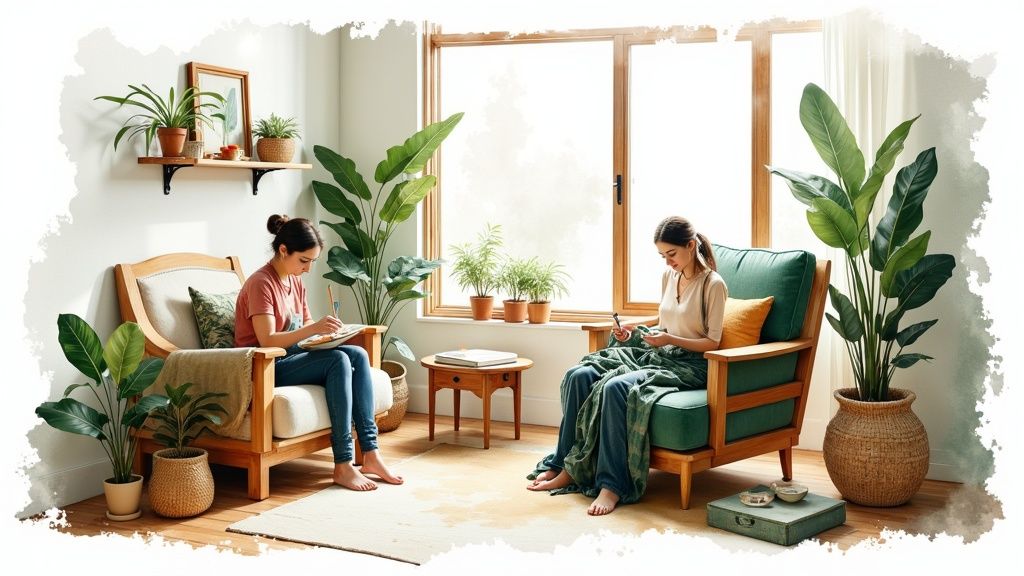
In an era of mass production, the Arts and Crafts design movement offers a refreshing return to authenticity, quality, and nature. This philosophy champions the beauty of handmade objects, honest materials, and skilled craftsmanship over fleeting trends. Arts and crafts interior decorating is not just a style; it is a celebration of creating a home with soul. From the rich grain of quarter-sawn oak to the subtle imperfections of hand-painted tiles, this aesthetic invites warmth, character, and a deep connection to the natural world into your living spaces.
To fully embrace the Arts and Crafts aesthetic, start with foundational elements like natural wood; indeed, the enduring elegance of timeless hardwood flooring is a hallmark of this style. This guide explores eight essential elements that define this enduring approach, providing actionable steps and expert insights to help you integrate its principles into your own home. We will delve into specific examples, DIY opportunities, and ways to balance authentic pieces with modern living. This list provides a clear roadmap for creating a sanctuary that is both beautiful and meaningful, ensuring your space reflects a true artisanal spirit.
1. Hand-Crafted Wooden Furniture and Fixtures
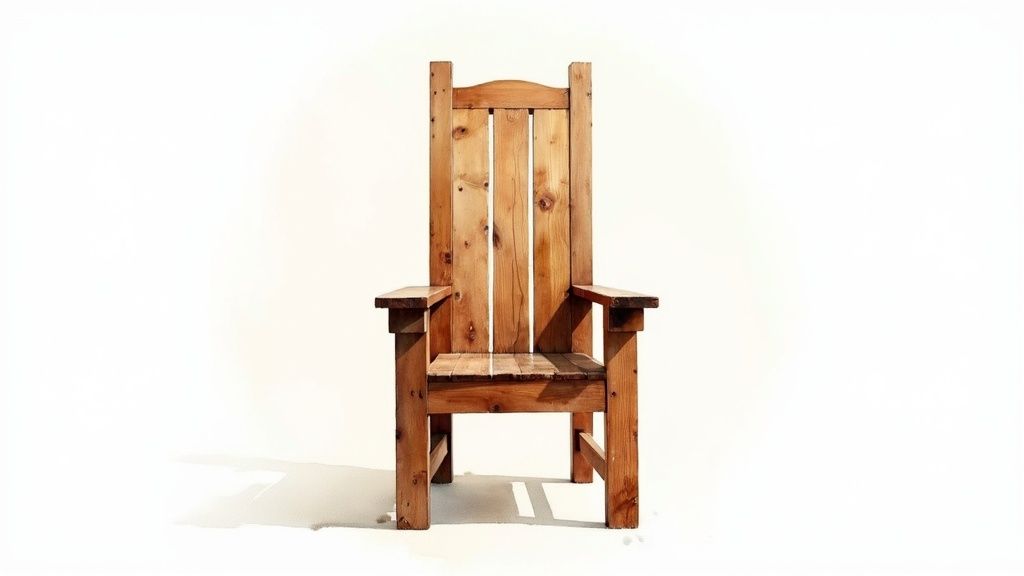
The cornerstone of authentic Arts and Crafts interior decorating is solid, hand-crafted wooden furniture. This design philosophy champions the inherent beauty of natural materials and the integrity of skilled artisanship, standing in stark contrast to mass-produced, ornate pieces. The focus is on clean lines, sturdy construction, and finishes that highlight the wood’s natural grain and character. Prominent figures like Gustav Stickley and the Roycroft community popularized styles that celebrated simplicity and durability, making furniture the functional art of the home.
Key Characteristics to Look For
When selecting pieces, prioritize quality over quantity. Look for items made from oak, particularly quarter-sawn oak, which reveals a beautiful ray flake pattern. Other common woods include cherry, maple, and walnut. The construction itself is a key design element:
- Visible Joinery: Mortise-and-tenon joints, exposed dowels, and dovetails are not hidden but celebrated as marks of superior craftsmanship.
- Simple, Strong Forms: Look for rectilinear shapes, straight lines, and a weighty, substantial presence. Avoid excessive ornamentation or carving.
- Hand-hammered Hardware: Simple, dark metal hardware, often in copper or wrought iron, complements the wood’s rustic charm.
How to Implement This Element
To incorporate this foundational element, start by identifying a key anchor piece for a room, such as a sturdy mission-style dining table, a Morris chair for the living room, or a handcrafted bookcase. You can mix authentic antiques with high-quality modern reproductions for a balanced and affordable approach. Explore different furniture types and styles to understand how Mission and Craftsman pieces can anchor a space.
To maintain the artisanal quality central to Arts and Crafts, consider restoring existing pieces; a guide to reupholstering furniture can help breathe new life into beloved items. Sourcing from local woodworkers or custom cabinet makers is another excellent way to acquire unique fixtures like built-in benches or shelving that perfectly embody the movement’s spirit.
2. Hand-Painted Tiles and Decorative Ceramics
A defining characteristic of Arts and Crafts interior decorating is the integration of handcrafted ceramics and decorative tiles. This element elevates everyday functional surfaces into works of art, reflecting the movement’s core belief in the beauty of artisan-made objects. Led by pioneers like William De Morgan and companies such as Grueby and Rookwood Pottery, these pieces featured stylized natural motifs, geometric patterns, and rich, earthy glazes. They were used to add character and visual interest to fireplace surrounds, kitchen backsplashes, and bathroom walls, bringing bespoke artistry into the home.
Key Characteristics to Look For
When choosing tiles and pottery, focus on pieces that showcase individual artistic expression and natural themes. These items should feel unique and thoughtfully made, not mass-produced. Look for rich, saturated colors and glazes that have depth and subtle variations.
- Stylized Nature Motifs: Designs often feature simplified and elegant depictions of flowers, vines, birds, and animals, rather than photorealistic renderings.
- Rich, Matte Glazes: Grueby pottery, for instance, is famous for its signature matte green glazes that resemble watermelon rind, while De Morgan tiles often feature vibrant blues and reds.
- Artisan Craftsmanship: Look for slight imperfections, like variations in glaze thickness or hand-drawn lines, that serve as evidence of the piece being made by hand.
How to Implement This Element
You can introduce this element on both a large and small scale. For a significant impact, create a fireplace surround using a mix of hand-painted accent tiles and simpler field tiles. In the kitchen, a decorative tile backsplash behind the stove can serve as a stunning focal point. On a smaller scale, display artisanal pottery, like a Rookwood vase or a Grueby-style lamp, on built-in shelving or a sturdy oak mantelpiece.
To achieve a balanced look, use intricate tiles as accents rather than covering entire walls. You can also mix new pieces from contemporary ceramic artists with antique finds to create a layered, authentic feel. For those interested in a hands-on approach, you can even create your own custom pieces; learn more about DIY interior decorating projects to see how you might paint your own tiles for a truly personal touch.
3. Stained Glass Windows and Leaded Glass Panels
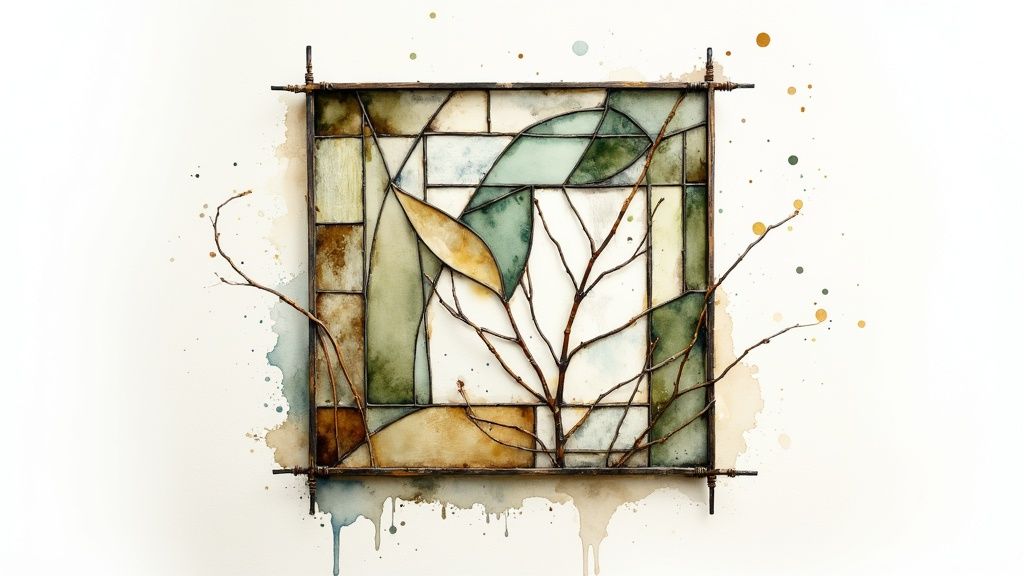
A defining feature of Arts and Crafts interior decorating is the integration of decorative stained and leaded glass. This element transforms functional windows, doors, and dividers into captivating works of art that filter light and create stunning focal points. Rather than the complex biblical scenes of Gothic tradition, Arts and Crafts glasswork favors simplified, stylized motifs drawn from nature or elegant geometric patterns. Pioneers like Frank Lloyd Wright and Charles Rennie Mackintosh championed this style, using it to harmonize a home’s interior with its natural surroundings.
Key Characteristics to Look For
When selecting or designing stained glass, look for patterns that emphasize line and form. The goal is to enhance the space without overwhelming it, using color and light to create a serene atmosphere. Key design features include:
- Nature-Inspired Motifs: Look for stylized representations of flowers, leaves, trees, and birds. These designs are often simplified and geometric rather than realistic.
- Geometric Patterns: Strong rectilinear lines, chevrons, and simple squares, often in an asymmetrical arrangement, are hallmarks of the style, particularly in Prairie School designs.
- Earthy Color Palette: Glass colors are typically subdued and natural, featuring ambers, deep greens, warm golds, and muted blues that complement the wooden elements in the room.
How to Implement This Element
Incorporating stained glass can range from a major architectural change to a simple decorative accent. For a significant impact, consider replacing transom windows above doorways or adding leaded glass panels to cabinet doors. Entryway sidelights are another classic location that provides both beauty and privacy.
For a less permanent or more budget-conscious approach, hang a smaller, framed stained glass panel in a sunny window to catch the light. You can also find lamps with stained glass shades that echo this aesthetic. When commissioning custom work or choosing a design, ensure it complements the existing architectural lines of your home.
4. Exposed Woodwork, Beams, and Architectural Details
A defining feature of Arts and Crafts interior decorating is the celebration of a building’s structure as an integral part of its design. Rather than concealing the framework, this philosophy puts it on display, transforming functional elements into beautiful focal points. Exposed ceiling beams, rich wood wainscoting, built-in cabinetry, and prominent window trim emphasize honest construction and the inherent warmth of natural materials. Pioneers like the Greene brothers and Gustav Stickley championed this approach, viewing the home’s “skeleton” as a source of organic beauty.
Key Characteristics to Look For
The goal is to showcase the craftsmanship and materials that form the home. These architectural details are not added for decoration but are an honest expression of the building’s construction, grounding the space with a sense of integrity and permanence.
- Prominent Beams and Rafters: Look for thick, substantial ceiling beams, often in dark-stained oak or fir, that draw the eye upward and add visual weight.
- Rich Wood Paneling: Wainscoting, particularly in a board-and-batten style, is common, typically covering the lower third or half of a wall and adding texture.
- Integrated Built-ins: Features like window seats, bookcases, and inglenooks are often framed with the same wood used elsewhere, creating a seamless, unified look.
How to Implement This Element
If your home has existing architectural woodwork, the key is to highlight it. Refinish beams or paneling with a high-quality stain that enhances the wood grain rather than obscuring it with paint. To prevent the room from feeling too dark or heavy, balance the rich wood with lighter, neutral wall colors like warm creams, soft greens, or earthy tans.
For homes without these original features, you can introduce them thoughtfully. Adding decorative, non-structural box beams to a ceiling can create the same visual effect. Installing wainscoting in a dining room or entryway is another accessible way to incorporate this element. When undertaking such a project, it’s a great time to evaluate your room’s overall layout and flow to ensure the new architectural details enhance the space harmoniously.
5. Handwoven Textiles and Natural Fiber Wall Hangings
Textiles are the soul of Arts and Crafts interior decorating, adding warmth, texture, and intricate artistry to a space. Championed by figures like William Morris, this design movement elevated textiles from mere accessories to central design elements, celebrating natural fibers and traditional, handcrafted techniques. The focus is on hand-loomed rugs, tapestries, and woven wall hangings that feature organic motifs and rich, natural color palettes, bringing a layer of softness and artisanal character that complements the sturdiness of wooden furniture.
Key Characteristics to Look For
When selecting textiles, prioritize authenticity and natural materials. Look for pieces that showcase the skill of the weaver, whether through complex patterns or the subtle variations of hand-dyed yarns. Wool, linen, cotton, and jute are the preferred fibers.
- Nature-Inspired Motifs: Look for stylized patterns of leaves, flowers, vines, and birds. Designs by William Morris, like the iconic “Strawberry Thief,” are quintessential examples.
- Geometric Patterns: Simple, repeating geometric designs found in Turkish kilim rugs or Native American-inspired weavings align perfectly with the movement’s honest, straightforward aesthetic.
- Rich, Muted Colors: Seek out textiles dyed with natural pigments, resulting in earthy tones like moss green, terracotta, deep indigo, and golden ochre.
How to Implement This Element
Incorporating handwoven textiles is an excellent way to add color and texture without overwhelming a room. Use a large, patterned area rug, such as a Turkish kilim, to define a seating area in the living room or add comfort under a dining table. Wall tapestries can serve as a stunning focal point, acting as a softer alternative to traditional framed art above a fireplace or headboard.
For a layered look, drape a smaller hand-loomed throw over a Morris chair or place woven cushions on a sofa. Even small touches, like block-printed curtains or an embroidered table runner, contribute to the handcrafted, cozy atmosphere that is central to the Arts and Crafts style. Proper care is essential; consider professional cleaning for valuable pieces and rotate rugs to ensure even wear.
6. Nature-Inspired Wall Art and Botanical Illustrations
The Arts and Crafts movement’s reverence for the natural world extends directly to the artwork chosen for the home. Nature-inspired wall art and botanical illustrations are essential components of arts and crafts interior decorating, serving as windows to the outdoors and reinforcing the connection between the built environment and nature. This philosophy values art that is both beautiful and educational, celebrating the intricate forms of flowers, trees, and wildlife with honesty and artistic integrity. Figures like William Morris often translated these motifs from wallpaper to framed art, making the walls a canvas for the flora and fauna he so admired.
Key Characteristics to Look For
When selecting artwork, focus on pieces that depict nature with a sense of realism and artistry, avoiding overly abstract or stylized interpretations. The goal is to bring authentic representations of the natural world indoors. Look for specific styles and subjects that align with the movement’s ethos:
- Botanical and Zoological Prints: Detailed illustrations of plants, birds (like Audubon prints), and insects are classic choices.
- Landscape Paintings: Look for serene, pastoral scenes painted in rich, earthy tones that capture the beauty of the countryside.
- Handmade Prints: Woodcuts, etchings, and linocuts featuring natural subjects celebrate the craft of printmaking itself, a core tenet of the movement.
How to Implement This Element
To effectively incorporate this element, treat your artwork as a thoughtful extension of the room’s design rather than a simple accessory. Begin by choosing a single, large-scale piece, such as a landscape painting, to act as a focal point above a fireplace or sideboard. For a different approach, create a gallery wall of smaller botanical prints.
To ensure a cohesive look, use simple, high-quality wooden frames, preferably in oak or a dark stain, that complement your furniture. Sourcing from local artists or printmaking studios is an excellent way to acquire unique pieces that embody the handmade spirit. For more ideas on creating a nature-centric sanctuary, explore various nature-themed bedroom ideas that can be adapted for any room. Mixing quality reproductions with original artwork allows for a curated and accessible collection.
7. Handcrafted Lighting with Artistic Shades and Metalwork
In Arts and Crafts interior decorating, lighting transcends mere function to become a central artistic statement. These fixtures are celebrated for their handcrafted quality, showcasing hand-shaped metals like copper and wrought iron, along with artistic shades made from mica, art glass, or painted slag glass. Championed by artisans like Louis Comfort Tiffany and Dirk Van Erp, this style of lighting emphasizes honest construction and natural materials, casting a warm, inviting glow that enhances the entire room’s ambiance.

Key Characteristics to Look For
When choosing lighting, focus on pieces that highlight the maker’s hand and the intrinsic beauty of the materials. Look for designs that feel both substantial and elegant, providing sculptural interest even when unlit. The goal is to find a fixture that acts as a functional work of art.
- Natural Materials: Seek out fixtures made from hammered copper, dark wrought iron, and bronze, often paired with shades of mica, stained glass, or leaded glass.
- Artistic Shades: Shades are a focal point, often featuring geometric patterns or nature-inspired motifs like leaves, dragonflies, or flowers. Tiffany-style lamps are an iconic example.
- Visible Craftsmanship: Look for details like hand-hammered textures, visible rivets, and hand-forged elements that underscore the fixture’s artisanal origins.
How to Implement This Element
Introduce handcrafted lighting as a key focal point in a room, such as a statement chandelier over a dining table or a distinctive table lamp on a sideboard. For an authentic feel, use warm-toned LED or incandescent bulbs to replicate the soft, ambient glow characteristic of the era.
You can layer different light sources for a well-rounded and functional space. For example, complement a central pendant light with Mission-style wall sconces and a reading lamp beside a Morris chair. Installing dimmer switches is a modern adaptation that allows you to control the mood and highlight the fixture’s artistic details. Consider sourcing pieces from contemporary artisans who continue the tradition of handcrafted metalwork and glass art.
8. Open Shelving with Curated Displays of Handmade Objects
A core tenet of Arts and Crafts philosophy is the belief that everyday objects can and should be beautiful. Open shelving provides the perfect stage to bring this idea to life, transforming functional storage into a curated gallery of handmade treasures. Unlike hidden cabinetry, open displays celebrate the artistry of pottery, the texture of hand-bound books, and the unique forms of artisanal objects, making them an integral part of the room’s aesthetic. This approach honors the maker’s skill and infuses a space with personal character and authenticity.
Key Characteristics to Look For
Successful displays feel intentional, not cluttered. The goal is to create visual harmony by showcasing objects that reflect the movement’s values of craftsmanship, simplicity, and natural beauty. These displays are more than storage; they are carefully composed vignettes.
- Handmade Items: Prioritize pieces that show the artist’s hand, such as hand-thrown pottery, carved wooden bowls, or hand-hammered metalwork.
- Natural Materials: Feature items made from clay, wood, natural fibers, and stone to maintain a connection to the earth.
- Purposeful Curation: The collection should feel cohesive, united by color, material, or theme. Avoid a random assortment of knick-knacks.
How to Implement This Element
Start by installing simple, sturdy wooden shelves, ideally made from oak or another hardwood that complements your existing furniture. In the kitchen, use them to display your everyday ceramic dishes and mugs. In a living room, built-in shelving can house a mix of books, pottery, and small plants.
When arranging your objects, follow a few key design principles to achieve a balanced look that is central to arts and crafts interior decorating:
- Group in Odd Numbers: Arrangements of three or five items are often more visually appealing than even-numbered groupings.
- Vary Height and Shape: Combine tall vases with low bowls and round objects with rectangular books to create dynamic interest.
- Leave Breathing Room: Don’t overcrowd the shelves. Negative space is crucial for allowing each object to be seen and appreciated. Rotate items seasonally to keep the display feeling fresh and dynamic.
Arts & Crafts Interior Decorating — 8-Item Comparison
| Item | 🔄 Implementation complexity | ⚡ Resource requirements | ⭐ Expected outcomes | 📊 Ideal use cases | 💡 Key advantages / tips |
|---|---|---|---|---|---|
| Hand-Crafted Wooden Furniture and Fixtures | High — skilled joinery, custom build | High cost, quality hardwoods, time‑intensive | Durable, timeless, unique character | Dining rooms, built‑ins, heirloom pieces | Look for mortise‑and‑tenon, use quarter‑sawn oak, mix vintage + repros |
| Hand-Painted Tiles and Decorative Ceramics | Medium‑High — artisan work, specialist install | Moderate‑High cost, glazing/sealing, careful handling | One‑of‑a‑kind accents, durable when installed properly | Backsplashes, fireplaces, bathrooms, tile murals | Use as accents, mix with solid tiles, seal for wet areas |
| Stained Glass Windows and Leaded Glass Panels | Very high — custom design & professional installation | Very high cost, fragile, maintenance/repairs | Strong focal points, privacy with light, high architectural value | Entry doors, transoms, interior dividers, privacy windows | Start with small panels, combine with plain glass, hire pros |
| Exposed Woodwork, Beams, and Architectural Details | High — structural work or careful restoration | High material/installation cost, periodic refinishing | Dramatic character, depth, honest craftsmanship | Craftsman bungalows, cottages, lodges, ceilings & paneling | Highlight with lighting, balance with light walls, consider reclaimed beams |
| Handwoven Textiles and Natural Fiber Wall Hangings | Medium — sourcing artisans, proper hanging | Moderate‑High cost for large pieces, maintenance, pest care | Warmth, texture, acoustic absorption, artisanal authenticity | Rugs, wall hangings, layered textiles in living rooms/bedrooms | Rotate to avoid fading, store with cedar, professional cleaning |
| Nature‑Inspired Wall Art and Botanical Illustrations | Low — easy to procure and install | Low‑Medium (framing can increase cost) | Affordable aesthetic lift, flexible and changeable decor | Gallery walls, bedrooms, entryways, dining rooms | Mix originals with quality reproductions, use UV framing for longevity |
| Handcrafted Lighting with Artistic Shades and Metalwork | Medium‑High — custom fixtures, electrical work | High cost, possible reinforcement, maintenance/fragile glass | Focal lighting, warm ambiance, enduring craftsmanship | Entryways, dining, bedside, task lighting | Use warm bulbs, dimmers, pair with neutral backgrounds |
| Open Shelving with Curated Displays of Handmade Objects | Low‑Medium — install shelving + curate items | Low cost for shelving, ongoing styling & cleaning effort | Personalized displays, easy access, visual interest | Kitchens, libraries, studios, living rooms | Group in odd numbers, leave breathing room, dust regularly |
Crafting Your Timeless and Personal Space
Embarking on an arts and crafts interior decorating journey is about more than just adopting a particular style; it’s a commitment to a philosophy centered on authenticity, quality, and personal expression. As we’ve explored, this enduring aesthetic champions the beauty of handcrafted objects, the honesty of natural materials, and the harmony between form and function. By integrating these principles, you move beyond fleeting trends to create a home that is both a sanctuary and a reflection of your values.
The core of this design movement is a deep appreciation for the maker’s hand. Whether it’s the solid, reassuring presence of hand-carved wooden furniture, the vibrant artistry of hand-painted tiles, or the warm glow cast by a handcrafted lamp, each element contributes to a narrative of skill and intention. You are not just filling a space; you are curating a collection of meaningful, beautiful, and useful items that tell a story.
Key Takeaways for Your Home
To truly capture this spirit, remember these foundational ideas:
- Embrace Imperfection: The subtle variations in a handwoven textile or the unique grain of an exposed wooden beam are not flaws. They are the marks of authenticity that give your space character and warmth.
- Prioritize Natural Materials: Wood, stone, copper, linen, and wool form the bedrock of the Arts & Crafts palette. These materials connect your interior to the natural world, creating a serene and grounded atmosphere.
- Function Meets Art: Every object should serve a purpose while also being beautiful. From a sturdy oak dining table to a decorative ceramic vase, functionality is never sacrificed for ornamentation; instead, they are intertwined.
Your Actionable Next Steps
Feeling inspired? The beauty of arts and crafts interior decorating is its adaptability. You don’t need to overhaul your entire home at once. Start small and build momentum.
- Begin with a Focal Point: Choose one key element to introduce. This could be a signature piece of furniture like a Morris chair, a set of botanical illustrations for a gallery wall, or a striking stained glass panel for your entryway.
- Focus on Textiles: One of the simplest ways to introduce the style is through handwoven rugs, embroidered cushions, or block-printed curtains. These additions instantly add texture, color, and a sense of handcrafted comfort.
- Curate and Edit: Assess your existing decor. Start by decluttering and then thoughtfully arrange your favorite handmade objects on open shelving. This simple act celebrates craftsmanship and personalizes your space immediately.
Ultimately, mastering this approach is about creating a home that feels deeply personal and built to last. It’s a conscious rejection of the mass-produced and a celebration of the unique. By surrounding yourself with items that hold meaning and are crafted with care, you are not just decorating; you are building a legacy of timeless style and intentional living that will be cherished for years to come.
Ready to visualize these principles in your own home? Let technology guide your creative vision. The RoomGenius design platform can help you experiment with Arts & Crafts layouts, color palettes, and furniture arrangements, allowing you to see how handcrafted elements will transform your space before you commit. Start designing your authentic, nature-inspired sanctuary today at RoomGenius.